Wine Blogging Wednesday #58: wine & music symbiotics

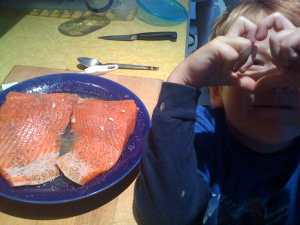
A month or so ago I went copper river salmon to a tasting at Paradise Pantry in downtown Ventura where Vino V winemaker Michael Meagher showed off his chardonnay, his Confundido blend, his pinot noir, and his syrah. I knew the syrah and even used it for the Wine Blogging Wednesday North vs South Challenge, so I was excited to experience the others. At a rushed tasting that night (we had a documentary on loons we’d planned to catch that night and we were on bikes), I loved the chardonnay because it was NOT overwhelmed by oak, and I was super impressed by the pinot which means a lot because I’m not always impressed by California pinots. I knew when it was wild salmon season, I wanted to pair it.love copper river salmon with Red Rex
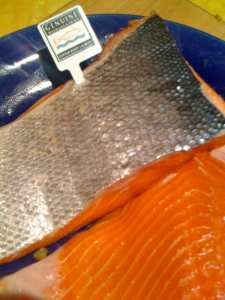
Fast forward to Copper River salmon season, those fleeting, magical few weeks in early June which I wish would last for months, but this year may even be shorter than the typical Memorial Day weekend to Father’s Day or sometimes July 4th weekend. The Copper River salmon season lasts as long as the allotment, and this year the allotment is so small that Von’s won’t even commit to having it one day to the next; when they have it, it’s $29.99 a pound unless you’re a Vons Club member which means it ranges in price from $8.99-15.99. Right now it’s $12.99. Typically we prepare it simply: some olive oil, salt and pepper, a squirt of fresh lemon then cook it on the outdoor grill.
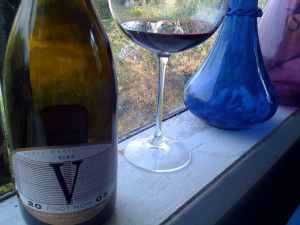
Vino V pinot 2005 smSo when I learned that Gonzo Gastronomy’s Wine Blogging Wednesday #58 Prompt “Now I’m waiting for Wednesday, waiting for Wednesday…” was to do a tasting under different musical influences, I thought: FUN! Then I thought: Gotta get some of the Vino V pinot and taste it with some Copper River salmon and then sit around and listen to music! (This is how I broke the news to the Big Monkey–you be my dj and I’ll be your dancer and we’ll both do the drinking! You can imagine this suggestion was greeted with enthusiasm!)

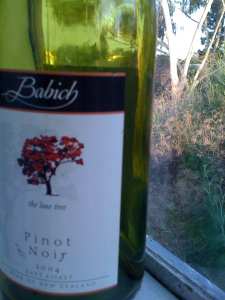
Just to make it more interesting, and because I’ve become quite fond of NZ pinot noirs following the Wine Blogger’s Conference last October, I opened a bottle of Babich 2004 Lone Tree which I found on clearance for $8 at Vons. It typically retails between $15 and $20. babich pinot 2004 sm
The Vino V has super limited distribution but since they’re local, I was able to pick up a bottle that night from winemaker Michael Meagher who was hosting a winemaker dinner at one of our favorite restaurants, Brooks.  It typicaly retails between $40 and $45 but for members of their email club, it’s 10% less or on special at $35 which is what I bought it for.

While we were preparing our dinner, we of course opened the wines and snacked a little on some simple wheat and flax organic crackers from Trader Joes. The Babich was room temperature rather than cellar temperature like the Vino V, which was especially important to the Vino V since it is 14.5% while the Babich is 13.5%.

At first there were many characteristics that we really liked about the Babich, and we liked it even more after we chilled it down a bit: it has a nice, earthy character, a generous nose, and surprising depth and complexity with notes of eucalyptus and truffle. We liked it with our simply prepared salmon, brown rice, fresh squash, and stuffed portabello dinner. But as the meal and the evening progressed, it seemed to grow harsh, and flat while the Vino V flourished. It was significantly more flavorful and complex–flat out more enjoyable, begging us to refill our glasses. It had plenty of flavor and character for our meal yet didn’t overwhelm the salmon either. The wine comes across balanced and has a lovely finish.
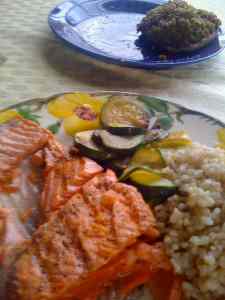
cooked copper river salmon

The next stage was to fullfill the legacy of the prompt: to taste the wine with various musical offerings and see how that changes the experience of the wine, enhancing or degrading it.

Honestly, it’s hard for me to imagine a wine such as this as ever being distasteful. But we did find that our experience of the wine changed depending on the music. Our musical choices ranged from Bruce Springsteen to Frank Sinatra to a spoken word piece of mine with music I arranged:

The bottom line on this prompt is that we really enjoyed selecting music from our hard drive, clicking play and then tasting the wine and talking about it and the music. This is one experiment we will do again!

Here are some really rough notes of the Vino V pinto noir with various musical pairings as well as the original prompt: Continue reading →

Green Drinks & Green Wine –biodynamic, organic & sustainable practices explained

shapeimage_3Whenever I bring up Green Drinks, the national green monthly networking event, people always assume I am talking about “green” as in sustainable drinks.

Uh no, but that’s a good topic too and one that confuses people as well. Since I just happen to have some info on it and a desire to let you in on some wonderful “green” wines including the Vino V Pinot Noir I want to feature for tomorrow’s Wine Blogging Wednesday #58 hosted by Katie at Gonzo Gastronomy, I figured I’d take on a intro to both Green Drinks and “Green” Drinks especially green wines in this post.

First, Green Drinks–the event. Then Green Drinks, the beverage with particular attention to wine, my favorite drink of all and possibly one of the most easily available green drink (after water and likely most non-alcoholic beverages!)

Green Drinks is a networking event for people who are “environmentally minded.” Casual gatherings, held monthly in 400 cities around the world, bring like-minded people together to eat, drink, socialize, problem solve, network, find jobs, learn, and make jobs better. Locally we meet on the second Wednesday of the month and it appears to be sponsored by GreenLiving Magazine; I’ve gone twice now.shapeimage_7

In April, we met at the new Red Cross headquarters in Camarillo where officials showed off how they are pursuing LEEDS certification and described the many ways the Red Cross is trying to go green. About 30 people attended, and I saw familiar as well as new faces. Some wine and appetizers were available, but they weren’t necessarily “green”–either by being locally produced or organically grown.

In May, I rode my bike over to the Crown Plaza on the promenade near the ocean. The restaurant served excellent fried calamari and a tuna appetizer as well. People paid for their own drinks; I had a house special using locally made Limoncello that was really yummy–not too sweet and not too sour. Over the course of the evening, about 30 people passed through.

This month, on Wednesday June 10 from 5:30pm-7:30pm, we meet at Sheila’s Place Wine Bar and Restaurant, 302 N. Lantana,  Camarillo. Maybe I’ll see you at our local green drinks or in spirit at yours!

So what about this other “green drinks”? What makes an alcoholic beverage “green”? And I don’t mean St Paddy’s Day green beer or other artificially green drinks.

Typically it means a beverage made from organic, biodynamic, or sustainably grown grapes, grains etc and/or produced using sustainable practices. For some examples of organic beers, go here.

According to an article by Heather Stober Fleming, a wine professional who lives in Fairhaven MA ( http://tinyurl.com/dbzakd), “As the green movement gains momentum, more wine drinkers are seeking out wines that are made from producers that are using Earth-friendly farming practices.”

If a wine is made from certified organic grapes, the label will read “organically grown,” “organically farmed,” or “made with organically grown grapes.” The fundamental idea behind organic farming is to harvest grapes that have been grown without pesticides, herbicides, fertilizers or any other synthetic chemicals.

Methods like crop rotation, tillage, and composting are used to maintain the health of the soil. Other natural methods are also used to control weeds, insects and other pests that can damage the vineyard or the fruit.

It is important to know that most wines made from organically grown grapes will not be labeled as “organic wine.” In order for a wine to be labeled as “organic wine,” it must be made from certified organic grapes and contain no added sulfites.

Biodynamic is the highest form of organic farming. It goes beyond the elimination of all chemicals. It incorporates the environment in and around the vineyard and works with nature to apply the knowledge of life forces to bring about balance and healing in the soil. No artificial fertilizers, pesticides, or herbicides may be used. Farmers achieve pest control through soil management and the use of biodynamic sprays and teas. Crop rotation, natural vineyard compost, and manure are employed to promote a healthy crop. Biodynamic farmers nurture a diverse animal, bird, and insect population to promote natural control of predators. The vineyard must be free of all synthetic components for 36 months and under biodynamic farming for 24 months before it can be certified. Weeds are controlled by using cover crops and other mechanical or by-hand methods. The majority of composting material used is generated by the vineyard itself. What is taken out of the land is put back in.

The Demeter Association, an independent certifier, is the organization that certifies a vineyard as biodynamic. The certification is extremely difficult to achieve, must be renewed every year and is the ultimate guarantee of purity in agricultural products. Sustainable agriculture produces crops without depleting the earth’s resources or polluting the environment. It is agriculture that follows the principles of nature to develop systems for the best crop possible.

As far as I know, there are no certifications or legal guidelines for sustainability. It is more of a way of life and a commitment that the farmer has made to the land to produce the best product possible, without stripping the land of what nature has given it. All organic and biodynamic growers practice sustainable agriculture, but not all sustainable agriculturists are certified organic or biodynamic. The wine industry is not only green in the vineyard, but the wineries as well.

There are more than 75 wineries in California that have switched to solar power to supply electricity for their winery and other facilities on their property such as tasting rooms, office buildings, and residences.

The article also mentions these widely available wines:

* Bonterra, one of the first wineries in California to commit to organic and sustainable agriculture. All of their wines are made with certified organically grown grapes. They also make one red wine, The McNabb, which is certified biodynamic.

* Benziger — The Benziger family is an industry leader in organic, biodynamic, and sustainable grape growing. They are going through the certification process so the wines that are distributed across the country do not have the organic certification on the label yet but have been grown in sustainable vineyards. The certified organic wines are currently only available at the winery. Benziger Tribute is a Bordeaux blend that is biodynamic certified. It’s hard to find, but well worth it if you do.

* Cono Sur from Chile produces a Cabernet Sauvignon/Carmenere made with organically grown grapes.

* Öko from France produces a Cabernet Sauvignon/Merlot blend made with organically grown grapes.

* All the following wineries are solar powered — Cline, Domaine Carneros, Saintbury, Fetzer, Far Niente, Frog’s Leap, Grgich Hills, Long Meadow Ranch, Merryvale, Robert Mondavi, Robert Sinskey, Shafer, Silverado, Spottswoode, Eos, Clos du Bois, Rodney Strong, J. Lohr, and St. Francis.

Usually, information on the front and back label can inform the consumer of earth-friendly practices that were used to produce a specific wine.

Mutineer Magazine Launch Party Success

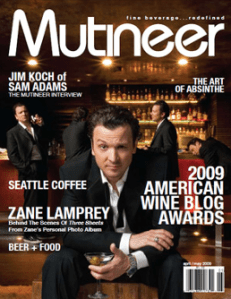
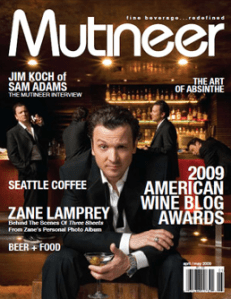
subheader_magcoverI’m surrounded by stickers, business cards, tattoos, pamphlets handouts and more inclusing a special artist inscribed bottle of wine from Wine Guerillas as I sift through what I collected last night both in terms of memories, tastes, flavors, people and fun.
Life changers: seeded gouda!! and Trippel beer!! and yes, there as wine there also!

More to come!!

Mutineer Magazine Launch Party tonight in Hollywood

subheader_magcover“Greetings,” began the email from Alan Kropf, editor of Mutineer who I met at the Wine Blogging Conference in October and have run into a few times at various wine tastings in the LA area.

“Mutineer Magazine has gone National, and we’re having a hell of a party at Falcon Hollywood on May 18 to celebrate. The evening will be hosted by Zane Lamprey and feature an incredible beverage tasting with wines, beers, spirits, sake, soda, and more.  Please come as our guest, we’d love to have you.  Here is a link to our current issue:

Cheers!

Alan Kropf, Editor in Chief

MUTINEER MAGAZINE
www.mutineermagazine.com

Of course, I said YES! So momentarily I will be heading to LA  for The Mutineer Magazine National Launch Party in Hollywood. Continue reading →

WBW: Ridge Inspirations

Wbw-new May 13, 2009 is Wine Blogging Wednesday and this month’s  host Jeff at Good Grape prompts us to write about a California wine which inspired us, writing Thematically, this month is intended to be broad while acting as homage to Robert Mondavi, the 1-year anniversary of his passing on Saturday, May 16.

Because Mondavi was such an inspiration physically, spiritually and philosophically to so many – both in the industry and to consumers, while acting as the forefather of the modern California wine movement, I would like for WBW participants to revisit a California wine that they have enjoyed, or have a particular fond memory of, and tell a story.

Please go buy or pull from your stash, a bottle of whatever that California wine was that created a memorable chapter in your life, revisit the bottle, and share your story. Continue reading →

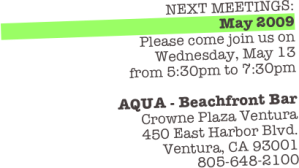
Green Drinks Ventura County Meets Tonight at the Crowne Plaza

shapeimage_2

shapeimage_3-1shapeimage_8

WBW #57: share the story of an inspiring California wine

Lenn Thompson announces Wine Blogging Wednesday #57: California Inspiration here.

Wbw-new Due May 13, host Jeff at Good Grape prompts us to write about a California wine which inspired us:

Thematically, this month is intended to be broad while acting as homage to Robert Mondavi, the 1-year anniversary of his passing on Saturday, May 16.

Because Mondavi was such an inspiration physically, spiritually and philosophically to so many – both in the industry and to consumers, while acting as the forefather of the modern California wine movement, I would like for WBW participants to revisit a California wine that they have enjoyed, or have a particular fond memory of, and tell a story.

Simply, Mondavi promoted an air of inclusiveness, not exclusiveness, conducting many of his business practices around a philosophy of aiding other wineries in knowledge and practices to create a profile for California wine that would rival the world’s finest wines.

The easy route for this theme would be to taste a Mondavi wine, but I don’t think it’s a stretch to say that Mondavi would have preferred an air of openness.  No good is accomplished by a singularity of purpose that acts as an exclusionary barrier for others.

Please go buy or pull from your stash, a bottle of whatever that California wine was that created a memorable chapter in your life, revisit the bottle, and share your story.

Lynn says, “Join us on May 13 as we celebrate the life of Robert Mondavi and the wines and wine industry he helped create.”

This prompt is a no brainer for me: today I am off to find an amazing bottle of Ridge, the winery where I worked in my early 20s and which shaped my palate as surely as working for Mr Peet!

Unfortunately, there’s nothing left from that time in the cellar; I really should have bought more when I left to hike the Pacific Crest Trail, especially since I have a cellar to keep it in. I enjoyed the last bottle in 2003–a 1980 Monte Bello Ridge Cabernet Sauvignon on New Years at the Ahwahnee Hotel in Yosemite.

And since this weekend is Mother’s Day, I have the perfect excuse to splurge!! What a great prompt! Watch for a report by next Wednesday!