Greening Valentine’s Day with organic treats, homemade gifts & local, sustainable, organic, biodynamic wines of course!

Even though Valentine’s Day screams RED: red roses, red foil chocolates, red sweaters, red hearts, and RED ink in your checking account, GO GREEN and SAVE GREEN this year! Turn your Valenfree trade chocolatestine’s Day GREEN with some of these tips from LIVE Earth: Save a Little Love for the Planet on Valentine’s Day (photo by LA Green Girl). Wine Predator’s additional tips and commentary are in bold and italics.
Valentine’s Day is fast approaching! February 14th is Saturday and you want to be prepared, but while you’re at it why not show some love for the planet too. It doesn’t take much to green your Valentine’s gifts and festivities. You will be surprised at how much love you can spread around the world. Here are some great tips you can use to show your loved one you care about them, and the planet.

1. So you’ll want a card to go with the wine. Buy valentine cards from local artists who make greeting cards out of recycled material.

artlifekissessm2Most art galleries feature a selection of cards by local artists: around here, I find my favorites at Farmer and the Cook in Meiners Oaks by a local cycling activist artist or at Buenaventura Art Gallery on Fir by the Post Office. Or download my kisses poem and send me a donation; you could also send your loved one a link to my Kisses poem (and show me a little link love too while you’re at it by linking to Kisses on your site!)

2. Make your own valentine cards with recycled items and things from nature such as dried flowers, satin ribbons, fabric hearts.

Try going to the beach or the snow and handwriting your message! Photo the message and send it to your loved one! Or print it out!

3. If you like to enjoy your wine by candlelight, use eco-friendly fragrance free candles. Beeswax or vegetable based candles that are biodegradable and smoke-free are a good choice.

Beeswax candles also clean and clear the air of pollutants and they smell wonderfully while they burn. I find mine at our local farmers markets; I keep them near sunlight so as they warm during the day, they exhale a rich sweet scent.

4. Choose wine or champagne that’s  organic, biodynamic, or sustainably produced. If there is a vineyard near,  buy from there. You will be supporting a local business, cutting down the use of packaging for shipping and probably saving some money too.

images-2Organic isn’t the only GREEN wine around–look for biodynamic wine or wines produced from sustainable vineyards, wineries and businesses.

One “green” red  I enjoyed recently over New Years weekend in Joshua Tree is RN13 Vin de pique-nique which indeed is perfect for a Valentine’s Day picnic! Made from 40% cabernet, 40% syrah, and 25% grenache (and sometimes mourverde)  grown organically in the south of France (Languedoc-Roussillon), the blend brings out the best of all three–it’s a spicy, silky,  full bodied,  full of fruit, full of fun!

I found the wine in Joshua Tree for $15 at a funky little cool cafe and shop on the corner across the street from the strip mall in Joshua Tree where you’ll find a thrift store and a natural foods market. We enjoyed it during a cloudy, wind whipped sunset in Joshua Tree and with a dinner of bolognese, salad, and stuffed portabellas. If you’re not in the neighborhood of Joshua Tree NP, try a Whole Foods Market.

The unusual way it’s bottled makes it easy to reuse as well! And each time you reuse the bottle, you will remember your special “picnic”!11ojai

Yesterday at a Santa Lucia Highland’s tasting in LA I tasted dozens of wonderful wines–mostly chardonnays like Bernardus full of character and pinots like Belle Glos with its lipstick red dripping cork seal and amazing nose plus a few intense syrahs like Wrath or Novy’s 2006. I also discovered Hahn’s sustainably grown wines. Unfortunately,  by the time I made it to their table, they were packing up. They did give me some seeds which they use as a cover crop and we will plant for Valentine’s Day!

You’d be surprised how many biodynamic, organic and sustainable wines that are being made in the US these days and beyond! Go here to learn about biodynamic wines from Quivira in the Dry Creek Valley of Sonoma.

You’d also be surprised at the number of wineries scattered across the country; I know I am! I’m lucky since in my backyard I have world-class wine and winemakers like Manfred Frankl of Sine Qua Non and the up and coming Michael Meagher at Vino V, and long-time local winemaking guru Adam Tolmach at Ojai producing wine from grapes typically sourced within 50 miles of my house.

5. For dessert, buy Organic or fair trade chocolates treats, (if you can buy from companies whose profits go to helping endangered species) or make your own chocolate treats with organic chocolates, nuts and fruits.

chocolate-strawberriesMaking your own customized chocolate treats like chocolate dipped strawberries with pecans really is easy! Finding organic strawberries this time of year is simple also since now is when they are really coming in season. While my favorites “Harry’s Berries” aren’t certified organic, the family follows sustainable and organic practices. You can find a recipe here.


Off to a good start: Now taking a Holiday!

As you may have noticed, the Wine Predator has been MIA. Not that I haven’t been tasting wine and making notes on them to share here at a later time–because I have and I look forward to discussing an amazing languedoc imported by Vinalia from Camarillo (focusing on biodynamic and organic–more on this small importer soon!), and comparing and contrasting two wines by Australian winemaker Rolf Binder (he’s the “B” in RBJ wines which are absolutely delightful!) a 1998 Veritas WInery Barossa Valley Shiraz/Mourvedre and the Watcher shiraz!

I have been posting non-wine shenanigans on my other blog, Art Predator , quite regularly, including Santacon, plus pictures.

For New Year’s, we’re  off on a road trip to Joshua Tree National Park–and of course we’re bringing some wines with us! Will report later! Then I’ll be at Macworld–will you?

Best wishes this holiday season and into the New Year!

Mulled wine: for those wines you mull over & decide you just don’t have to drink or dump

Yep, sometimes a wine is best for mulling…maybe a bottle of Merlot left after a party you don’t want to drink or store, or some 2 Buck Chuck lying around. Or maybe you tried something and you flat-out don’t like it enough to add those calories!Mulled Wine...yum

This is a wonderful time of year to enjoy mulled wines at home, with friends, or to bring to a gathering. No matter what you mull, the smell is divine!

There are lots of mulled wine recipes out there with variations on the theme of a spiced, heated, red wine. I am not of the camp that recommends you use a fine red wine for mulling; something in the $5 range works great as does 2 Buck Chuck if you have a Trader Joe’s in the neighborhood. I am tempted to try a Shiraz this year, but any red wine will work.

I always have a pot of homemade chai spices going on the store to make chai and the easiest mulled wine or mulled cider to make for me is to add red wine to the eight spice combination: cinnamon, nutmeg, cardamom, coriander, ginger, pepper, allspice and cloves with a little honey or sugar to taste. (I’ll share my chai recipe soon, I promise!)

A few weeks ago I saw this mulled wine recipe on Delectable Jen’s blog which she found from an episode where chef Andreas Viestad makes Mulled Wine in Trondheim, Norway. I prefer mine without raisins, almonds, and orange and the added vodka, but this is the traditional Norwegian recipe in  its entirety.

Ingredients

1 cup (2 1/2 dl) water
1 cinnamon stick
4 cardamom seeds
2 cloves
1 heaped tablespoon honey
2 tablespoons homemade vanilla sugar, or 2 tablespoons vanilla and 1/4 vanilla bean
1 bottle of red wine
1/2 cup (1 dl) vodka (OPTIONAL!)
1/2 cup (1 dl) almonds
1/4 cup (1/2 dl) raisins
1 orange, sliced

In a small pot, bring the water to boil. Add cinnamon, cardamom, cloves, honey and vanilla sugar to and mix it well. Let this sweet spice mixture boil for about 15 minutes to release the flavor of the spices.

Mulled Wine…yum

Meanwhile, heat the red wine gently in a medium pot. Make sure it does not reach more than 170F (78C), otherwise the alcohol will evaporate. Add 1/3 of the sweet spice mixture. Add almonds and raisins. Add more spice mixture to taste, until the mulled wine has the sweetness of your liking. Add the vodka.

Add a slice of orange to each cup add mulled wine and serve.

Update from 2013: I wouldn’t use 2 Buck Chuck. I’d try to find something in the $5 range at least. Doesn’t have to be in the $10-20 unless you really didn’t like it and don’t want to blend it with something else…

Tistrya Merlot 2000: worth finding!

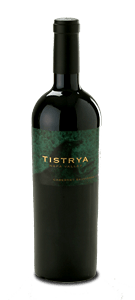
tistryacabmainI mentioned the other day  at Big Lots I took a risk and splurged $10 on a bottle of 2000 Napa Valley Tistrya Merlot. Forget that I’ve never heard of Tistrya and I’m not a huge fan of merlot. Forget that it’s $10 — at Big Lots. Forget that we have plenty of wine right now.

What made me forget all this was the beauty and weight of the bottle. Not the label which is a dated looking dark forest green marble–but the bottle itself which shaped and heavy like Twisted Oak’s The Spaniard but heavier than Chris Ringland’s Ebenezer shiraz.

This is a bottle of distinction. Someone cared enough for this wine to put it in a really really nice bottle–a merlot even!

While the majority of the wine at Big Lots is under $5 (and often not worth $5–save your receipt!), more expensive wines –and sometimes excellent values like last month’s Jamieson Canyon 2002 cab for $4–do show up. They rarely tempt me. It’s too risky. But this time I decided to risk it-this bottle was calling me, calling my name: “Wine Predator, Wine Predator!! Then whispering and moaning a little. I quickly grabbed the bottle and we left. I prayed I hadn’t just spent $10 on a wine for mulling (recipe up soon!)

Once home,  I began searching out info on the wine: nothing nothing nothing NOTHING! The website listed on the bottle and above is MIA. I did find some info on a Tistrya cab and a $75 price which made me more optimistic about my purchase.

As soon as I mentioned the Tistrya here, I started having fellow Wine Predators turn up searching for info. I knew I wasn’t the only one curious about the wine, and I knew I needed to try this wine and soon–I had a responsibility here to my reading public: inquiring winos want to know!

Last night, we brought the Tistrya Merlot to dinner at friends. The impressive bottle did its job: Dave was definitely impressed and eagerly opened it up, letting it breathe while he gave us a tour of Bea’s new house. About 45 minutes later, he poured and with a little trepidation, I tasted. “This is really good!” said Dave. “I like this,” said the Big Monkey. “Wow,” I said, “I need to go get more of this!”

Fellow Wine Predators, rejoice! Here is the prognosis: Tistrya Merlot 2000 is DEFINITELY worth every penny of your $10!

Immediately go to Big Lots and buy some of this wine. It’s an impressive wine to bring to dinner or a party, and it’s plenty soft and mild, with pleasant fruit and nice garnet color,  enjoyable without food, or with dinner–we had it with a roast, roasted vegetables, curry pumpkin soup, and rosemary bread.

Anything but merlot? Not at this price! Not for this wine!

great food/wine pairings chart

Questions about what to drink with what? This food and wine pairing chart looked useful in answering some of my questions–let me know how it works for you! I found it at Drinks are on Me:

Wine Varietal Herbs and Spices Vegetables Fish and Shellfish Meats Cheeses Bridges
Sauvignon Blanc Basil, bay leaf, cilantro, dill, fennel, lemongrass, marjoram, mint, parsley, savory, thyme Carrots, eggplant, most green vegetables (lettuces, snow peas, zucchini), tomatoes Clams, mussels, oysters, scallops, sea bass, shrimp, snapper, sole, swordfish, trout, tuna Chicken, game birds, turkey Buffalo mozzarella, feta, fontina, goat, Parmigiano Reggiano, ricotta, Swiss Bell peppers, capers, citrus, garlic, green figs, leeks, olives, sour cream
Chardonnay Basil, clove, tarragon, thyme Corn, mushrooms, potatoes, pumpkin, squash Crab, grouper, halibut, lobster, monkfish, salmon, scallops, shrimp, swordfish, tuna Chicken, pork, turkey, veal Brie, camembert, Monterey Jack, Swiss Apples, avocado, bacon, butter, citrus, coconut milk, cream, Dijon mustard, milk, nuts, pancetta, pears, polenta, tropical fruits, vanilla
Riesling Chile pepper, cilantro, dill, five-spice, ginger, lemongrass, nutmeg, parsley Carrots, corn, onions parsnips Crab, scallops, smoked fish, snapper, sole, trout Chicken, game birds, pork Emmenthal, gouda Apricots, citrus, dried fruits, peaches, tropical fruits
Pinot Noir Basil, black pepper, cinnamon, clove, fennel, five-spice, oregano, rosemary, star anise, thyme Beets, eggplant, mushrooms Salmon, tuna Beef, chicken, game birds, lamb, liver, rabbit, turkey, veal Aged chedar, Brie, smoked cheeses Beets, butter, chocolate/cocoa, cooked tomatoes, Dijon mustard, dried fruits, mushrooms, onions, pomegranates, shallots
Shiraz/Syrah Allspice, chile pepper, coriander, cumin, five-spice, pepper, rosemary, sage Eggplant, onions, root vegetables Blackened fish Bacon, duck, lamb, pancetta, pheasant, sausage, short ribs, venison Cheddar, goat, Gouda, Gruyere Black figs, black licorice, black olives, black pepper, cherries, chocolate/cocoa
Cabernet Sauvignon Juniper, oregano, rosemary, sage, savory, thyme Mushrooms, potatoes, root vegetables None Beef, duck, lamb, venison Camembert, carmody, aged Gouda, aged Jack Balsamic vinegar, blackberries, black olives, black pepper, butter, cassis, cherries, cream, currants, roasted red pepper, toasted nuts

http://drinksareonme.net/?page_id=186

Compare & Contrast: 3 Old World Reds under $10 with New World Reds under $10

As a native Californian who cut her wine tasting bicuspids in Napa, Sonoma, and Mendocino while going to college in the Bay Area, then worked in the tasting room at Ridge Winery in the early 80s and who now lives just south of the thriving wine regions of the Central Coast, I am most familiar with and partial to California wines.

Why bother with wine from anywhere else when California wines are so abundant, so inexpensive, so tasty and easy to find at Trader Joe’s, Vons, or The Ventura Wine Company?

All that changed when I started going to the Grateful Palate Warehouse sales two years ago and ventured into the wild and wonderful world of Australian wines, especially shiraz, and I discovered I love GSMs.   At their warehouse sale prices, I became spoiled drinking much better quality wines in much bigger quantities.

At the Wine Bloggers Conference, I had the opportunity to taste not only plentiful pours of local Sonoma wines, but wines from New York State, New Zealand, and really all over the world thanks to Doug Cook and others who brought wines to share. Most of these wines were priced around $20.

Since much of the conversation around wine blogs recently has related to Chilean red value wines under $20 (see here for a list of posts), and how Chilean wines are such a great value in comparison, I found myself asking: in comparison to what? In my opinion, there are plenty of California cabs at around $20 which are better than the 2006 Casa Lapostolle “Alexandre” I tasted over the past few days and I know  California cabs I’d prefer to spend my $10 on than the 2006 Santa Rita Reserva.

So in comparison to what? I asked myself again. To European wines at the same price point?

To answer that question, I investigated three old world wines easily found on the internet for around $10: a 2003 Raimat Tempranillo, a 2006 J. Vida-Fleury Rhone blend of Grenache and Shiraz, and a 2006 Chateau Nenine blend of Merlot, Cab Franc and Cabernet Sauvignon.

I liked the Tempranillo. A lot. I would definitely buy this one. In terms of my Wine Predator scale,
5-8………. Terrible; Lose the Trail
9-11…….. Emergency Rations
12-14……. Worth Drinking
15-17 ……..Worth Finding
18-20 ……TRACK IT DOWN!

it scored 17 and it deserves to be FOUND again! It was great with appetizers of various pizzas, cheeses, and grapes, and the gathering drank it up quickly.

Unfortunately, the Rhone wine, at 12 points, as much as I wanted to enjoy it, was barely WORTH DRINKING. It tasted thin, and flat.  The Bordeaux fared a bit better, with a score of 13, but it wasn’t too exciting either.

The Chilean Santa Rita, as you may recall, scored a 14 the other day; last night it was clear to us that this was a better wine and a better value than the two French ones. Unfortunately, we finished the Tempranillo before I could taste it again and compare it with the Chilean Santa Rita! I would say that is suggestive! How much can be contributed to the Tempranillo being 3 years older, and other factors, remains to be seen, however.

Last night, over steaks, we drank the 3 “value” reds along with the Casa Lapostolle; at this point, it had opened up into a lovely, personable, pleasurable wine, and the Casa Rita was very serviceable while the two French wines were only that: French, and with significantly lower alcohol levels (which we did appreciate). Yes, I’d chose them over $2 Buck Chuck, but next time I think I’d take my $10 and spend it on another wine.

Sigh. Now that I think about this experiment, I am wishing I’d opened up the Chateau Greysac 2001 I picked on clearance for $14 (regularly $20) to compare with the Casa Lapostolle…

Oh well, another day!

Wine Aroma Wheel

As someone who is getting more serious about tasting and drinking wine, I find I am often searching for the words to describe the various sensations which a particular wine produces. How to be clear and articulate, personal and universal at the same time?  Using a common vocabulary with other tasters can help us all speak the same language better.

One tool for developing the necessary accuracy and language is to make samples of various smells (standards) commonly found in wine; I found directions on how to do make these at the Wine Aroma Wheel site as well as info about the Wheel, created by Ann C. Noble in 1990 at UC Davis. You’ll find information on making standards as well as the Wheel below:

The wheel is an incredible and useful tool to learn about wines and enhance one’s ability to describe the complexity of wine flavor.

The Wine Aroma Wheel The wheel is made of three tiers : it has very general terms located in the center (e.g. fruity or chemical), going to the most specific terms in the outer tier (e.g. grapefruit or strawberries).

These terms are not the only terms that can be used to describe wines, but represent ones that are often encountered.

top of the page

Whether you are a beginner or a wine connoisseur, the use of the wheel during wine tasting will facilitate the description of the flavors you perceive. More importantly, you will be able to recognize and remember specific details about wines.

top of the page

Novice tasters often complain that they “cannot smell anything” or can’t think of a way to describe the aroma of wine. Fortunately, it is very easy to train our noses and brains to connect and quickly link terms with aromas.

The fastest way is to make physical standards to illustrate important and major notes in wine aroma.

download the user guide

top of the page

Wine Aroma Wheel T-shirtsIndulge yourself or relatives with this beautiful T-shirt featuring the Wine Aroma Wheel.

Click here for more information

top of the page

We partnered with Inno Vinum to distribute a French version of the wheel worldwide. Since Inno Vinum is a Canadian company, it will ensure the distribution of the English version of the wheel throughout Canada.

To order the English version of the Wine Aroma Wheel :

To order La Roue des Arômes, the French version of the Wine Aroma Wheel, please visit Inno Vinum.

To order the Japanese version of the Wine Aroma Wheel or the Sparkling Wine Aroma Wheel (only available in English) click here.