Yep, sometimes a wine is best for mulling…maybe a bottle of Merlot left after a party you don’t want to drink or store, or some 2 Buck Chuck lying around. Or maybe you tried something and you flat-out don’t like it enough to add those calories!
This is a wonderful time of year to enjoy mulled wines at home, with friends, or to bring to a gathering. No matter what you mull, the smell is divine!
There are lots of mulled wine recipes out there with variations on the theme of a spiced, heated, red wine. I am not of the camp that recommends you use a fine red wine for mulling; something in the $5 range works great as does 2 Buck Chuck if you have a Trader Joe’s in the neighborhood. I am tempted to try a Shiraz this year, but any red wine will work.
I always have a pot of homemade chai spices going on the store to make chai and the easiest mulled wine or mulled cider to make for me is to add red wine to the eight spice combination: cinnamon, nutmeg, cardamom, coriander, ginger, pepper, allspice and cloves with a little honey or sugar to taste. (I’ll share my chai recipe soon, I promise!)
A few weeks ago I saw this mulled wine recipe on Delectable Jen’s blog which she found from an episode where chef Andreas Viestad makes Mulled Wine in Trondheim, Norway. I prefer mine without raisins, almonds, and orange and the added vodka, but this is the traditional Norwegian recipe in its entirety.
Ingredients
1 cup (2 1/2 dl) water
1 cinnamon stick
4 cardamom seeds
2 cloves
1 heaped tablespoon honey
2 tablespoons homemade vanilla sugar, or 2 tablespoons vanilla and 1/4 vanilla bean
1 bottle of red wine
1/2 cup (1 dl) vodka (OPTIONAL!)
1/2 cup (1 dl) almonds
1/4 cup (1/2 dl) raisins
1 orange, sliced
In a small pot, bring the water to boil. Add cinnamon, cardamom, cloves, honey and vanilla sugar to and mix it well. Let this sweet spice mixture boil for about 15 minutes to release the flavor of the spices.
Mulled Wine…yum
Meanwhile, heat the red wine gently in a medium pot. Make sure it does not reach more than 170F (78C), otherwise the alcohol will evaporate. Add 1/3 of the sweet spice mixture. Add almonds and raisins. Add more spice mixture to taste, until the mulled wine has the sweetness of your liking. Add the vodka.
Add a slice of orange to each cup add mulled wine and serve.
Update from 2013: I wouldn’t use 2 Buck Chuck. I’d try to find something in the $5 range at least. Doesn’t have to be in the $10-20 unless you really didn’t like it and don’t want to blend it with something else…
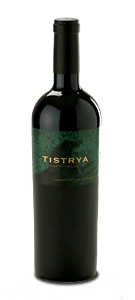
I mentioned the other day at Big Lots I took a risk and splurged $10 on a bottle of 2000 Napa Valley Tistrya Merlot. Forget that I’ve never heard of Tistrya and I’m not a huge fan of merlot. Forget that it’s $10 — at Big Lots. Forget that we have plenty of wine right now.
What made me forget all this was the beauty and weight of the bottle. Not the label which is a dated looking dark forest green marble–but the bottle itself which shaped and heavy like Twisted Oak’s The Spaniard but heavier than Chris Ringland’s Ebenezer shiraz.
This is a bottle of distinction. Someone cared enough for this wine to put it in a really really nice bottle–a merlot even!
While the majority of the wine at Big Lots is under $5 (and often not worth $5–save your receipt!), more expensive wines –and sometimes excellent values like last month’s Jamieson Canyon 2002 cab for $4–do show up. They rarely tempt me. It’s too risky. But this time I decided to risk it-this bottle was calling me, calling my name: “Wine Predator, Wine Predator!! Then whispering and moaning a little. I quickly grabbed the bottle and we left. I prayed I hadn’t just spent $10 on a wine for mulling (recipe up soon!)
Once home, I began searching out info on the wine: nothing nothing nothing NOTHING! The website listed on the bottle and above is MIA. I did find some info on a Tistrya cab and a $75 price which made me more optimistic about my purchase.
As soon as I mentioned the Tistrya here, I started having fellow Wine Predators turn up searching for info. I knew I wasn’t the only one curious about the wine, and I knew I needed to try this wine and soon–I had a responsibility here to my reading public: inquiring winos want to know!
Last night, we brought the Tistrya Merlot to dinner at friends. The impressive bottle did its job: Dave was definitely impressed and eagerly opened it up, letting it breathe while he gave us a tour of Bea’s new house. About 45 minutes later, he poured and with a little trepidation, I tasted. “This is really good!” said Dave. “I like this,” said the Big Monkey. “Wow,” I said, “I need to go get more of this!”
Fellow Wine Predators, rejoice! Here is the prognosis: Tistrya Merlot 2000 is DEFINITELY worth every penny of your $10!
Immediately go to Big Lots and buy some of this wine. It’s an impressive wine to bring to dinner or a party, and it’s plenty soft and mild, with pleasant fruit and nice garnet color, enjoyable without food, or with dinner–we had it with a roast, roasted vegetables, curry pumpkin soup, and rosemary bread.
Anything but merlot? Not at this price! Not for this wine!
Questions about what to drink with what? This food and wine pairing chart looked useful in answering some of my questions–let me know how it works for you! I found it at Drinks are on Me:
As someone who is getting more serious about tasting and drinking wine, I find I am often searching for the words to describe the various sensations which a particular wine produces. How to be clear and articulate, personal and universal at the same time? Using a common vocabulary with other tasters can help us all speak the same language better.
One tool for developing the necessary accuracy and language is to make samples of various smells (standards) commonly found in wine; I found directions on how to do make these at the Wine Aroma Wheel site as well as info about the Wheel, created by Ann C. Noble in 1990 at UC Davis. You’ll find information on making standards as well as the Wheel below:
The wheel is an incredible and useful tool to learn about wines and enhance one’s ability to describe the complexity of wine flavor.
The wheel is made of three tiers : it has very general terms located in the center (e.g. fruity or chemical), going to the most specific terms in the outer tier (e.g. grapefruit or strawberries).
These terms are not the only terms that can be used to describe wines, but represent ones that are often encountered.
Whether you are a beginner or a wine connoisseur, the use of the wheel during wine tasting will facilitate the description of the flavors you perceive. More importantly, you will be able to recognize and remember specific details about wines.
Novice tasters often complain that they “cannot smell anything” or can’t think of a way to describe the aroma of wine. Fortunately, it is very easy to train our noses and brains to connect and quickly link terms with aromas.
The fastest way is to make physical standards to illustrate important and major notes in wine aroma.
We partnered with Inno Vinum to distribute a French version of the wheel worldwide. Since Inno Vinum is a Canadian company, it will ensure the distribution of the English version of the wheel throughout Canada.
To order the English version of the Wine Aroma Wheel :
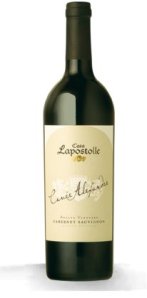
Determined to find an interesting Chilean wine under $20 in order to participate in this month’s Wine Blogging Wednesday, this afternoon I trudged to the Ventura Wine Company once again. They had three choices in the $15-20 range; two cabs and a cab blend. A hand drawn, store produced shelf talker raved about the 2006 Casa Lapostolle Cabernet Sauvignon “Alexandre” from the Apalta Vineyard (15 alc%) in the Colchuaga Valley; of course it was the bottle closest to $20.
Adding to the mix was dinner. I had put lima beans on to soak the night before and planned to cook them with a ham bone, bacon, mushrooms, and anduille sausages–pretty rich and spicy. What I really wanted with it was a syrah or even better, a GSM like the Twisted Oak one I’d had the previous week with David’s homemade spicy red sauce with spicy Italian sausage. Ventura Wine Company owner Nick reassured me this Casa Lapostolle would work fine with the lively bean, sausage and bacon soup so I went for it.
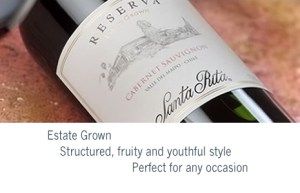
Since we had to go to Trader Joe’s anyway for the sausage, I checked out their selection once again and decided to make the tasting more interesting for myself by getting a 2006 Santa Rita Reserve Cabernet Sauvigon from Maipo Valley (14.1% alc) at half the price so I could compare the two.
I opened both and started tasting toward the end of cooking dinner, while the cornbread was in the oven. Right off the bat, I preferred the Lapostolle–there was more depth and richness. But was it $10 better? I wondered, because the Santa Rita was nice enough. The kitchen was full of bacon smell which made the nose a bit of a challenge but clearly there was more to the Lapostolle. I poured more in the glasses to let it breathe while we set up for dinner.
I’m typically not a huge fan of cabs full of bell pepper and herbs, and a cab like that I suspect would have been awful with the meal. As it was, the wines didn’t take anything away but didn’t add much. The Santa Rita didn’t stand a chance with the spicy sausage soup. Surprisingly, the Lapostolle had plenty of body and fruit to work with the soup and enough acid to cut through the richness of the bacon infused meal.
During clean-up, I continued to test and taste. The Santa Rita softened nicely when allowed to rest awhile. I left some wine in the glasses and went to a poetry reading. When I returned, yep, I still preferred the Lapostolle which is made from 60 year old non-irrigated vines by the family which makes Grand Marnier; the Santa Rita continued to be quite pleasurable.
SCORING: 1-5 points per category; 20 points total
SEE: Both had nice bright garnet color in the glass, with a tinge of brown to the Santa Rita.
CL–4; SR–4
SWIRL: Both are pretty, the Casa Lapostolle with better legs (and with higher alcohol).
CL–4; SR–4
SNIFF: I’m recovering from a cold so my sniffer is not in top notch shape. However, the Lapostelle certainly came off with more fruit– cherry in particular while the Santa Rita…well I almost got light headed trying to find and figure out the fruit. The fruit was actually a little more like a cherry/berry Hawaiian punch, and a little too sickly sweet. I did find tar, cloves, and anise easily in the Santa Rita, especially after I switched glasses from the everyday dinner wine glasses to crystal tasting glasses, careful to prime them with some SR wine first.
The nose in the Casa Lapostolle “Cuvee Alexandre” was more complex. Instead of the sweet Hawaiian punch of the Santa Rita, I found the floral and spicy notes of the clove and cinnamon of Cecil Bruner roses and white carnations. Also, some savoriness–a creamy meatiness–as well as tobacco leaf.
CL–4; SR– 3
SIP: SR Light, friendly; could use a bit more time in the bottle or leave open for a while to tone down the tannins some. CL ‘ is fuller and the tannins are better balanced, red licorice, red raspberry. The CL has a long, pleasant finish with some anise.
CL–4; SR 3
Next time for Wine Blogging Wednesday, I may try to get away with getting a glass or two at a wine bar rather than spending that much on wines midweek when recovering from a cold! While I liked them both, for the money there are other wines I prefer. I didn’t find these wines as great of a bargain as I’d anticipated or as some great for the money as many local California wines or Australian wines I’ve had recently. For my almost $20, I think I’d rather spend it on a different Lapostolle family specialty–Grand Marnier.
Not to mention that there’s plenty left for me to continue tasting throughout the week to see what happens next!
TOTALS:
Casa Lapostelle: 16 out of 20–Worth Finding
Santa Rita: 14 out of 20–Worth Drinking
WINE PREDATOR’s 20 POINT SCALE:
4 areas worth 5 points each to add up to a point score totaling 20
What is it they say about good intentions? The road is paved with them?
Jeez, I must have a whole freeway system…
Last month I found out that Wine Blogging Weds #51 asked for Baked Goods: what to drink for dessert, specifically madeira…yummy! I enjoy a good glass of dessert wine many evenings, and was thrilled for an excuse to test drive madeira–except I couldn’t find any. I did have on hand a few Australians: Jonesy Port, as always, as well as a 2002 Lillypilly Noble Blend sweet white wine and a 2002 Hazy Blur Baroota Late Picked Shiraz I was itching to try which I picked up from the Grateful Palate.
But Nov 12 came and went in a blur of birthday festivities for my boy and so did Wine Blogging Wednesday #51 leaving me waiting for WBW # 52 : Chilean Value Reds.
Back in college in the 80s, I used to drink a lot of Chilean wines under $5. Gato Negro and Gato Blanco as I recall and a few others from the Maipo valley were the $2 Buck Chucks of the day. This was before everyone and their sister in the US were growing grapes and were making wine.
Finding an interesting Chilean under $20 and drinking it and writing it up by the next WBW, Weds Dec. 10, would be no problem I figured. Well here it is Tuesday Dec 9 and I am still empty handed when it comes to a Chilean Red Under $20.
I started at the best local wine retail outlet, The Ventura Wine Company, and glanced around. Last time I was there but nothing caught my eye (except the Whirling Dervish Sauv Blan once again) so I emailed David of the blog Vinomadic for some suggestions. He’s spent quite a bit of time in Argentina and wants to import some of their smaller, sustainable wines here.
He emailed back a few suggestions including links to Kingston Vineyards and Organic Vintners. Unfortunately, i’d have to drive 30 minutes to get to a store which carries the Kingston and it’s too late to order anything from Organic Vintners.
David and I did check a Ralph’s in Sherman Oaks which offered two wines and we split the cost of the one on sale for $22, forgetting that the WBW is for Chilean Wines UNDER $20. The merlot wasn’t particularly memorable (I don’t even remember what it was!) so I left it behind with David to see how it might develop over time. Earlier David had opened a bottle of Twisted Oak and not much could follow that beautiful GSM which is a steal at $25 a bottle:.
2005 Calaveras County Asterisk Percent Pound Ampersand At Exclamation (Red Blend, Mourvedre Syrah Grenache) Arrrr, the name of this wine is so disgusting that the Scurvy Dogs who provide our web site can’t even print the title… More Details
Yesterday, I desperately searched the shelves of Vons (two more Chilean wines which failed to move me toward the checkout counter although I did pick up a 6 pack of Alaska’s Winter Ale complete with real spruce!! yummy!), I scavenged at my favorite wine store, Big Lots and came up with some interesting wines: a mysterious Tistyra 2000 merlot in a very impressive bottle (hope it tastes as good!), Artisan’s 2005 Napa Cab, and Parson’s Creek Old Vines 1999 zin ($3). Nothing like the steal of the Jamieson Canyon 2002 Napa Cab for $4 which I found for sale on the web for $25. Next I tried Smart and Final; I came home instead with a few bottles from clearance: Chateau Greysac 2001 Medoc for $14, a BV Chard for $14, and two bottles of Bonterra Chard for $8 each.
Lots of interesting wines for under $20 but still no Chilean Red. I am going to try the Ventura Wine Company once more. I might even be making a road trip…
After all, I grew up going to garage sales and auctions with my family. For years, my dad worked as an auctioneer. When I was in college, I bought for him at garage sales, worked his auctions, and learned to refinish furniture too.
I find no shame in dumpster diving, having spent several of my formative years collecting beer cans from the neighborhood dumpsters. I still have a number of Navy middies I found at the dump when I was about 12; I imagine now they once belonged to someone recently returned from Viet Nam.
Like the recently deposed Sarah Palin, I regularly shop at thrift stores, especially on half-price Wednesdays at the Goodwill by the farmers market, and at Habitat for Humanity’s Restore.
So when it seemed that the room full of open wine left behind after the after party at the Wine Bloggers Conference was going to get poured down the drain, thrown out or who knew what, I packed up what I could manage and drove off with it, figuring I’d drink what I could as fast as I could, taste and write and taste some more, and share the wealth–which is exactly what I’ve been doing since I returned from the Wine Bloggers Conference last week.


 I mentioned the other day at Big Lots

 The wheel is made of three tiers : it has very general terms located in the center (e.g. fruity or chemical), going to the most specific terms in the outer tier (e.g. grapefruit or strawberries).


 Indulge yourself or relatives with this beautiful T-shirt featuring the Wine Aroma Wheel.

 this afternoon I trudged to the
 But Nov 12 came and went in a blur of birthday festivities for my boy and so did Wine Blogging Wednesday #51 leaving me waiting for
 bottle of


