
 |
Writes Grateful Palate’s Dan Phillips of his 6 Bottle Grab Bag for $50:
Knowing the condition of Dan’s warehouse after several warehouse sales, I’d say this one’s a go for it steal of the day! I’m betting it will include some super close-out deals of wines that they no longer import or the tail end of a case that they don’t want to mess with anymore. My bet is he’s going to give you some great wines at a great price knowing you’ll come back for more! And what soundtrack might you choose to enjoy with your Grateful Palate wine? The soundtrack to 15 years of my life in SoCal is KCRW–the public radio station out of Santa Monica City College that I’m obsessed with! And now that they have an iPhone ap, I never have to leave home without it–even when I’m traveling by bicycle or out of the station’s reach or away from an internet connection! This KCRW iPhone ap is absolutely the best news I’ve had since the good times on the Santacon ride Friday! The only bad news is it’s not free–which it should be for us subscribers! Yep, it’s .99. Here are the details: KCRW Listen to KCRW with our brand-new iPhone app. Listen Live, On Demand, and Be Tuned-In to events around town! http://ow.ly/doajBTW, here’s the info on Today’s Top Tune: KCRW Today’s Top Tune is Naomi Shelton and the Gospel Queens with “Trouble in My Way.” Get the FREE song-a-day athttp://ow.ly/do5D |
Category Archives: Great Wines under $20
Green Drinks & Green Wine –biodynamic, organic & sustainable practices explained
 Whenever I bring up Green Drinks, the national green monthly networking event, people always assume I am talking about “green” as in sustainable drinks.
Uh no, but that’s a good topic too and one that confuses people as well. Since I just happen to have some info on it and a desire to let you in on some wonderful “green” wines including the Vino V Pinot Noir I want to feature for tomorrow’s Wine Blogging Wednesday #58 hosted by Katie at Gonzo Gastronomy, I figured I’d take on a intro to both Green Drinks and “Green” Drinks especially green wines in this post.
First, Green Drinks–the event. Then Green Drinks, the beverage with particular attention to wine, my favorite drink of all and possibly one of the most easily available green drink (after water and likely most non-alcoholic beverages!)
Green Drinks is a networking event for people who are “environmentally minded.” Casual gatherings, held monthly in 400 cities around the world, bring like-minded people together to eat, drink, socialize, problem solve, network, find jobs, learn, and make jobs better. Locally we meet on the second Wednesday of the month and it appears to be sponsored by GreenLiving Magazine; I’ve gone twice now.
In April, we met at the new Red Cross headquarters in Camarillo where officials showed off how they are pursuing LEEDS certification and described the many ways the Red Cross is trying to go green. About 30 people attended, and I saw familiar as well as new faces. Some wine and appetizers were available, but they weren’t necessarily “green”–either by being locally produced or organically grown.
In May, I rode my bike over to the Crown Plaza on the promenade near the ocean. The restaurant served excellent fried calamari and a tuna appetizer as well. People paid for their own drinks; I had a house special using locally made Limoncello that was really yummy–not too sweet and not too sour. Over the course of the evening, about 30 people passed through.
This month, on Wednesday June 10 from 5:30pm-7:30pm, we meet at Sheila’s Place Wine Bar and Restaurant, 302 N. Lantana, Camarillo. Maybe I’ll see you at our local green drinks or in spirit at yours!
So what about this other “green drinks”? What makes an alcoholic beverage “green”? And I don’t mean St Paddy’s Day green beer or other artificially green drinks.
Typically it means a beverage made from organic, biodynamic, or sustainably grown grapes, grains etc and/or produced using sustainable practices. For some examples of organic beers, go here.
According to an article by Heather Stober Fleming, a wine professional who lives in Fairhaven MA ( http://tinyurl.com/dbzakd), “As the green movement gains momentum, more wine drinkers are seeking out wines that are made from producers that are using Earth-friendly farming practices.”
If a wine is made from certified organic grapes, the label will read “organically grown,” “organically farmed,” or “made with organically grown grapes.” The fundamental idea behind organic farming is to harvest grapes that have been grown without pesticides, herbicides, fertilizers or any other synthetic chemicals.
Methods like crop rotation, tillage, and composting are used to maintain the health of the soil. Other natural methods are also used to control weeds, insects and other pests that can damage the vineyard or the fruit.
It is important to know that most wines made from organically grown grapes will not be labeled as “organic wine.” In order for a wine to be labeled as “organic wine,” it must be made from certified organic grapes and contain no added sulfites.
Biodynamic is the highest form of organic farming. It goes beyond the elimination of all chemicals. It incorporates the environment in and around the vineyard and works with nature to apply the knowledge of life forces to bring about balance and healing in the soil. No artificial fertilizers, pesticides, or herbicides may be used. Farmers achieve pest control through soil management and the use of biodynamic sprays and teas. Crop rotation, natural vineyard compost, and manure are employed to promote a healthy crop. Biodynamic farmers nurture a diverse animal, bird, and insect population to promote natural control of predators. The vineyard must be free of all synthetic components for 36 months and under biodynamic farming for 24 months before it can be certified. Weeds are controlled by using cover crops and other mechanical or by-hand methods. The majority of composting material used is generated by the vineyard itself. What is taken out of the land is put back in.
The Demeter Association, an independent certifier, is the organization that certifies a vineyard as biodynamic. The certification is extremely difficult to achieve, must be renewed every year and is the ultimate guarantee of purity in agricultural products. Sustainable agriculture produces crops without depleting the earth’s resources or polluting the environment. It is agriculture that follows the principles of nature to develop systems for the best crop possible.
As far as I know, there are no certifications or legal guidelines for sustainability. It is more of a way of life and a commitment that the farmer has made to the land to produce the best product possible, without stripping the land of what nature has given it. All organic and biodynamic growers practice sustainable agriculture, but not all sustainable agriculturists are certified organic or biodynamic. The wine industry is not only green in the vineyard, but the wineries as well.
There are more than 75 wineries in California that have switched to solar power to supply electricity for their winery and other facilities on their property such as tasting rooms, office buildings, and residences.
The article also mentions these widely available wines:
* Bonterra, one of the first wineries in California to commit to organic and sustainable agriculture. All of their wines are made with certified organically grown grapes. They also make one red wine, The McNabb, which is certified biodynamic.
* Benziger — The Benziger family is an industry leader in organic, biodynamic, and sustainable grape growing. They are going through the certification process so the wines that are distributed across the country do not have the organic certification on the label yet but have been grown in sustainable vineyards. The certified organic wines are currently only available at the winery. Benziger Tribute is a Bordeaux blend that is biodynamic certified. It’s hard to find, but well worth it if you do.
* Cono Sur from Chile produces a Cabernet Sauvignon/Carmenere made with organically grown grapes.
* Öko from France produces a Cabernet Sauvignon/Merlot blend made with organically grown grapes.
* All the following wineries are solar powered — Cline, Domaine Carneros, Saintbury, Fetzer, Far Niente, Frog’s Leap, Grgich Hills, Long Meadow Ranch, Merryvale, Robert Mondavi, Robert Sinskey, Shafer, Silverado, Spottswoode, Eos, Clos du Bois, Rodney Strong, J. Lohr, and St. Francis.
Usually, information on the front and back label can inform the consumer of earth-friendly practices that were used to produce a specific wine.
What’s Up: MWG, WBW, OCRW & more!
That would be: a report from the Millenium Wine Group tasting last Wednesday, Wine Bloggging Wednesday, bottling day at Old Creek Ranch Winery, some current wine deals (and a few wines to avoid) at Big Lots and more …just as soon as I get my notes together and some coffee in my cup!
Making a Movie & Drinking Hutton Vale Grenache Mataro 2000
 Again I have been MIA on Wine Predator and busy posting on Art Predator!
And what have I been busy posting about? Getting the Best Job In the World–as Island caretaker on the Great Barrier Reef! Which doesn’t exactly encourage me to go on and on about AUS wine!
To be in the running for the Island caretaker job, applicants had to produce a 60 second or less video highlighting their qualifications, including why they want the job, and sharing a little about the Great Barrier Reef. In addition to years writing the Art Predator column and now several blogs (this wine one with lots about AUS wine!), plus other journalism and creative writing experiences, I had my own TV news show in high school, I’ve written scripts for PSAs and produced 7 spoken word videos.
So as soon as I heard about the job, I got right to writing a script. And rewriting. And revising. And writing completely different scripts. I won’t tell you how many. I drank quite a bit of wine while working on all this and neglected to take adequate notes to describe them to you!
I enlisted the help of a friend, Imre Juhasz, the father of my son’s best friend Shimon. Imre works on films all over the world, most recently for the Discovery channel. He knows his way around a video camera AND is skilled with final cut pro.
Once we meshed our schedules, we had to work around the weather (rain, rain and more rain). My family being under the weather meant I had to revise the script so that it required very little of the man of my life who was down with the flu, and the small boy wasn’t well either.
So there went the funny script with both of them or even including them in much of the way of anything, certainly not anything athletic or adventurous!
We started at the beach down the street from Imre’s house. While our boys played, we played too with some camera angles and ideas, and filing the sand writing sequences. We considered going to Channel Islands NP but ended up scoping out my mom’s house as a rainy backup with expansive views.
The next day, Valentine’s Day, we met again at sunset, this time with the whole family and our bikes to shoot the cycling scene and the closing scene with the globe beach ball. Imre drove his car with his son sleeping in the back–that was our steadycam!
The third day of shooting we did in the backyard and then hiked up to Two Trees. Marshall was too sick so we shot him close to the car then he waited for us there while we hiked up.
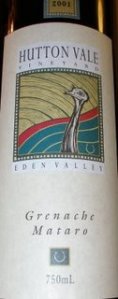
The fourth day we couldn’t get together until after the kid were asleep. So at 830 I came over with a bottle of Hutton Vale Vineyards 2000 Eden Valley Grenache Mataro blend I picked up for around $10 at the last Grateful Palate sale. Hutton Vale is one of those wineries GP dropped over the summer, and if this wine says anything about what they produce, it was a mistake! It came in red tissue paper with s sticker closure and the wine was sealed in red wax. Very classy presentation! I also chose it because Imre and I had some very unimpressive and bland Coppola Tempranillo the night before (regularly $16 on sale at Vons for $9) and I’d raved to him about how much I enjoy GSMs which he was unfamiliar with.
So the Hutton Vale Grenache Mataro I figured would be perfect for the task–something wonderful as we edited the video.
And I was right! From the first sniffs to the last sediment filled sips, the wine was quite a pleasure. The nose had that funny musky rich Mataro thing with some sage thrown in going on which at first raised Imre’s eyebrows but then he settled right into it happily and with amazement. The grenache gives the mataro a fine balance with its spicy fruitiness. It was so good that I’m practically desperate to go find more!
The wine lasted through three hours of editing, then we called it a night and I headed home with the empty bottle and a promise to get more!
On the fifth day, we worked about 12 hours on it, on and off during the day. We stopped for a pizza and I picked up a bottle of Ecco Chianti (regularly $12,on sale for $8) and we were all unimpressed–the memories of the Hutton Vale too strong on our palates! About midnight we finished and ready to upload when Imre started having trouble getting it to be the right size without distortion. It took over 3 hours to get it right, then I headed up to post it on the site–at 4am! Unfortunately a day or so later, it was rejected –some sort of YouTube problem and they asked me to resubmit. Back to the drawing board with Imre and another 3 hours down the tube trying to get the right size without distortion. Another late night ensued for me when the site went down for maintenance when I was ready to upload it! Finally I heard the news that it was accepted and live. Because the site gets so bombarded, it is easiest to watch it on YouTube in HD:
Now just waiting to hear whether I make the 50 shortlist!
Go here to read a review of the 2001.
Greening Valentine’s Day with organic treats, homemade gifts & local, sustainable, organic, biodynamic wines of course!
Even though Valentine’s Day screams RED: red roses, red foil chocolates, red sweaters, red hearts, and RED ink in your checking account, GO GREEN and SAVE GREEN this year! Turn your Valen tine’s Day GREEN with some of these tips from LIVE Earth: Save a Little Love for the Planet on Valentine’s Day (photo by LA Green Girl). Wine Predator’s additional tips and commentary are in bold and italics.
Valentine’s Day is fast approaching! February 14th is Saturday and you want to be prepared, but while you’re at it why not show some love for the planet too. It doesn’t take much to green your Valentine’s gifts and festivities. You will be surprised at how much love you can spread around the world. Here are some great tips you can use to show your loved one you care about them, and the planet.
1. So you’ll want a card to go with the wine. Buy valentine cards from local artists who make greeting cards out of recycled material.
 Most art galleries feature a selection of cards by local artists: around here, I find my favorites at Farmer and the Cook in Meiners Oaks by a local cycling activist artist or at Buenaventura Art Gallery on Fir by the Post Office. Or download my kisses poem and send me a donation; you could also send your loved one a link to my Kisses poem (and show me a little link love too while you’re at it by linking to Kisses on your site!)
2. Make your own valentine cards with recycled items and things from nature such as dried flowers, satin ribbons, fabric hearts.
Try going to the beach or the snow and handwriting your message! Photo the message and send it to your loved one! Or print it out!
3. If you like to enjoy your wine by candlelight, use eco-friendly fragrance free candles. Beeswax or vegetable based candles that are biodegradable and smoke-free are a good choice.
Beeswax candles also clean and clear the air of pollutants and they smell wonderfully while they burn. I find mine at our local farmers markets; I keep them near sunlight so as they warm during the day, they exhale a rich sweet scent.
4. Choose wine or champagne that’s organic, biodynamic, or sustainably produced. If there is a vineyard near, buy from there. You will be supporting a local business, cutting down the use of packaging for shipping and probably saving some money too.
 Organic isn’t the only GREEN wine around–look for biodynamic wine or wines produced from sustainable vineyards, wineries and businesses.
One “green” red I enjoyed recently over New Years weekend in Joshua Tree is RN13 Vin de pique-nique which indeed is perfect for a Valentine’s Day picnic! Made from 40% cabernet, 40% syrah, and 25% grenache (and sometimes mourverde) grown organically in the south of France (Languedoc-Roussillon), the blend brings out the best of all three–it’s a spicy, silky, full bodied, full of fruit, full of fun!
I found the wine in Joshua Tree for $15 at a funky little cool cafe and shop on the corner across the street from the strip mall in Joshua Tree where you’ll find a thrift store and a natural foods market. We enjoyed it during a cloudy, wind whipped sunset in Joshua Tree and with a dinner of bolognese, salad, and stuffed portabellas. If you’re not in the neighborhood of Joshua Tree NP, try a Whole Foods Market.
The unusual way it’s bottled makes it easy to reuse as well! And each time you reuse the bottle, you will remember your special “picnic”!
Yesterday at a Santa Lucia Highland’s tasting in LA I tasted dozens of wonderful wines–mostly chardonnays like Bernardus full of character and pinots like Belle Glos with its lipstick red dripping cork seal and amazing nose plus a few intense syrahs like Wrath or Novy’s 2006. I also discovered Hahn’s sustainably grown wines. Unfortunately, by the time I made it to their table, they were packing up. They did give me some seeds which they use as a cover crop and we will plant for Valentine’s Day!
You’d be surprised how many biodynamic, organic and sustainable wines that are being made in the US these days and beyond! Go here to learn about biodynamic wines from Quivira in the Dry Creek Valley of Sonoma.
You’d also be surprised at the number of wineries scattered across the country; I know I am! I’m lucky since in my backyard I have world-class wine and winemakers like Manfred Frankl of Sine Qua Non and the up and coming Michael Meagher at Vino V, and long-time local winemaking guru Adam Tolmach at Ojai producing wine from grapes typically sourced within 50 miles of my house.
5. For dessert, buy Organic or fair trade chocolates treats, (if you can buy from companies whose profits go to helping endangered species) or make your own chocolate treats with organic chocolates, nuts and fruits.
 Making your own customized chocolate treats like chocolate dipped strawberries with pecans really is easy! Finding organic strawberries this time of year is simple also since now is when they are really coming in season. While my favorites “Harry’s Berries” aren’t certified organic, the family follows sustainable and organic practices. You can find a recipe here.
Tistrya Merlot 2000: worth finding!
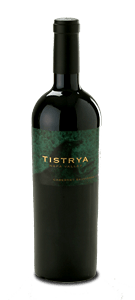 I mentioned the other day at Big Lots I took a risk and splurged $10 on a bottle of 2000 Napa Valley Tistrya Merlot. Forget that I’ve never heard of Tistrya and I’m not a huge fan of merlot. Forget that it’s $10 — at Big Lots. Forget that we have plenty of wine right now.
What made me forget all this was the beauty and weight of the bottle. Not the label which is a dated looking dark forest green marble–but the bottle itself which shaped and heavy like Twisted Oak’s The Spaniard but heavier than Chris Ringland’s Ebenezer shiraz.
This is a bottle of distinction. Someone cared enough for this wine to put it in a really really nice bottle–a merlot even!
While the majority of the wine at Big Lots is under $5 (and often not worth $5–save your receipt!), more expensive wines –and sometimes excellent values like last month’s Jamieson Canyon 2002 cab for $4–do show up. They rarely tempt me. It’s too risky. But this time I decided to risk it-this bottle was calling me, calling my name: “Wine Predator, Wine Predator!! Then whispering and moaning a little. I quickly grabbed the bottle and we left. I prayed I hadn’t just spent $10 on a wine for mulling (recipe up soon!)
Once home, I began searching out info on the wine: nothing nothing nothing NOTHING! The website listed on the bottle and above is MIA. I did find some info on a Tistrya cab and a $75 price which made me more optimistic about my purchase.
As soon as I mentioned the Tistrya here, I started having fellow Wine Predators turn up searching for info. I knew I wasn’t the only one curious about the wine, and I knew I needed to try this wine and soon–I had a responsibility here to my reading public: inquiring winos want to know!
Last night, we brought the Tistrya Merlot to dinner at friends. The impressive bottle did its job: Dave was definitely impressed and eagerly opened it up, letting it breathe while he gave us a tour of Bea’s new house. About 45 minutes later, he poured and with a little trepidation, I tasted. “This is really good!” said Dave. “I like this,” said the Big Monkey. “Wow,” I said, “I need to go get more of this!”
Fellow Wine Predators, rejoice! Here is the prognosis: Tistrya Merlot 2000 is DEFINITELY worth every penny of your $10!
Immediately go to Big Lots and buy some of this wine. It’s an impressive wine to bring to dinner or a party, and it’s plenty soft and mild, with pleasant fruit and nice garnet color, enjoyable without food, or with dinner–we had it with a roast, roasted vegetables, curry pumpkin soup, and rosemary bread.
Anything but merlot? Not at this price! Not for this wine!
Compare & Contrast: 3 Old World Reds under $10 with New World Reds under $10
As a native Californian who cut her wine tasting bicuspids in Napa, Sonoma, and Mendocino while going to college in the Bay Area, then worked in the tasting room at Ridge Winery in the early 80s and who now lives just south of the thriving wine regions of the Central Coast, I am most familiar with and partial to California wines.
Why bother with wine from anywhere else when California wines are so abundant, so inexpensive, so tasty and easy to find at Trader Joe’s, Vons, or The Ventura Wine Company?
All that changed when I started going to the Grateful Palate Warehouse sales two years ago and ventured into the wild and wonderful world of Australian wines, especially shiraz, and I discovered I love GSMs. At their warehouse sale prices, I became spoiled drinking much better quality wines in much bigger quantities.
At the Wine Bloggers Conference, I had the opportunity to taste not only plentiful pours of local Sonoma wines, but wines from New York State, New Zealand, and really all over the world thanks to Doug Cook and others who brought wines to share. Most of these wines were priced around $20.
Since much of the conversation around wine blogs recently has related to Chilean red value wines under $20 (see here for a list of posts), and how Chilean wines are such a great value in comparison, I found myself asking: in comparison to what? In my opinion, there are plenty of California cabs at around $20 which are better than the 2006 Casa Lapostolle “Alexandre” I tasted over the past few days and I know California cabs I’d prefer to spend my $10 on than the 2006 Santa Rita Reserva.
So in comparison to what? I asked myself again. To European wines at the same price point?
To answer that question, I investigated three old world wines easily found on the internet for around $10: a 2003 Raimat Tempranillo, a 2006 J. Vida-Fleury Rhone blend of Grenache and Shiraz, and a 2006 Chateau Nenine blend of Merlot, Cab Franc and Cabernet Sauvignon.
I liked the Tempranillo. A lot. I would definitely buy this one. In terms of my Wine Predator scale,
5-8………. Terrible; Lose the Trail
9-11…….. Emergency Rations
12-14……. Worth Drinking
15-17 ……..Worth Finding
18-20 ……TRACK IT DOWN!
it scored 17 and it deserves to be FOUND again! It was great with appetizers of various pizzas, cheeses, and grapes, and the gathering drank it up quickly.
Unfortunately, the Rhone wine, at 12 points, as much as I wanted to enjoy it, was barely WORTH DRINKING. It tasted thin, and flat. The Bordeaux fared a bit better, with a score of 13, but it wasn’t too exciting either.
The Chilean Santa Rita, as you may recall, scored a 14 the other day; last night it was clear to us that this was a better wine and a better value than the two French ones. Unfortunately, we finished the Tempranillo before I could taste it again and compare it with the Chilean Santa Rita! I would say that is suggestive! How much can be contributed to the Tempranillo being 3 years older, and other factors, remains to be seen, however.
Last night, over steaks, we drank the 3 “value” reds along with the Casa Lapostolle; at this point, it had opened up into a lovely, personable, pleasurable wine, and the Casa Rita was very serviceable while the two French wines were only that: French, and with significantly lower alcohol levels (which we did appreciate). Yes, I’d chose them over $2 Buck Chuck, but next time I think I’d take my $10 and spend it on another wine.
Sigh. Now that I think about this experiment, I am wishing I’d opened up the Chateau Greysac 2001 I picked on clearance for $14 (regularly $20) to compare with the Casa Lapostolle…
Oh well, another day!
 wine predator.............. gwendolyn alley