What can make French wine confusing to newcomers is that often the name of the grape inside the bottle is nowhere to be found on the outside of the bottle.
That means to know what grapes are inside the bottle you have to know what is grown in the region named on the bottle.
While wine grapes may be grown throughout the world, it is France that many consider the most important country for wine. Ever since the Greeks cultivated grapes in Gaul (France) in the 6th century, for over 2,000 years, growing grapes and making wine has been an important aspect of life in France. Wine grapes are grown throughout the country with 7-8 million bottles produced every year making France the number one producer of wine by volume in the world.
Did you know that most of the well-known grapes grown globally are actually French in origin? Continue reading →
You have until midnight Eastern time or 9pm Pacific time TODAY Monday January 13 to comment about the proposed 100% Trump Tariffs against food and wine from the EU that might start as early as TOMORROW Jan. 14.
calling to complain: SO PLEAE Call YOUR senators and representatives and urge them to pressure the Office of the US Trade Representative to reconsider their proposed tariffs
Yes, some of these tariffs are 100%.
If you like wine, BUY, and enjoy cheese, olive oil, and so many other food products,
this will devastate YOU.
Because it will cost you so much more to buy the food, wine, and spirits products you love. AND it hurts many Americans who are in the import business– Americans who are your neighbors.
How did 2019 go by so fast? is it really 2020 — time of vision past and future?
I’d like to celebrate all three of us — Larry, Matt and ME, the future and the past plus any other Capricorns along for the ride…
and I’d like to ask for your support. Because this was not a typical birthday for me…
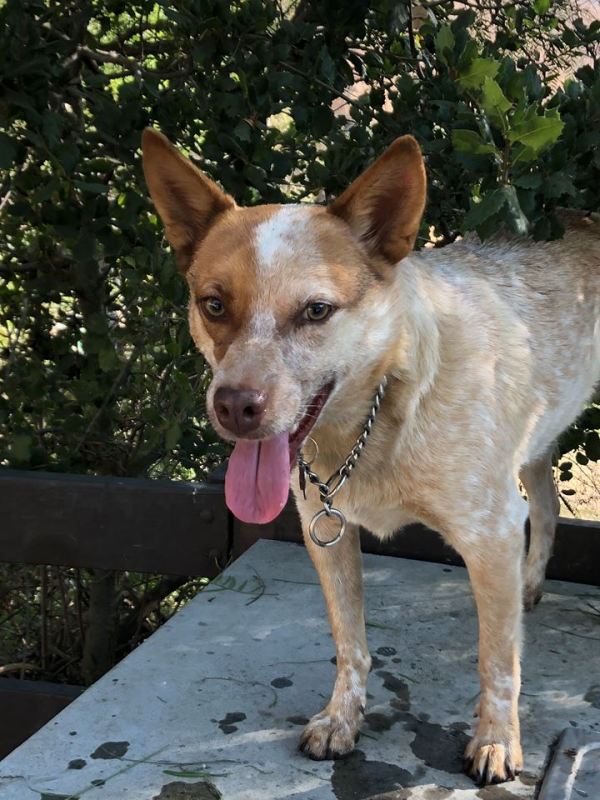
On Wednesday, my dog Cisco was hit by a car as I was on my way to a pre-birthday celebration; 24 hours in the ER later, we owed $2.5 k AND he still needs between $2-6k in treatment to fix his displaced hip. He’s in a great deal of pain. I spent most of my birthday taking care of and cleaning up after him. Continue reading →
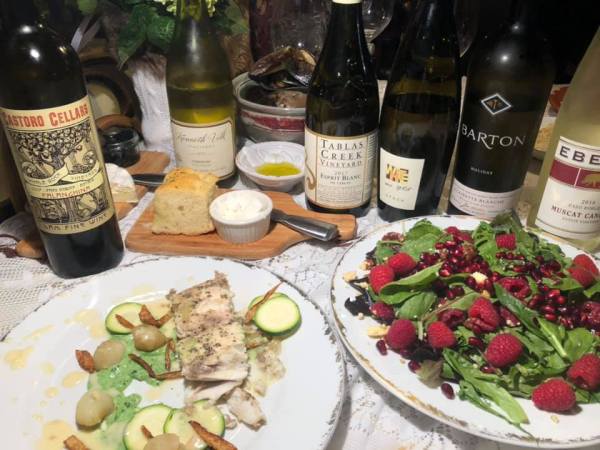
Castoro 2017 Falanghina CCOF estate
ITALY: white grape; sample
Kenneth Volk 2012 Verdelho
PORTUGAL: white grape; purchased
Barton 2017 “HOLIDAY” Clairette Blanche
FRANCE: Rhone white grape; sample
Epoch 2018
FRANCE: Rhone white grape blend: grenache blanc leads–
biodynamic; Sue purchased at winery
Tablas Creek 2017
FRANCE: Rhone white grape blend; Rousanne leads; sample
Eberle 2018 Muscat canelli
GREEK/ITALY: Greek white grape but most well known as Italian
Answer: These wines are all from Paso Robles CA and all might be considered wines made from “god-forsaken grapes” — grapes that are not common or unexpected in their home country AND not likely to be found outside their home country where they might not be all that appreciated either. And that’s the theme for this month’s Wine Pairing weekend prompt hosted by Culinary Cam– “godforsaken grapes” — a title that I hate that goes with a book I haven’t read but that I understand is quite entertaining and well written.
As people think first of red wines when think about wine from Central California’s Paso Robles if at all, we thought it would be fun to feature these uncommon and unexpected yet delightful white grapes from this less well known and under-appreciated region that is best known for its zinfandel, syrah, and cabernet blends — wines that are rich and red and often high in alcohol because so much of the AVA gets really hot in the summer.
Tablas Creek, Halter Ranch, Turley, and Justin are some of the better known labels with the first two of them focused on Rhone, Turley with zinfandel, and Justin with Cabernet and other Bordeaux red grapes.
2020 is barely a week old, but as I’m calendaring the year’s prompts for #ItalianFWT, #WinePW, #Winophiles, winemaker lunches and trade tastings in LA as well as other activities like the Wine Media Conference in Oregon and wine travel to Europe and South America, I’m reflecting on what we accomplished here on Wine Predator in 2019– and trying to decide what to submit for the Born Digital Awards (see what articles I submitted to the Millesima contest here).
I’m not really sure how we found the time, but Sue and I participated in EVERY SINGLE monthly prompt for Italian Food Wine Travel aka #ItalianFWT, Wine Pairing Weekend aka #WinePW, and the French Winophiles #Winophiles.
Time’s always moving on. Nothing can stop it. The question is whether we use our time well or not. We can't do anything about the past, but what happens in the future depends on what we do now. We can create a happier future by remembering that in being human we are all the same.
We joined wine bloggers and influencers from around the world but mostly from the US as we tasted and wrote about wines together following prompts that the group developed and organized sometimes with samples, and sometimes not.
Here on Wine Predator, that means 36 posts altogether at 15-20k words each! That’s the word count of a good sized book!
For almost every single article, I researched the region, the wine, the winery, and Sue and I both researched the cuisine to come up with menus and pairing ideas. Continue reading →
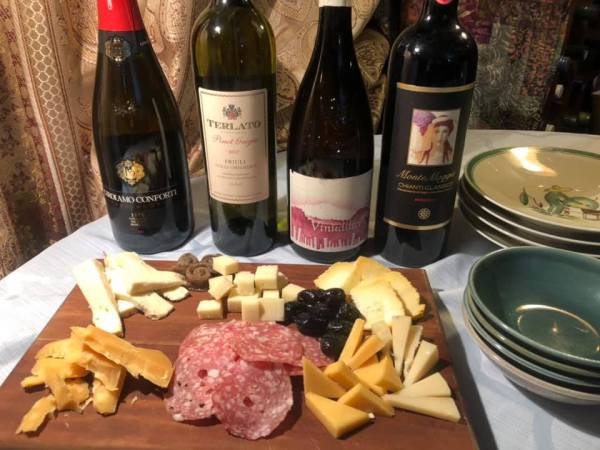
From Franciacorta in the north in Lombardy and Friuli in the northeast to Toscana in central west and Sicily in the southwest, Italy is full of wines to discover. With over 2000 indigenous grapes grown in the 20 regions, the range of wines and expressions makes getting to know and understand Italian wine an interesting challenge as I discovered last year during the VinItaly Wine Ambassador Course.
Think it’s time to tune up your Italian wine game in 2020?



 wine predator.............. gwendolyn alley