
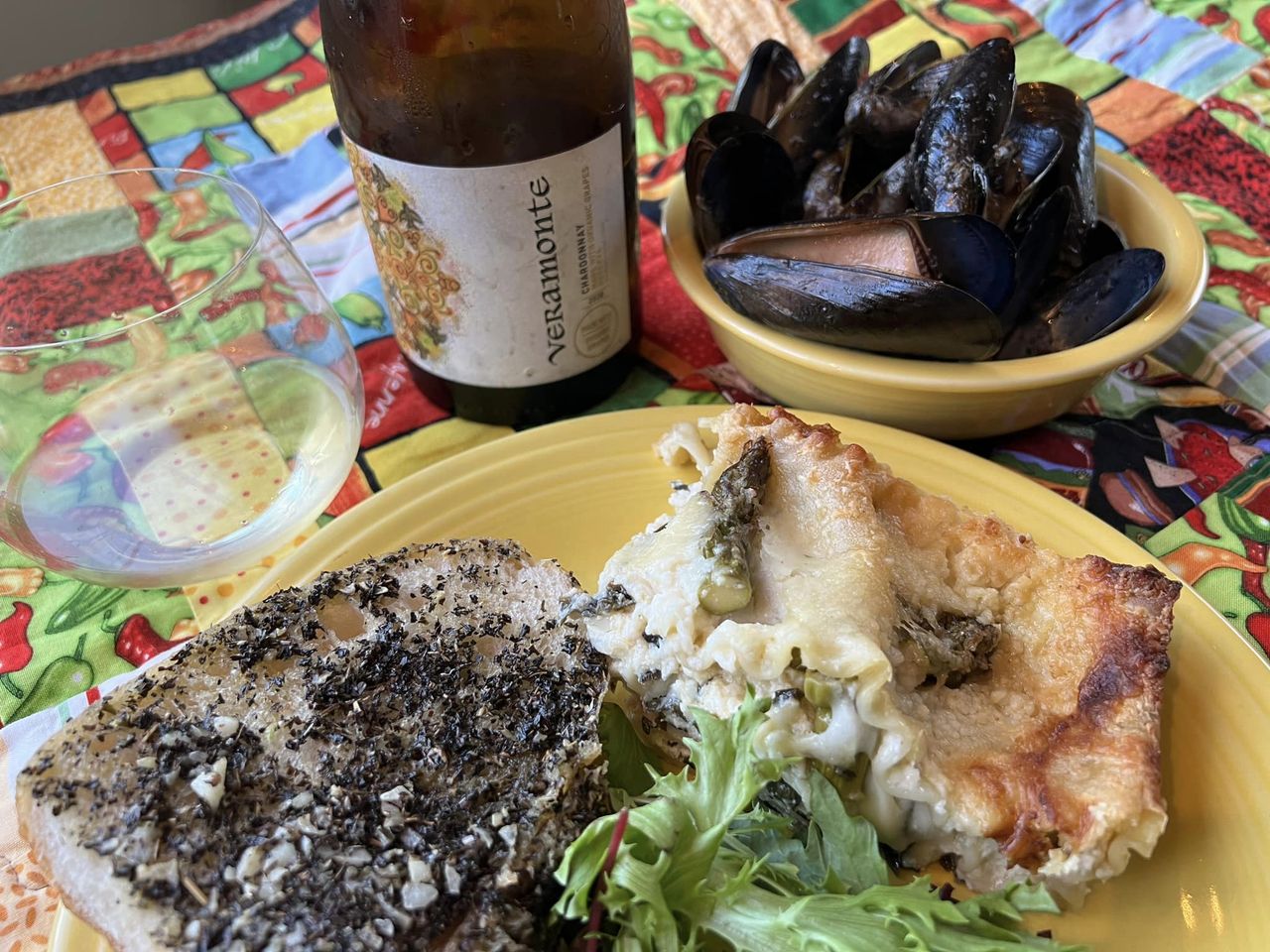
Organic Veramontes Chardonnay from Chile’s Cool Coast
What’s terroir and why does the land on which a particular product grows affect its quality and valued? How might Chardonnay from one place differ from another? That’s a challenge we took last month in advance of Chardonnay Day when we compared four from around the world, writing about the wines from Bourgnogne, Oregon, and Czech Republic here. and saving the notes about Chile’s organic Veramontes for this post when this month the World Wine Travel writers are focused on wines from coastal Chile (see below); read Martin’s invitation here.
Long slender Chile’s distinct topography has 3,000 miles of coastline, so no matter where you are in Chile, you’re never further than 100 miles from the sea! The icy Humboldt current flows north along the coast and the ridge of the Andes lies along the Eastern edge, with desert to the north and polar regions south, creating cooler climate conditions than what one might expect.
Veramonte, located in the Casablanca Valley, deems organic farming practices”essential for helping the planet and the people” so the grapes are grown without pesticides, herbicides, or synthetic fertilizer. On Friday, April 21, 2023 Viñedos Veramonte Gonzalo Bertelsen, Head Winemaker at Viñedos Veramonte and Viña Neyen de Apalta, participated in an Earth Day panel discussion to discuss the importance of terroir with Yao Zhao of 50Hertz Tingly Foods, Brian Ralph of Bona Furtuna, and Shunan Teng of Tea Drunk. The group discussed terroir and “why the land on which a particular product grows affects its quality and valued.” They also discussed “climate-related issues each niche terroir faces” and they are working towards sustainability. Learn more about their ideas about terroir and sustainability practices in this Earth Day 2023 video above.
Chardonnay is considered a neutral grape that is highly influenced by winemaking practices. We found that the key when it came to comparing the four chardonnay from four regions (Eastern Europe, Western Europe, the Pacific Northwest, and Chile) was the approach in the cellar with regards to choices about using oak, Malo-lactic fermentation, stainless steel et cetera. However, we did find some distinct notes of green aromas and flavors as well as high acidity in the Chilean wine.
While so far I’ve only visited Chile virtually and through my glass, I have applied to attend an ampelography workshop there in December. Wish me luck in getting in and getting the trip sponsored! I came close this year when I was a finalist and made this video:.
Curious about the wines from Chile and how to pair them? I’ve written a lot about them, including the following articles which explore various regions of Chile, wines, and pairings.
- 2019 Ritual Organic Sauvignon Blanc, Casablanca
- 2018 Terranoble Gran Reserva Cabernet Sauvignon, Valle de Colchagua
- 2017 Primus: The Blend, Apalta, Valle de Colchagua
- 2019 Concha y Toro Gran Reserva, Malbec DO Marchigue
Read about Cabernet Sauvignon from Chile here paired with blue cheese burgers,.
Read about Chile’s biodynamic Matetic Sauvignon blanc from the coast here.
Read more about favorite foods for four Chilean Sauvignon Blanc here.
Read about Carmenere from Chile here.
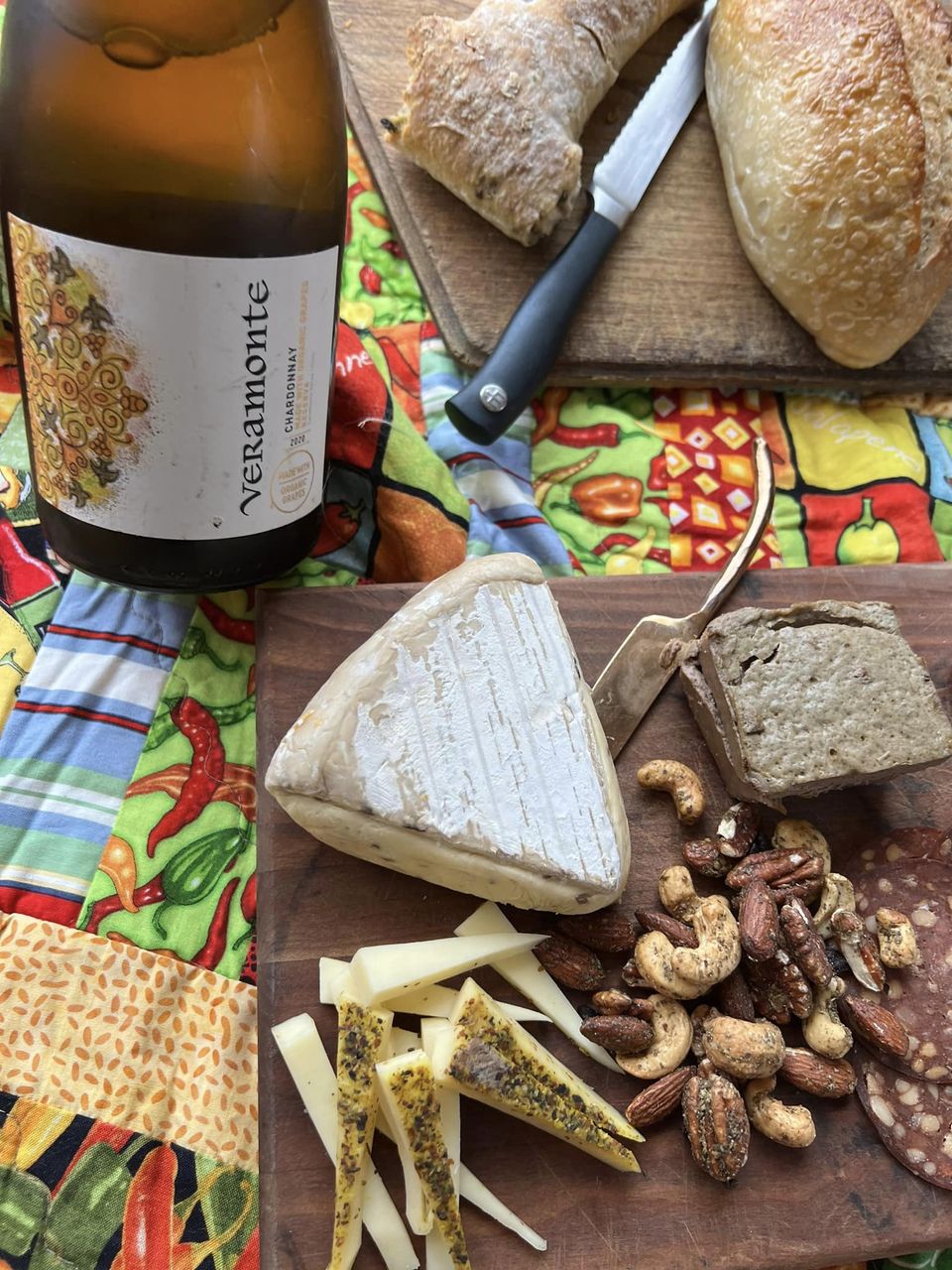
2020 Veramonte Chardonnay, Casablanca Valley, Chile loves all the flavors on this board but especially the mole salami!
2020 Veramonte Chardonnay, Casablanca Valley, Chile
ABV: 14%
SRP: $12
Grapes: organic Chardonnay
RS: 1.7 g/l
Acid: 6.0 g/l
Importer: Gonzalez Byass
sample for my review
Whole cluster pressing of the organic grapes adds structure from the stems, then juice spends a day on skins before racking. Neutral oak barrel ferment with wild yeasts for part and the rest is in stainless steel tanks. Spontaneous malolactic fermentation of 30% brings out creaminess. Perhaps the toasted oak notes on the palate come from the addition of oak chips?
The bottle has a vibrant fun label and opens with a screwtop making it a good wine for beach picnics or summer concerts with charcuterie, a cheese sandwich, chicken salad, or seafood.
Appearance: Pale, lemon yellow, platinum rim, crystal clear.
Aroma: Buttered popcorn, a bit of mineral hot springs, earthen, coastal clay, more like a delta than the mountains, greenery, oak.
Palate: Creamy lemon curd, bright acidity, a bit of bitter greens on the back end, toasted oak.
Pairing: With food on the palate the expression of this wine is completely change so that we didn’t mind the oakiness. It was fabulous with the dijon fontenelle. I yearned for a grilled cheese sandwich using the dijon cheese and pairing it with this wine. The wine loves the herbs and a bit of kick that the cheese has. We absolutely loved the wine with our rich, creamy, spicy, mole salami. It made the wine so incredibly fruity and took away all of the bitterness from the wine. Chicken mole would work perfectly with the wine. Great with the spiced nuts as well. This wine really responds to herbs and spices. This is also a wonderful seafood wine, especially with richer dishes like shrimp scampi. It stayed quite fresh for several days as I experimented with pairings.

2020 Veramonte Chardonnay, Casablanca Valley, Chile
For more wines from coastal Chile, check out:
- 2017 Louis-Antoine Luyt ‘Cuveé Benoit’ + Maple-Chipotle Cedar Plank Grilled Salmon by ENOFYLZ Wine Blog
- A Sauvignon Blanc from the Leyda Valley + Gambas al Pil Pil by Culinary Cam
- Organic Veramontes Chardonnay from Chile’s Cool Coast: Pair with seafood — or try with mole sauce! by Wine Predator…Gwendolyn Alley
- Sauvignon Blanc from Casablanca Valley Hits the Spot by Avvinare
- Talinay Sauvignon Blanc from Limari by A Day in the Life on the Farm
You’re invited to join a chat on the topic on twitter at 8am Pacific Sat. June 24 by searching for the hashtag #worldwinetravel. We’ll be discussing the following (times below Eastern):
11:00 – Q1 Welcome to the #WorldWineTravel chat forJune 2023! From where are you tweeting? Introduce yourself and share a link to your blog. Use the #WorldWineTravel hashtag during our chat and, if you’re joining in live this morning, share a selfie if you like!
11:07 – Q2 For this #WorldWineTravel event, we’re talking about wines from Chile’s coastal and cool climate regions. Which coastal or cool climate region is your wine from? And what did you learn about that region?
11:14 – Q3 Tell us about the wine that you opened and poured for today. Is there anything noteworthy about its creation? What made you pick the wine that you did? Share a link to your tasting notes and photos, if you like. #WorldWineTravel
11:22 – Q4 Did you pick a winery who follows organic, sustainable, or biodynamic practices? Is that a big draw for you when choosing a wine? Why or why not? #WorldWineTravel
11:27 – Q5 Sauvignon Blanc is now the 2nd most planted grape variety in Chile. If your wine is a Sauvignon Blanc, how would you compare it to Sauvginon Blanc you’ve had from other regions? #WorldWineTravel
11:32 – Q6 What food did you pair with your wine? Share a link to your recipe and photos, if you like. #WorldWineTravel
11:39 – Q7 Did you think the pairing was successful? Why or why not? If not, what would you pair with the wine a second time around? #WorldWineTravel
11:45 – Q8 What are your takeaways from your experience with Chile’s coast and cool climate wines? Do tell! #WorldWineTravel
11:50 – Just a shoutout of appreciation to some of the #WorldWineTravel bloggers who participated today: @Culinary_Cam @artpredator @martindredmond @WendyKlik @vignetocomm @wineivore. Thank you!
11:55 – Q9 Any last comments/questions? Share a thought, comment, or question! #WorldWineTravel
 wine predator.............. gwendolyn alley
That is one of my favorite very affordable wine labels. Cheers.
LikeLiked by 1 person
Solid, consistent, and affordable for sure!
LikeLike