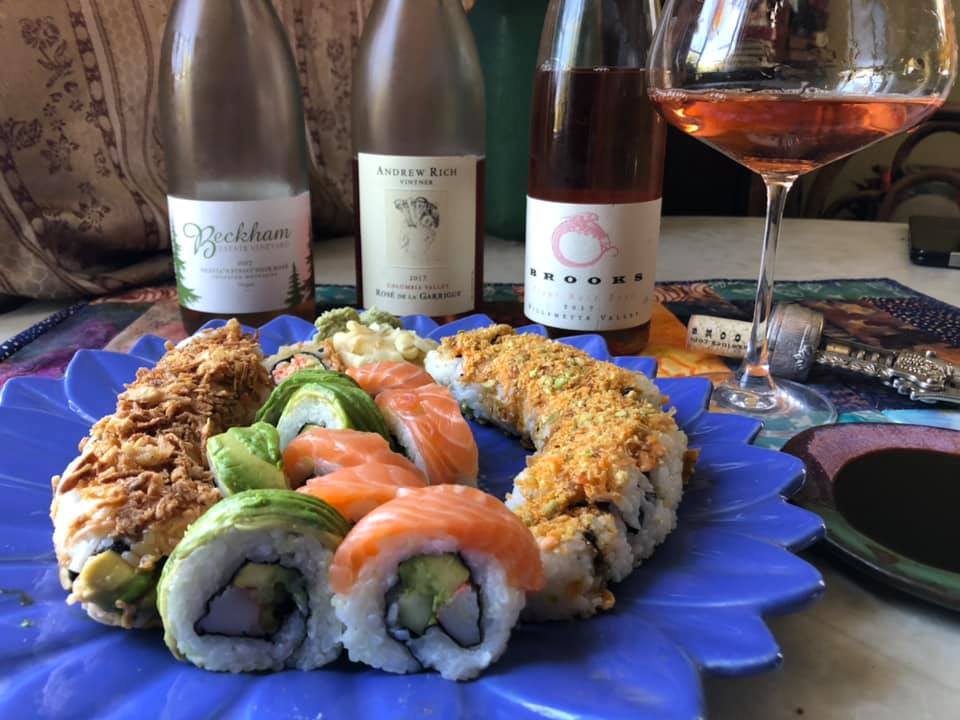
Three Rosé from Oregon’s Willamette Valley I purchased with an industry discount on a sponsored press trip.
With so many of us at home due to COVID-19 “shelter in place” policies and practices, I hear there’s been more day drinking going on!
One winemaker says that COVID-19 means “airplane rules” — you don’t judge day drinking in an airport because you have no idea what time zone people are from and what time it feels like to them! What’s breakfast time for you could be time for a night cap for them!
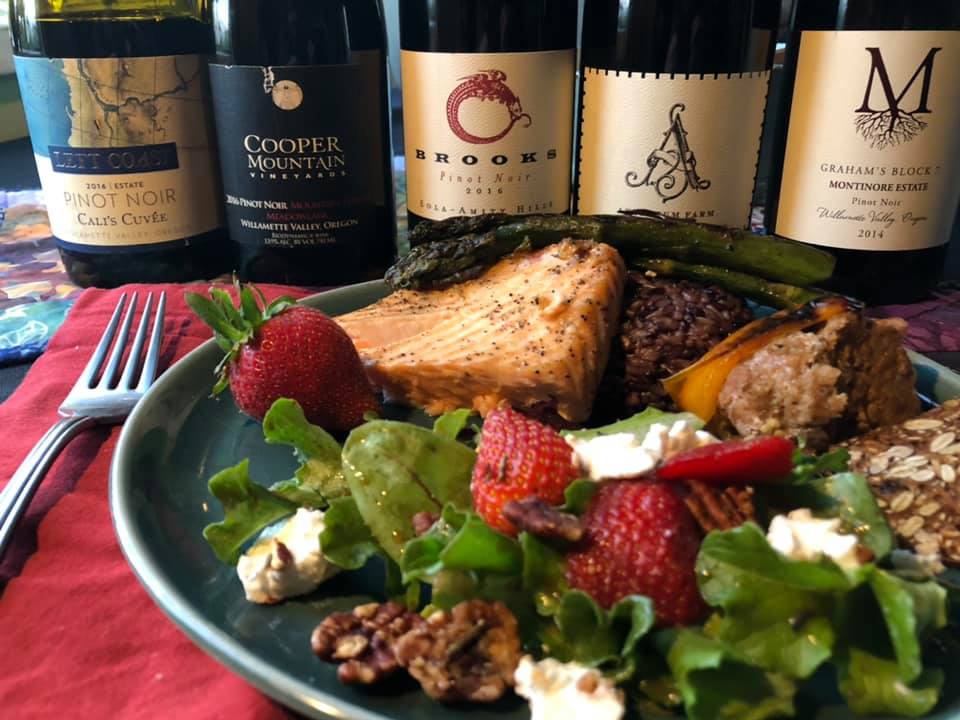
Biodynamic and sustainably grown Oregon Pinot Noir paired with fresh wild salmon from Monterey Bay and strawberry salad
As the country awakens from slumber, so does the countryside grow green and fragrant with flowers.
Wineries and vineyards, however, have not been sleeping: vines and wines have been cared for, and now winery owners and staff across the country are evaluating how they can reopen to the public and still keep everyone safe.
On Friday, May 15, Oregon’s governor opened up the state, but no gatherings more than 200 are allowed, which postponed the 2020 Wine Media Conference slated for late August in Eugene; it will now be in early August 2021.
“The timeframe for tasting rooms reopening still remains uncertain,” said Executive Director of the Willamette Valley Winery Association (WVWA) Morgen McLaughlin in a May 13 press release. “The Willamette Valley’s individual counties must submit a plan to the state government for final approval. Most importantly we are encouraging a gradual and thoughtful reopening of our region.”
In addition to frequent cleaning and social distancing, some changes to expect include:
Reservations.
Expanded outdoor seating areas.
Greeters to manage customer flow and monitor distancing.
The WVWA has created a new resource page related to COVID-19 where you’ll find wineries which have provided new protocols, contact details, and consumer information on their websites.
“When wine tasting rooms do open, we encourage consumers to call each winery for further information and details before visiting,” continued McLaughlin. “As much as the first few months may be far from business as customary, I have no doubt each winery will work hard to create the most authentic Willamette Valley experience as possible, with safety of guests and personnel our top priority.”
With vineyards, farmlands, coastline, volcanoes, desert, rangelands, and more, I look forward to visiting again because Oregon’s diverse landscapes make it one of the best places to experience spring, summer or fall! Continue reading →
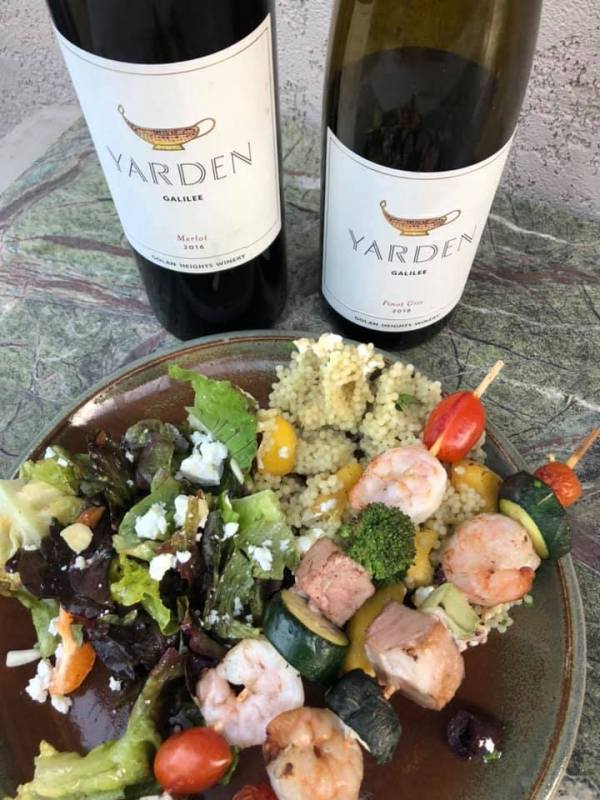
A beautiful oil lamp glimmers on the label of Yarden wines.
According to my friend Myr Slosberg, the oil lamp is significant because in Temple you have a light that’s above the Torah that’s always lit with oil. The light signifies the presence of God; the light is to always be lit.
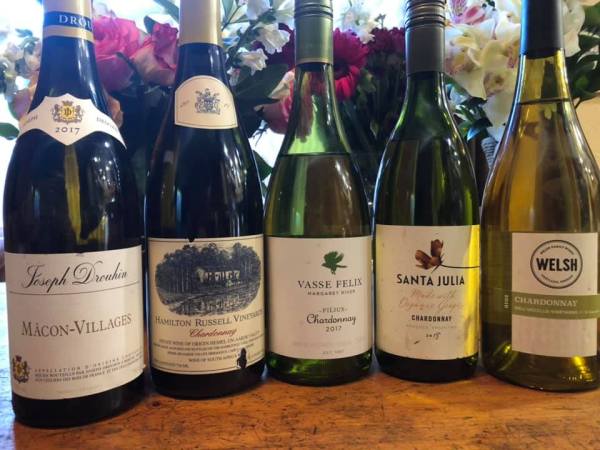
Chardonnay is made– and made well– around the world; here are representatives from Europe/France, Africa/So. Africa, Oceania, Australia, South America/Argentina, and North America/Oregon. Scroll down for tasting and pairing notes.
Just because we have to shelter in place at home doesn’t mean you can’t celebrate Chardonnay Day May 21 because all you need is a bottle of Chardonnay to do it! And doesn’t everyone have at least ONE bottle of Chardonnay in cellar if not in the fridge?
Or you can do like we did and celebrate it by traveling literally around the world from home here in North America to taste wine from five countries on five continents!
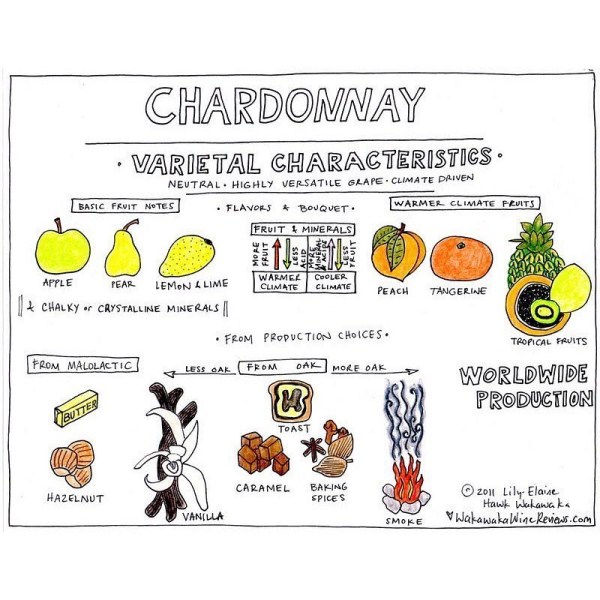
Back in 2011, Elaine Chukan Brown of Wakawaka Wine Reviews drew this informative illustration about Chardonnay:
“Hands stained from dirt and fruit, aches through your back and legs. As farmers, we’re looking for good soil. You can feel its texture, you can cup it in your hands and smell it.
“This isn’t dirt, this is soil: it’s alive, it has a lot of distinctness from one place to the other. It’s a unique opportunity to use our skills as good farmers on pieces of land that are rich with history and flavor.”
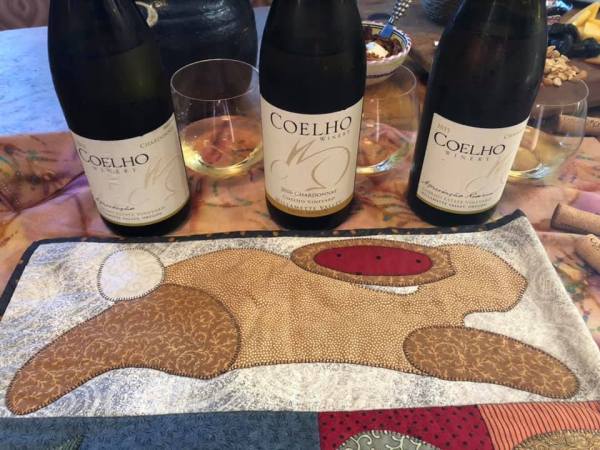
Since 2016, Coelho’s winemaker Chris Bertsche handles all aspects of wine production by saying “No problems, only solutions.” Chardonnay is winemaker Chris Bertsche’s go-to varietal, but with many of Pinot Noir and only 1.5 acres of Chardonnay, it’s clear that Coelho as a winery is really serious about Pinot Noir as well. Continue reading →

 wine predator.............. gwendolyn alley