
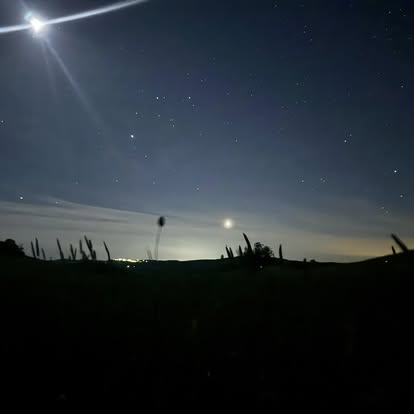
Tuscan evening spring walk with fireflies and moon May 21, 2026
As I write this, my fingertips slightly stained by mulberries picked fresh off the tree, I sit in front of wide open double doors enjoying the evening air which offers hints of hay and the hot springs of Saturnia in southern Tuscany. A deep sniff might reveal a whiff of lavender, elderberry, honeysuckle. The waxing moon heads toward the west casting a faint illumination over the hills. The lights of Montemerano glow in the distance above me while Saturnia is up the steep hill behind me. The fireflies dance in the grass to the music of the owls, crickets, and other night beings.
People have lived here in community with nature for thousands of years, and the night sparkles with life– human, insect, bird, plant, mineral even. I could do without the mosquitoes and their bites which leave me so itchy, but they feed the birds which I love listening to and watching as they flit from tree to tree or soar above me. It’s all a cycle of life.

International Day for Biodiversity 22 May 2026
In the midst of all this natural beauty, I am contemplating International Day for Biodiversity held annually on May 22. Last year, I wrote about visiting the regenerative organic vineyards of La Maliosa which teem with biodiversity. This year, I want to focus on Carlo Petrini, because on the eve of International Biodiversity Day, Carlo Petrini, founder of the Slow Food movement, died. I want to celebrate both with a recognition of the important work of those protecting global biodiversity as they grow good, clean, and fair food for all.

Carlo Petrini, founder of the Slow Food movement which begat the Slow Wine guides
As an Environmental Studies major at UC Santa Cruz, and then as a graduate teaching assistant in upper division Enviromental Studies classes, I learned about Carlo Petrini’s protest of a McDonald’s fast food restaurant in Rome near the Spanish Steps in the heart of the city in 1986. We studied how his activism and his manifesto transformed the world by recognizing the importance of a snail’s pace– slow and steady.
“We are enslaved by speed and have all succumbed to the same insidious virus: Fast Life, which disrupts our habits, pervades the privacy of our homes and forces us to eat Fast Foods.” Slow Food Manifesto, 1989
Instead of fast food, he advocated “slow food.” Instead of rush rush rush to get finished faster, he reminded us of the value of growing and making the food and drinks we consume slowly, and with care for the earth and each other.
“In the name of productivity, the ‘fast life’ has changed our lifestyle and now threatens our environment,” wrote Carlo Petrini in the Slow Food Manifesto. There is value in taking our time.
In 2021 and 2022, I wrote for the Slow Wine guide which evolved from the Slow Food movement to become an important way to find wine that is “good, clean, fair.” I wrote about Slow Wine and Slow Food for Edible Magazine in 2022, and I organized and led a panel on Slow Food and Wine at the Wine Media Conference in Italy which included Carmen Wallace who works for Slow Food and once worked as the administrative assistant to Carlo Patrini in the early days of the Slow Food movement in Bra, plus winemakers Luca Formentini of Podere Selva Capuzza in Lugana, Antonella Manuli of Fattoria La Maliosa in Maremma, Francesca Petrussa of Vigna Petrussa in Friuli. In 2022, I also won the Jancis Robinson Wine Writing Contest on Regenerative Agriculture; find the link to my winning essay here. Clearly this topic of biodiversity is near and dear to my heart.
Wine that is “good, clean, fair” means it is grown without pesticides and herbicides, and while it doesn’t have to be certified as such, that certainly makes it easier to advocate for its inclusion in the Slow Wine Guide, whether in Italy or in the US .
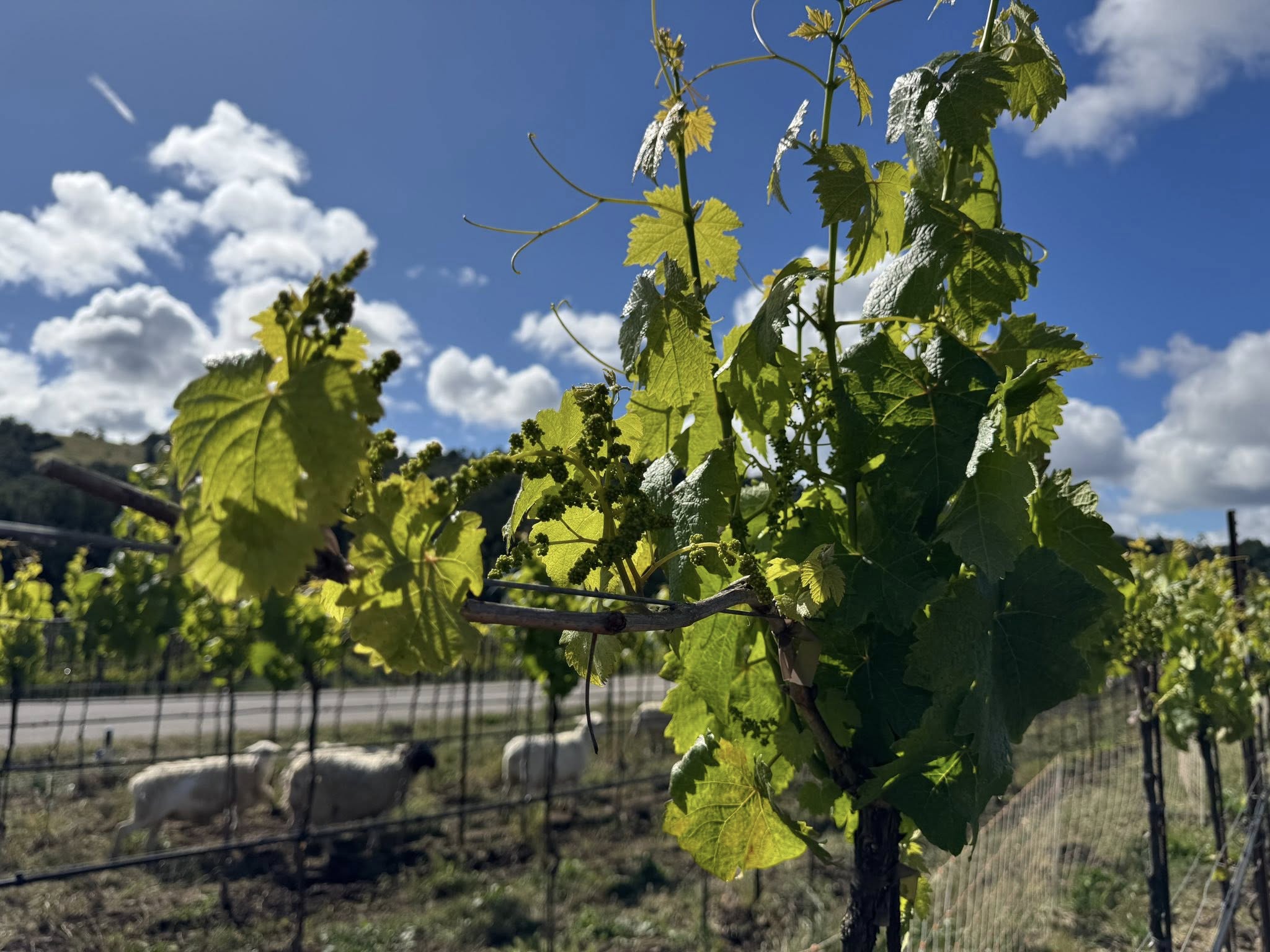
grape vines grow high about the sheep at Halter ranch April 2026
While some debate which form of certification is the most impactful, and the benefits of pursuing any of them, I recently returned from several days learning about Regenerative Organic Certified at wineries in Paso Robles where there are six such wineries: Booker, Halter Ranch, Le Cuvier, Maha, Robert Hall and Tablas Creek, which was the first winery in the US to achieve ROC status, and now has the highest certification– Gold. To me, there is no debate: ROC certification is a gold standard. The evidence is the work that these wineries are doing for the planet by farming not just sustainably but regeneratively, and it’s impressive to say the least. The wines we tasted are “good, clean, and fair” as well as delicious. Good for the planet and the palate! Research in France and at UCLA with blind tastings of certified wines show that they score higher.
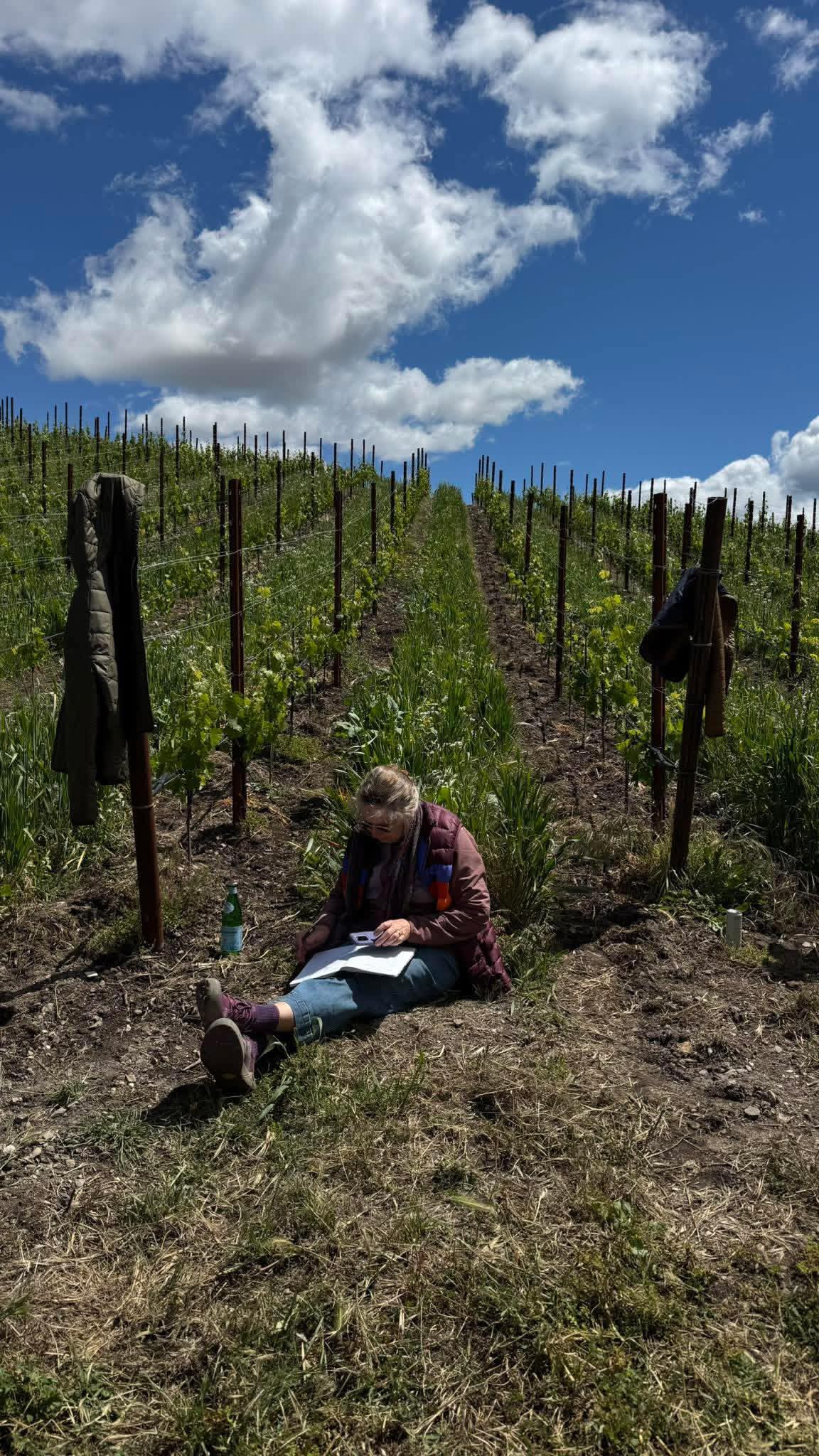
Gwendolyn Alley takes notes at Booker in Paso Robles, one of 6 ROC wineries
The International Day for Biological Diversity (IDB) is celebrated on 22 May annually to commemorate the adoption of the text of the Convention on Biological Diversity (CBD) on 22 May 1992. This observance proclaimed by the United Nations General Assembly provides an opportunity to foster wide support for the implementation of the Convention, its Protocols and related action frameworks. “Acting locally for global impact” is the theme of the 2026 edition of IDB.
As I wrote last year, according to FAOʼs “Third Report on the State of the World’s Plant Genetic Resources for Food and Agriculture”, genetic diversity is key to creating more resilient agrifood systems that withstand challenges such as shifting climate patterns. Since 80% of the food we consume is plant-based, preserving a wide range of genetic materials allows farmers to grow crops and varieties suited to their local environments, enhancing food security and livelihoods, states a Slow Food press release.
“Dedicated policies for agricultural diversity in the fields are absent in many countries or do not adequately involve all stakeholders,” says Edward Mukiibi, president of Slow Food, and a self-described seed farmer. “In all 128 countries that contributed to the FAO report, instead, the presence of informal seed systems emerged, consisting of farmers and local communities that play a central role in the conservation of agricultural biodiversity and in defending farmers’ rights. We need a legal framework that can sustain and grow agroecology, which offers a pathway for a transition towards sustainable food systems. We also seek support from institutions at all levels, to counter the serious risk to global food security.”
Slow Food founder Carlo Petrini loved to say “Those who sow utopia reap reality.”
Not only is this an inspiring sentiment, these are words that reflect his life. Dreams and visions, when they are just, inspire collective participation; he strongly believed and advocated that, pursued with conviction, we can achieve our dreams and visions.
So what wine am I toasting Carlo Petrini and International Day of biodiversity? Why a wine from a winery that is regularly featured in Slow Wine Guide of course! Tenuta Gorghi Tondi is an organic winery in Sicily that I visited in May of 2024, and which I will be posting more about soon along with some other need to know Italian white wines. In the meantime, here’s our tasting notes to whet your whistle or check out the Tenuta Gorghi Tondi website.
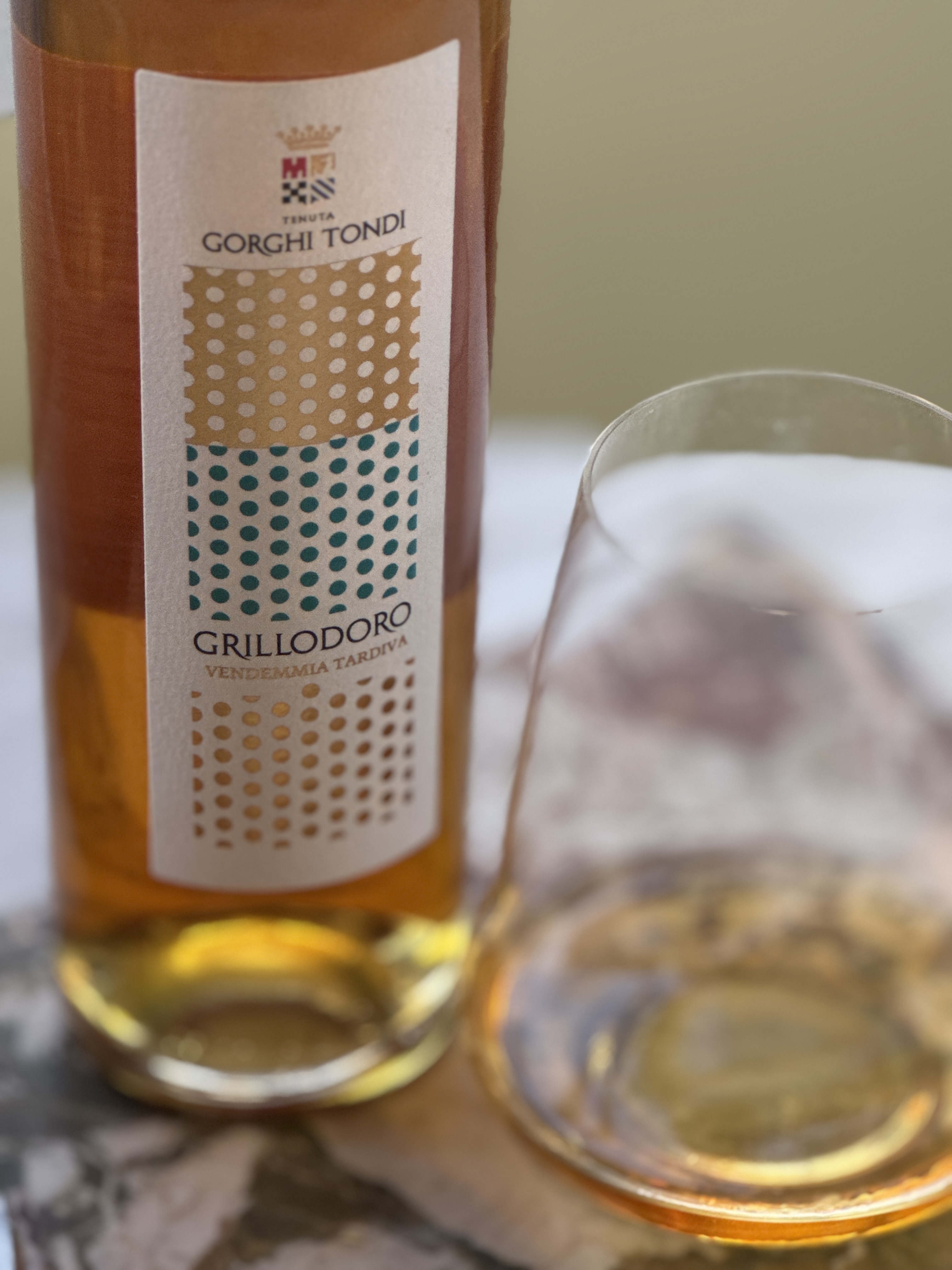
Tenuta Gorghi Tondi is in Slow Wine Guide
2020 Gorghi Tondi “GRILLODORO,” Sicilia DOC
ABV: 13.5%
SRP: $45 for 500ml
Grapes: Organic Grillo
Importer: ???
Gorghi Tondi may be an odd name for a winery! But the region’s rocks actually collapse and form these round craters which fill with water serving such an important resource for migrating birds that the area is managed as a nature preserve by the World Wildlife Fund — and in 2024 we visited it and walked down the trail to explore.
Appearance: Amber, sandlewood, daffodil rim, clear, bright
Aroma: Bee pollen, orange blossom, bees wax, almond paste, green almond, pistachio butter, buckwheat honey, very intriguing, lavender.
Palate: Wow, mouthwatering acidity, orange blossom, orange fruit, fresh honey, bee pollen, peach, nectarine, white stone fruit, yellow stone fruit, fennel, licorice, sage, thyme, bay; this is a very cleansing wine after a rich meal. The wine releases the flavors from the meal and reengages them for enjoyment.
Pairing: Very nice with the lemon ricotta cheese, so bright and flavorful together. Sue kept wanting to go back for more as it was absolutely heavenly. Great with the biscotti; the wine loved being the sweet one in the room and highlighting the semi-sweet cookie. Over the top combination with the cambozola cheese as the wine appreciated the creamy richness and saltiness of the cheese and added perfectly to the pairing.
We did this tasting just before I left for Italy, and even though I sent some home with Sue and some with Helen, I didn’t want to leave the remainder in California as I knew in a month it wouldn’t be as good. So I tested out my new Hydro Flask wine bottle which is lined in ceramic. I had received a sample before with a stainless steel lining but I could taste a subtle difference. Not so with the ceramic lining. I had my doubts about this experiment, and really wondered whether I was crazy to bring it on my trip. But here I am enjoying it with a very soft gooey gorgonzola DOP cheese I bought today, and wow oh wow. If we thought the cambazola was perfect, well this is just divine.
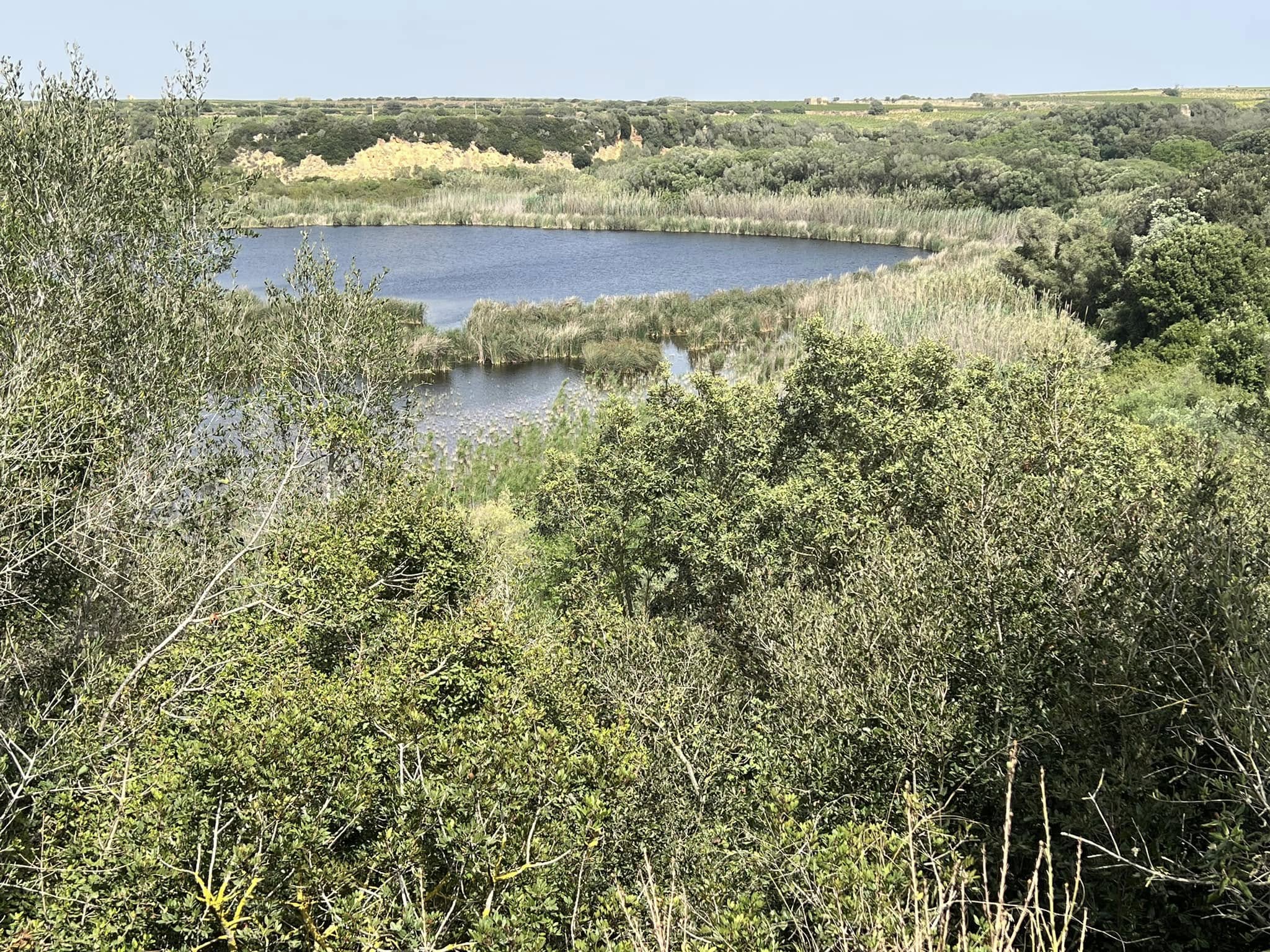
Gorghi Tondhi oasis
See more pictures from Gorghi Tondi and Palermo in this reel on Instagram.

