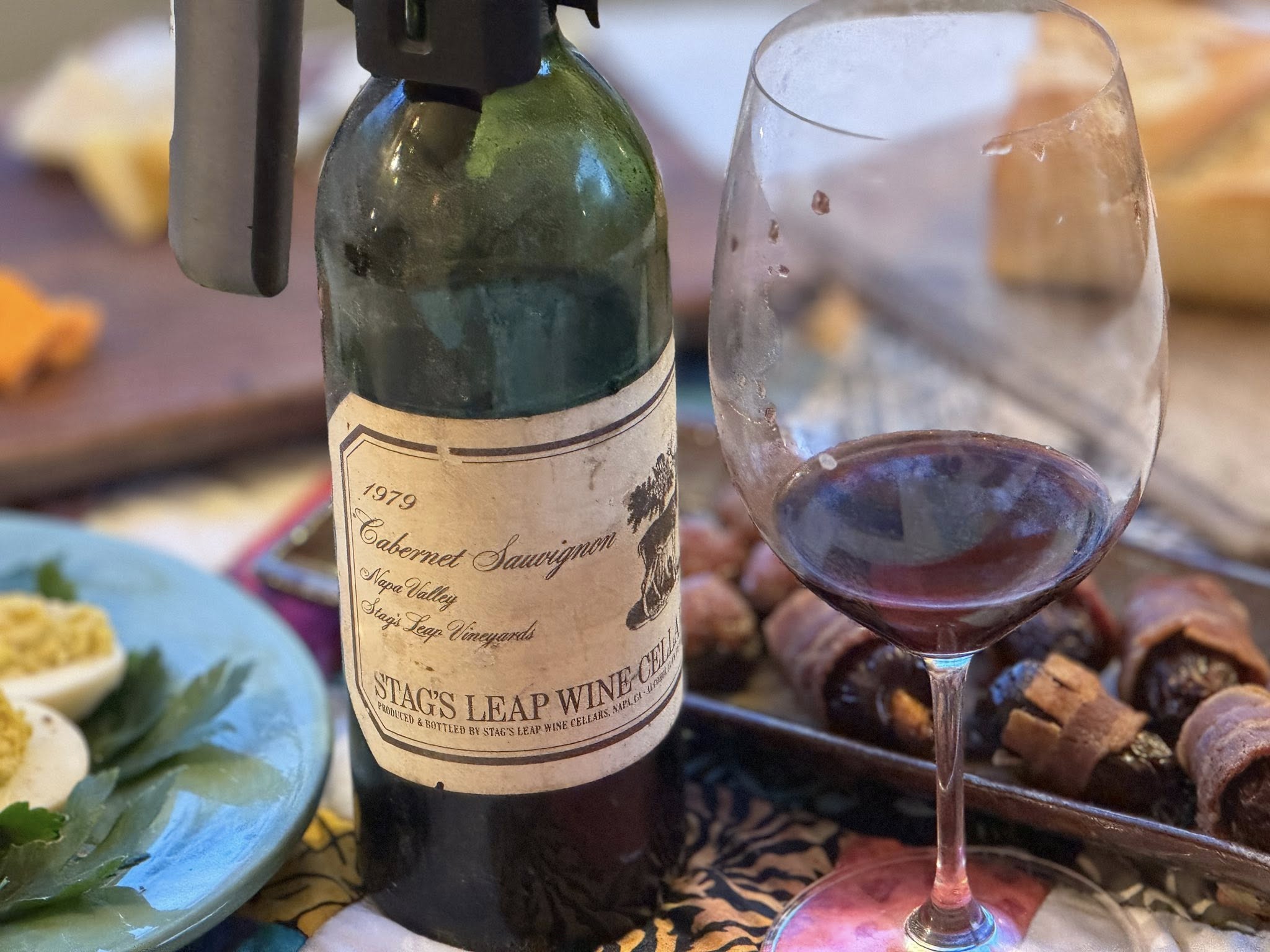
1979 Stag’s Leap Napa Cab Sauv for “Open That Bottle Night”
I may open hundreds of bottles of wine a year, but faced with a 1979 Stag’s Leap Wine Cellars Napa Valley Cabernet Sauvignon, I was nervous. Very nervous.
How did I come to be in possession of such a wine — a wine with a famous provenance having beat French Bordeaux in 1976? On a late winter midweek day, not long after I turned 21 in the 1980s, my fiancé Ken and I took a drizzly drive through shiny green hills from Palo Alto to Napa for a day of wine tasting with no particular wineries in mind and no appointments. Unlike today in most of Napa where tastings cost $50 and up, and require advance reservations, back then most tastings were more causal, free or only $5 ($15 in 2026 dollars); you could just show up and belly up to the bar. We were college students with little money to spend on wine or really anything else, so going wine tasting was a cheap date especially since we brought our own picnic!
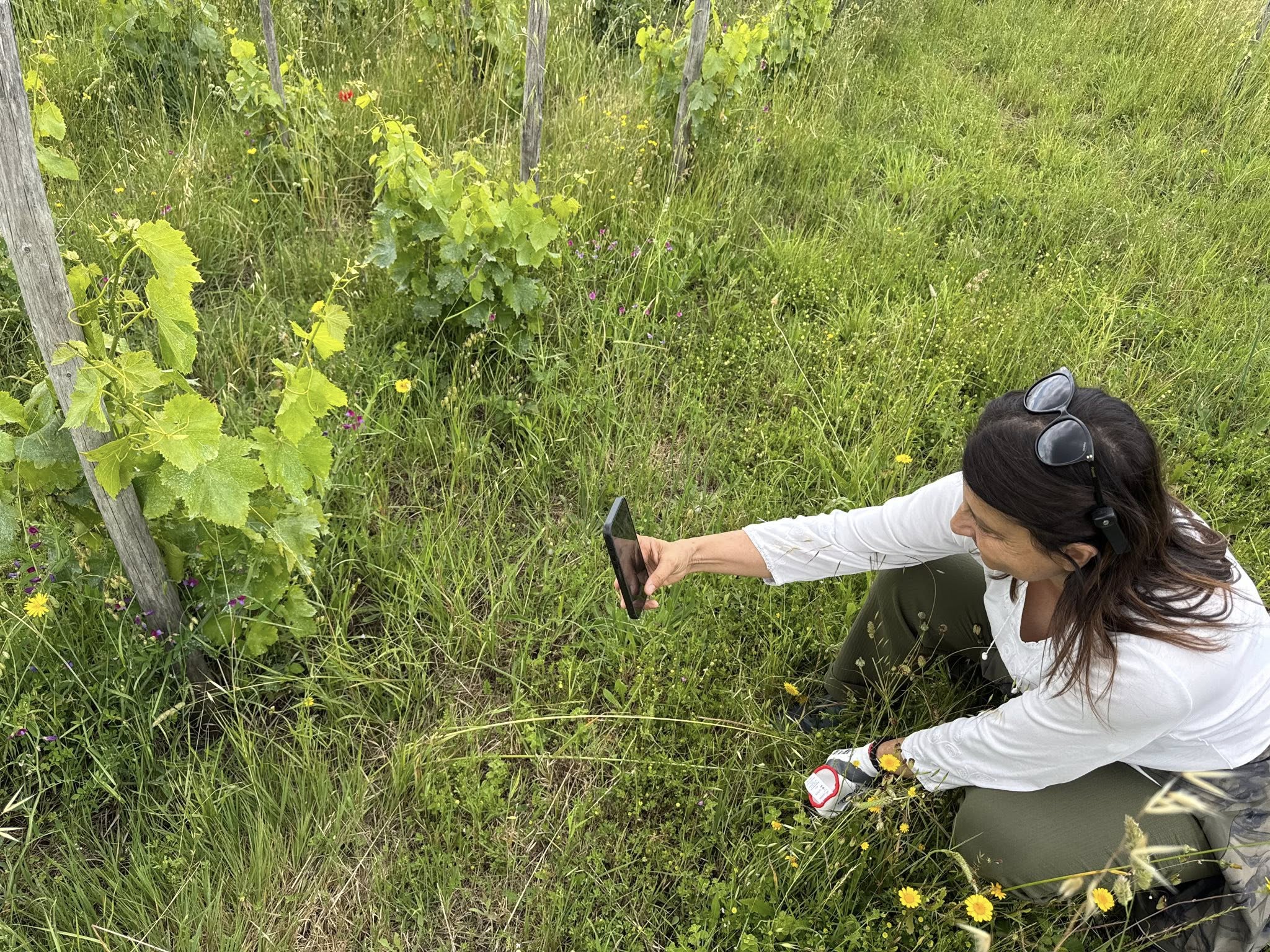
Antonella Manulli owner and winemaker at La Maliosa enjoying beautiful biodiversity in her vineyards May 2025
“Isn’t it beautiful — Procanico?” asked Antonella Manuli, the owner of Fattoria La Maliosa, in the Maremma, Southern Tuscany. We’d been together out in her Vigna Madre vineyard on a sparkling day in May where her 60 year old Procanico grows. She wanted me to see the grapes at harvest so that evening we watched this video of Procanico (scroll down to view) to know what makes this indigenous and rare Italian grape — a biotype of Trebbiano with longer pink bunches—so special to her.
“What struck me was – it was so beautiful– it is such a beautiful grape the way it becomes pink and the bunch is so elegant. It’s got a strength–it’s not a fragile beauty. It’s totally in tune with the environment. It’s resistant and resilient. Nothing is really going to screw with Procanico. Except hail– no defense from hail,” Antonella said in reference to her 70% loss of her harvest in 2023. “But everything else is okay.”
May 2025 was my third springtime visit as her guest, and I finally feel like I’m starting to understand not only the magic of Maremma, but also her regenerative agricultural practices in action— and the secrets of Procanico, which she helped resurrect.
To visit several of her vineyards including Procanico to view the progress of the vines, we traveled in her SUV on ancient narrow country roads that Etruscans built over 3000 years ago by cutting through compacted volcanic ash. Continue reading →

 wine predator.............. gwendolyn alley