
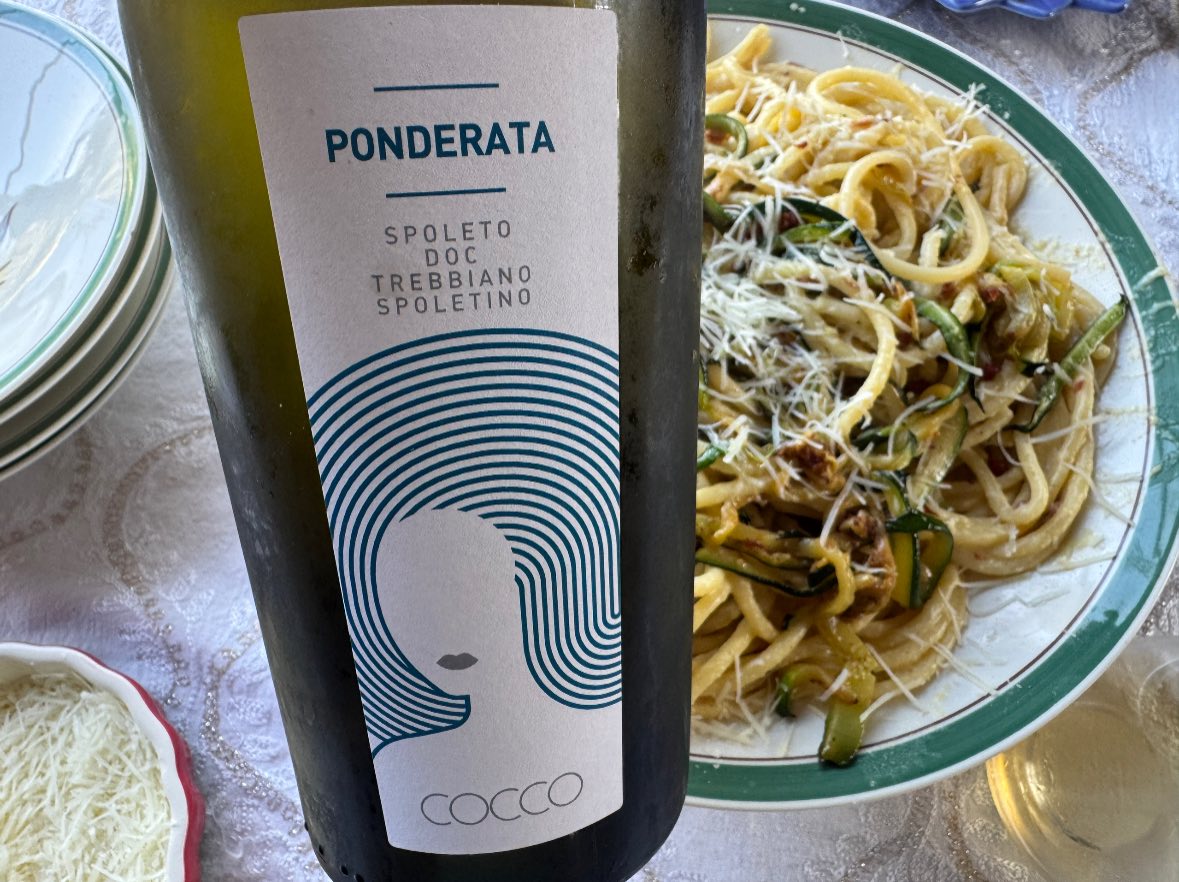
2022 Cocco Ilaria “Ponderata” Spoleto Trebbiano Spoletino DOC, Umbria, Italy Paired with Carbonara with fried zucchini
Fact: The wine world lacks women in wine. But Ilaria Cocco didn’t let this stop her from replanting her grandfather’s 3.5 hectares (about 7 acres) of vineyards in the Montefalco region of Umbria north of Rome, south of Florence and east of Tuscany. The vineyards had fallen into disrepair, and he died in 1998. With her father’s help in 2000, she replanted and brought the Montefalco vineyards into healthy production using organic practices as much as possible.
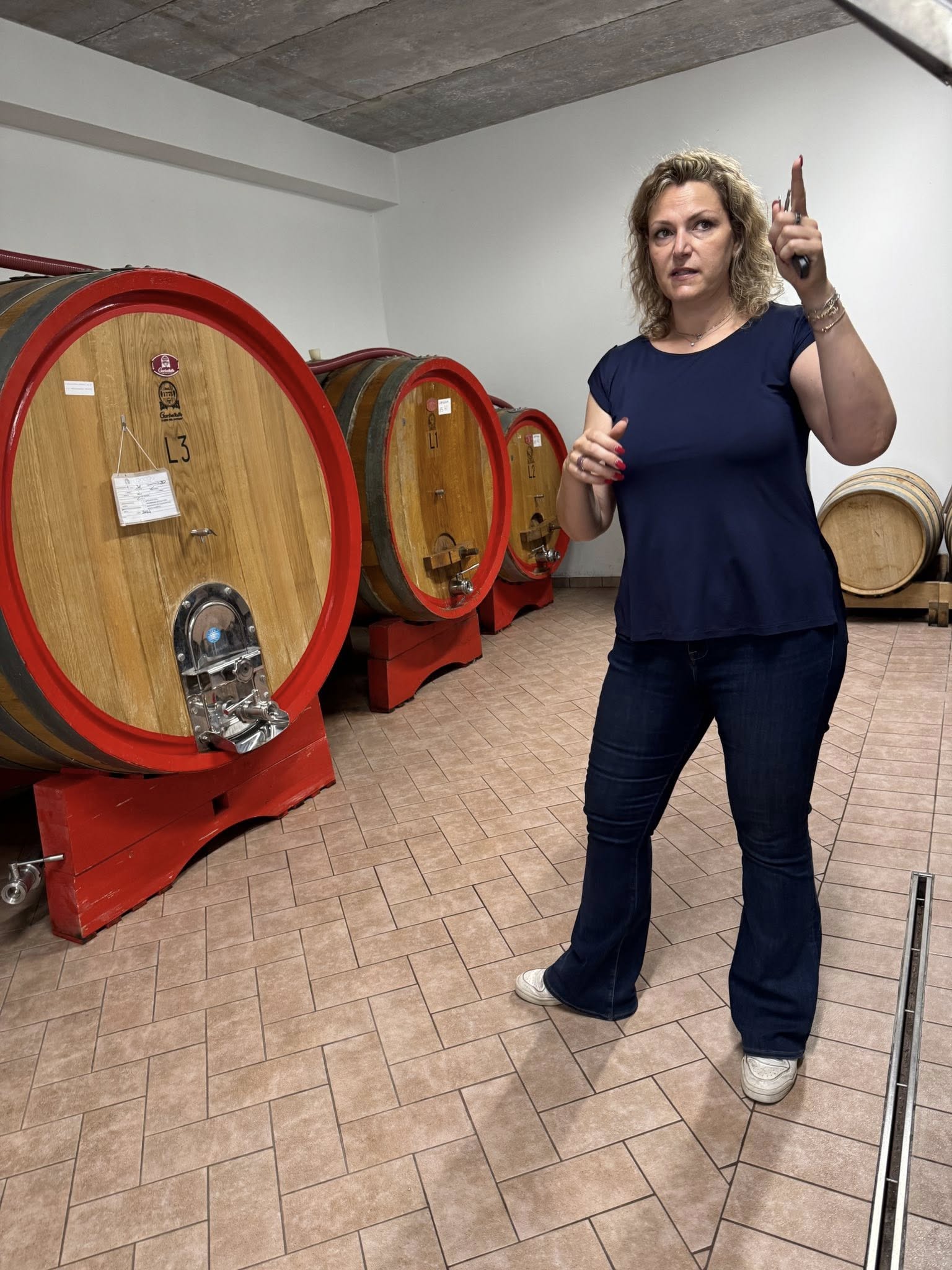
Ilaria Cocco in her Montefalco cellar
But soon Ilaria realized she wanted to make wine from her grapes and to carry on her grandfather’s tradition of winemaking and enjoying their family’s passito wines with Sunday dinners. With her family’s support, Ilaria followed her grandfather’s footsteps — and now she makes her own wine. The difference? Instead of just passito for the family, she produces a range of wines to sell commercially. Plus passito!
After a stint in London where she learned English, Ilaria Cocco says “I really wanted to come back and make wine and tell my story through wine.”
Ilaria is basically a one woman show — with continued support from her family, of course. In terms of winemaking, decision making, marketing, selling, and branding “I do everything myself,” she told me on a recent visit in June 2025 during “A Montefalco” sponsored by Consorzio Tutela Vini Montefalco. She does consult with Massimiliano Caburazzi.
At first Ilaria made the wine in the family garage, but now she has a new cellar that meets her growing needs, and above the cellar on the hill, a tasting room and office.
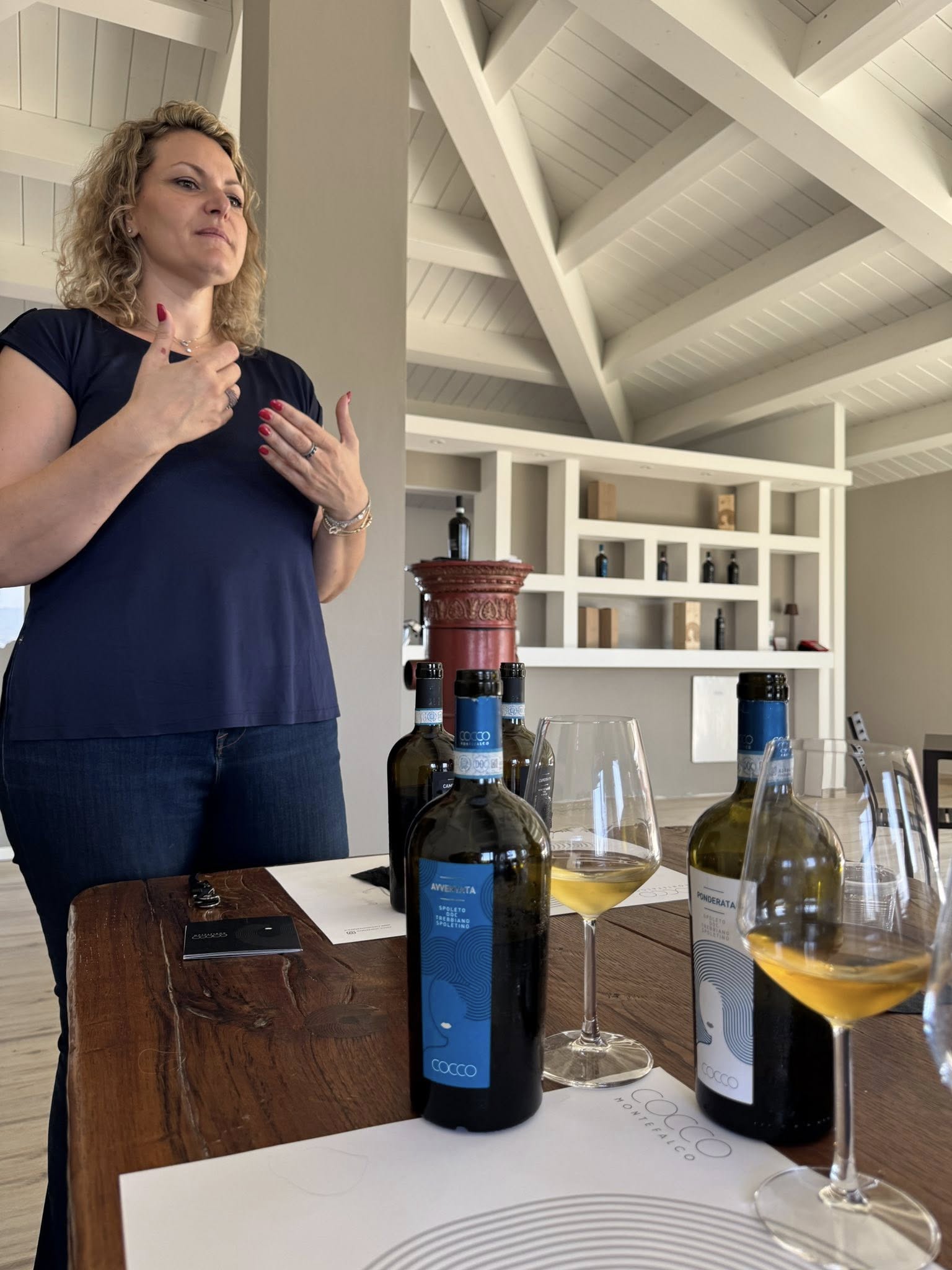
Ilaria Cocco in her Montefalco tasting room
“I try to follow organic,” Ilaria says of her Cucco Ilaria wines, because “I respect my vineyard.” Her goal is to feel the season, to preserve the vineyard, and to preserve her business which relies on the health of the vineyard.
Currently, she only makes about 12k bottles a year— very small production! In 2025 she will release her first sparkling wine.
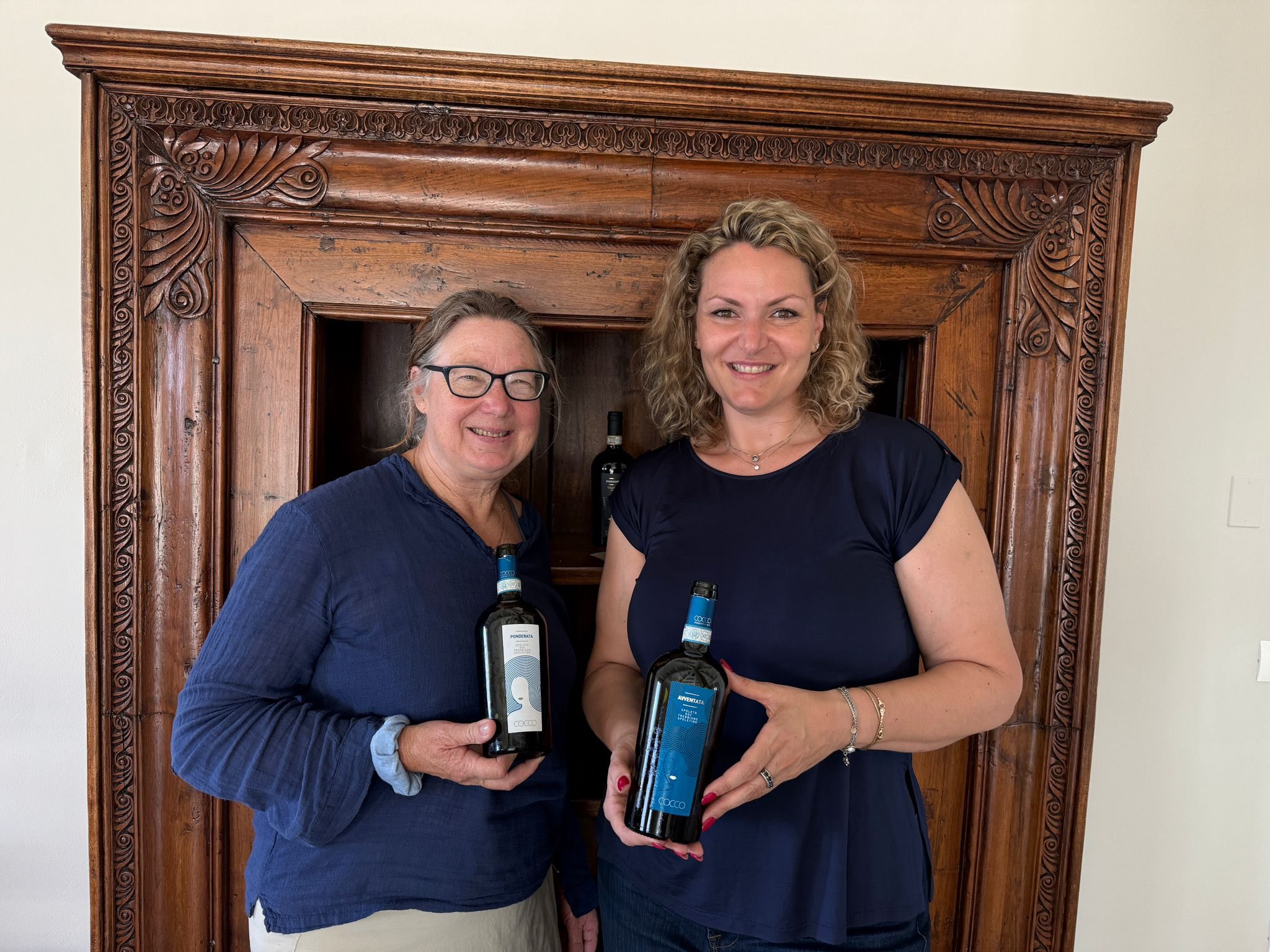
Ilaria Cocco and Gwendolyn Alley in Montefalco
At the finish of our visit, Ilaria asked which was my favorite. When I thought about which wine Sue and I would enjoy pairing and writing about most, I said the 2022 Cocco Ilaria Spoleto Trebbiano Spoletino DOC, Umbria, Italy which she presented to me and I managed to haul around Italy, then back home to California where Sue and I opened it.
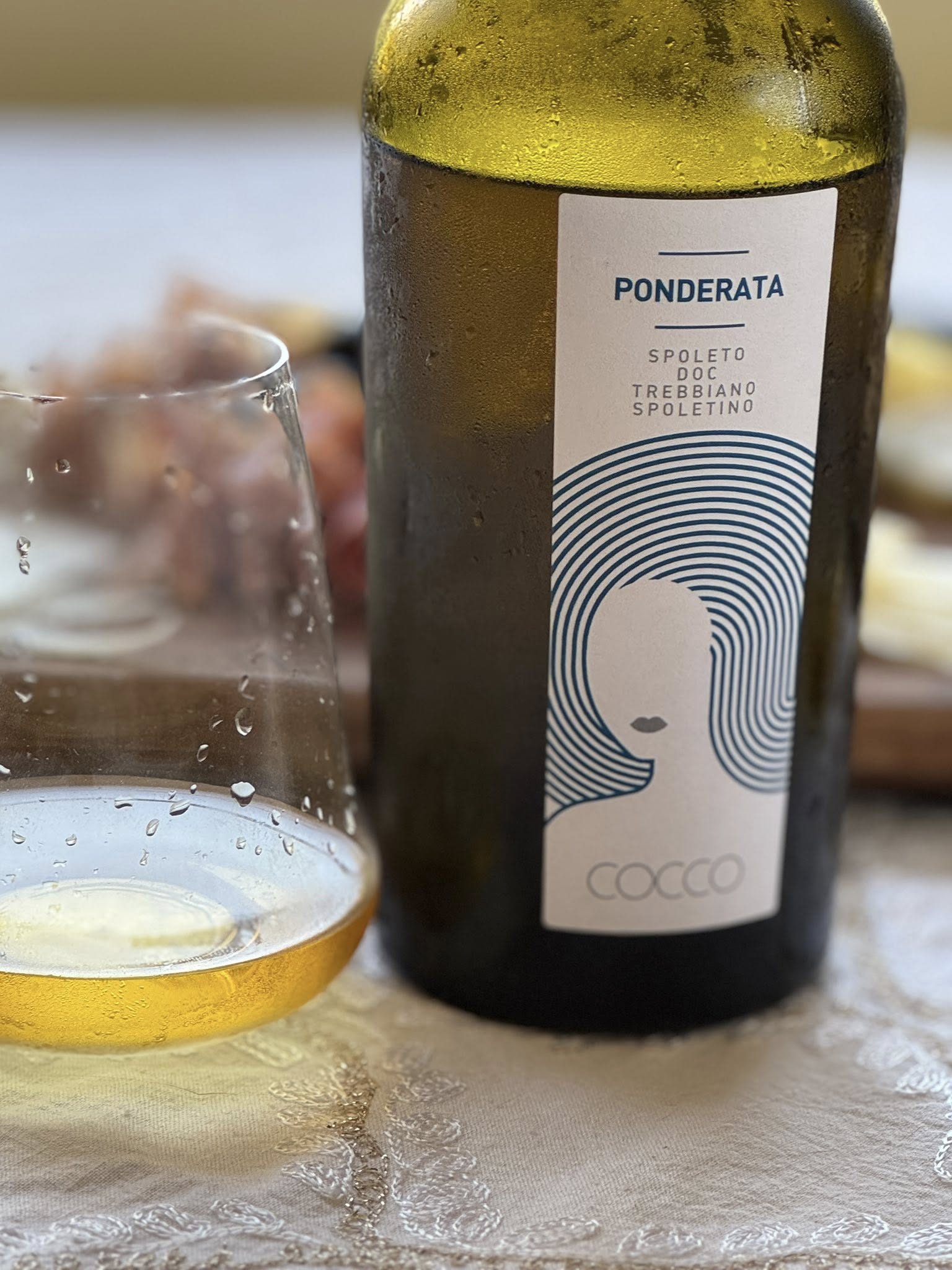
Trebbiano Spoletino
Never heard of Trebbiano Spoletino? It’s an ancient variety that’s typical of Umbria which offers more herbal notes than other Trebbiano. There are only 15 hectares planted, so very little makes it out of Italy.
Trebbiano Spoletino was first mentioned by Marziale, in the first century AD. A vigorous variety and naturally acidic, it’s resistant to most diseases as well as shifts in temperature because of its thick skin. Its versatility makes it suitable for different stylistic interpretations and types of wine while its combination of rich flavors and high acidity makes it a great food wine as well.
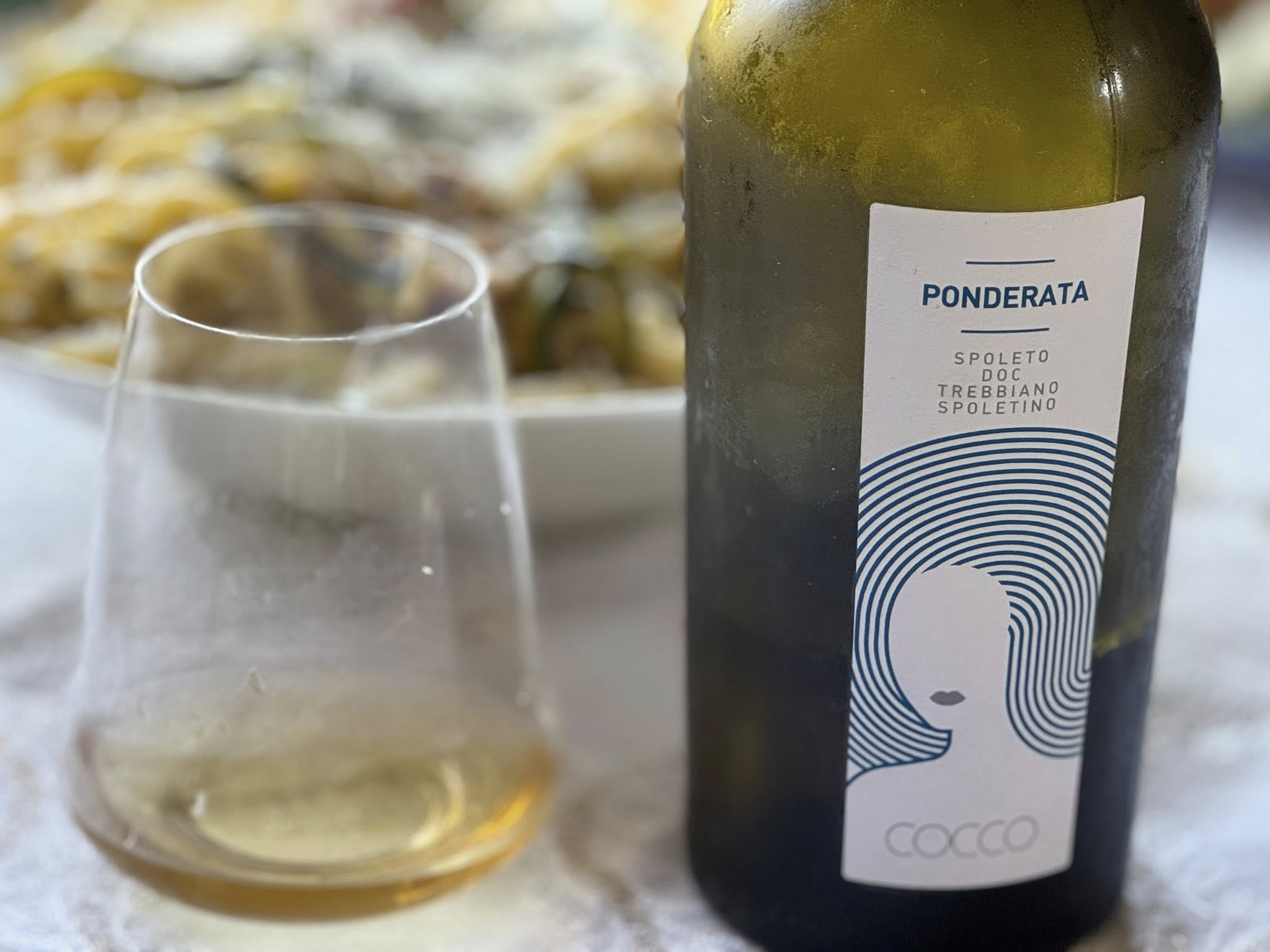
Trebbiano Spoletino
I reached out to Ilaria about pairings, and she said “Ponderata goes well with vegetarian dishes, even rich ones, and with egg-based recipes like pasta with vegetarian carbonara. My favorite pairing is with truffe, black, but especially white, although I Imagine it’s not so easy to find in California.” She recommends serving at a temperature of 12/14° C or around 55 degrees.
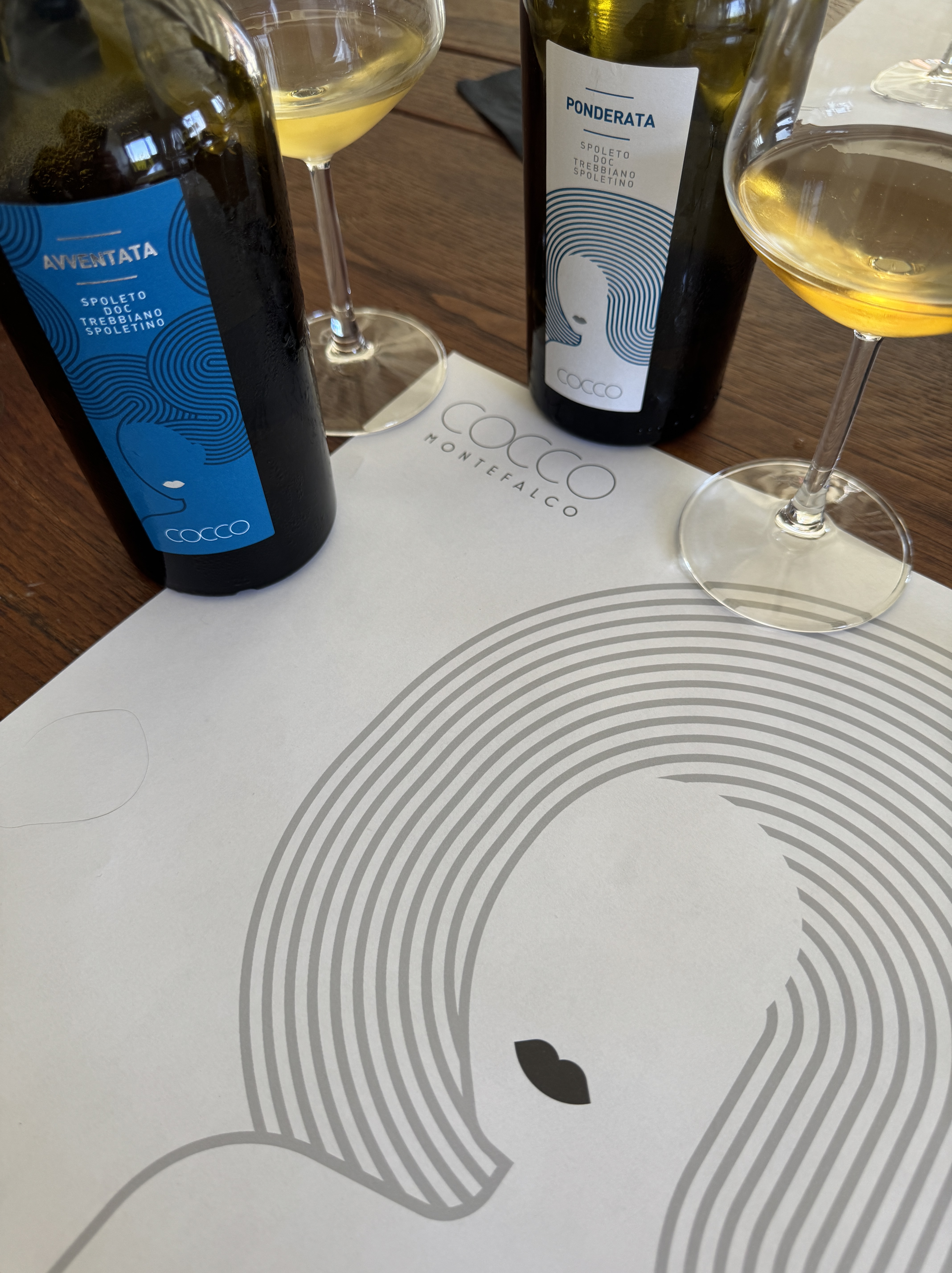
Ilaria offers 3 different Trebbiano Spoletino: still, sparkling, and orange!
In fact, the word for wine comes from an Umbrian word “vinu” according to Attila Scienza.
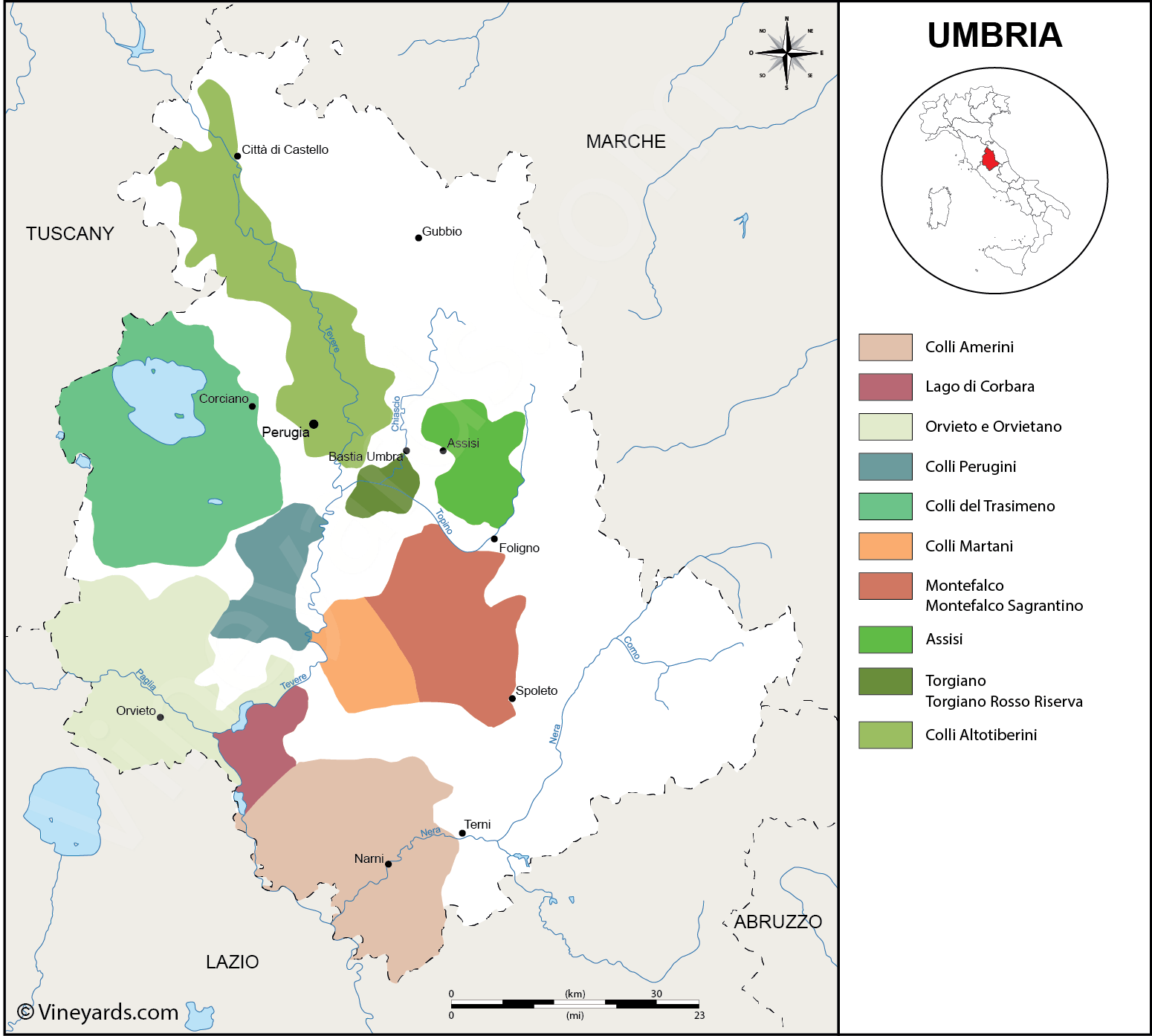
Umbria wine map from https://vineyards.com/wine-map/italy/umbria
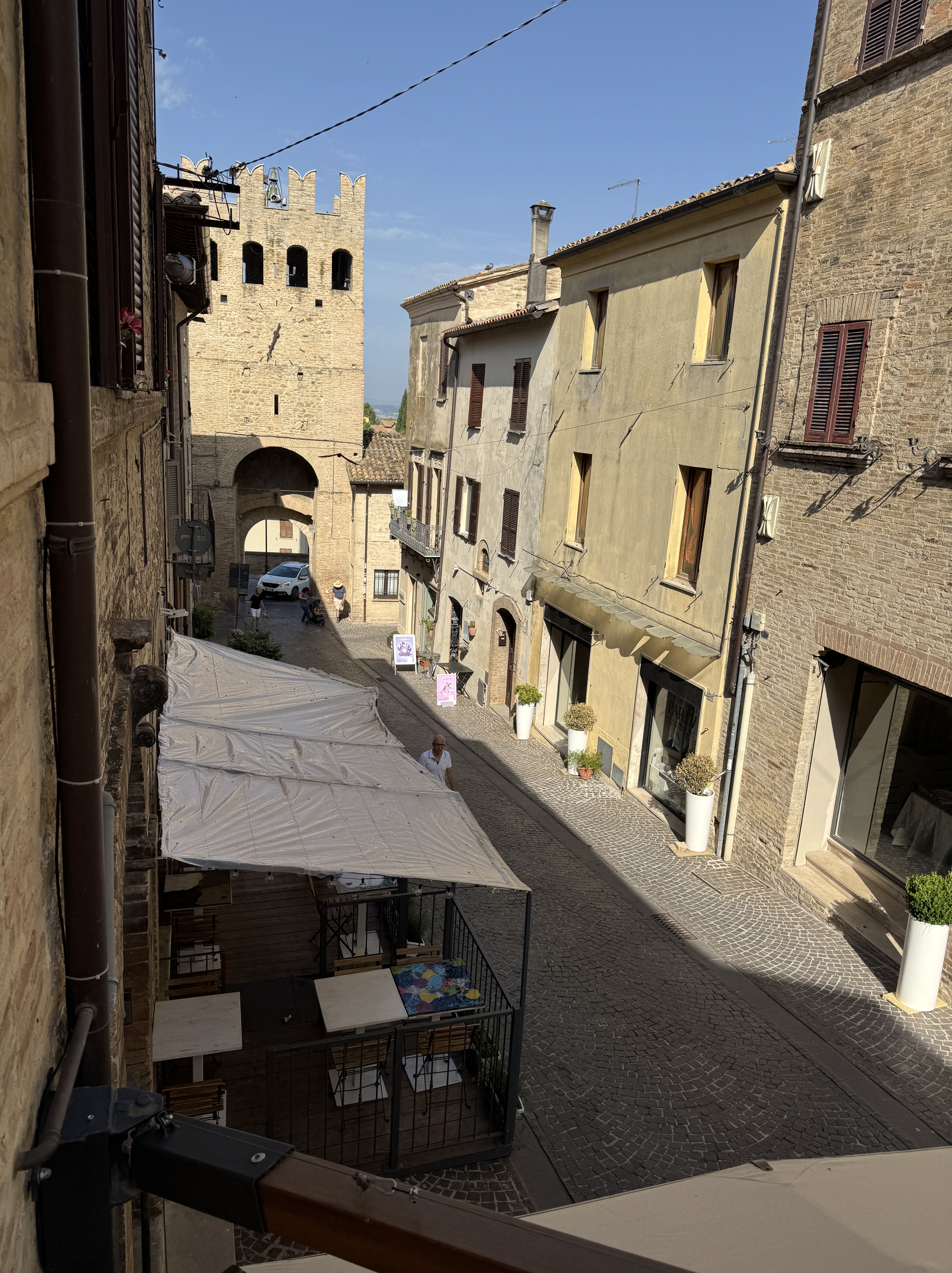
view from my window at the Hotel Ola Rosso of the walled village of Montefalco— cars struggle to get in!
While Trebbiano Spoletino is a white grape that’s just getting going again, Umbria is best known for Montefalco Sagrantino produced exclusively in the hilly territory of Montefalco and the municipalities of Bevagna, Castel Ritaldi, Giano dell’Umbria and Gualdo Cattaneo.
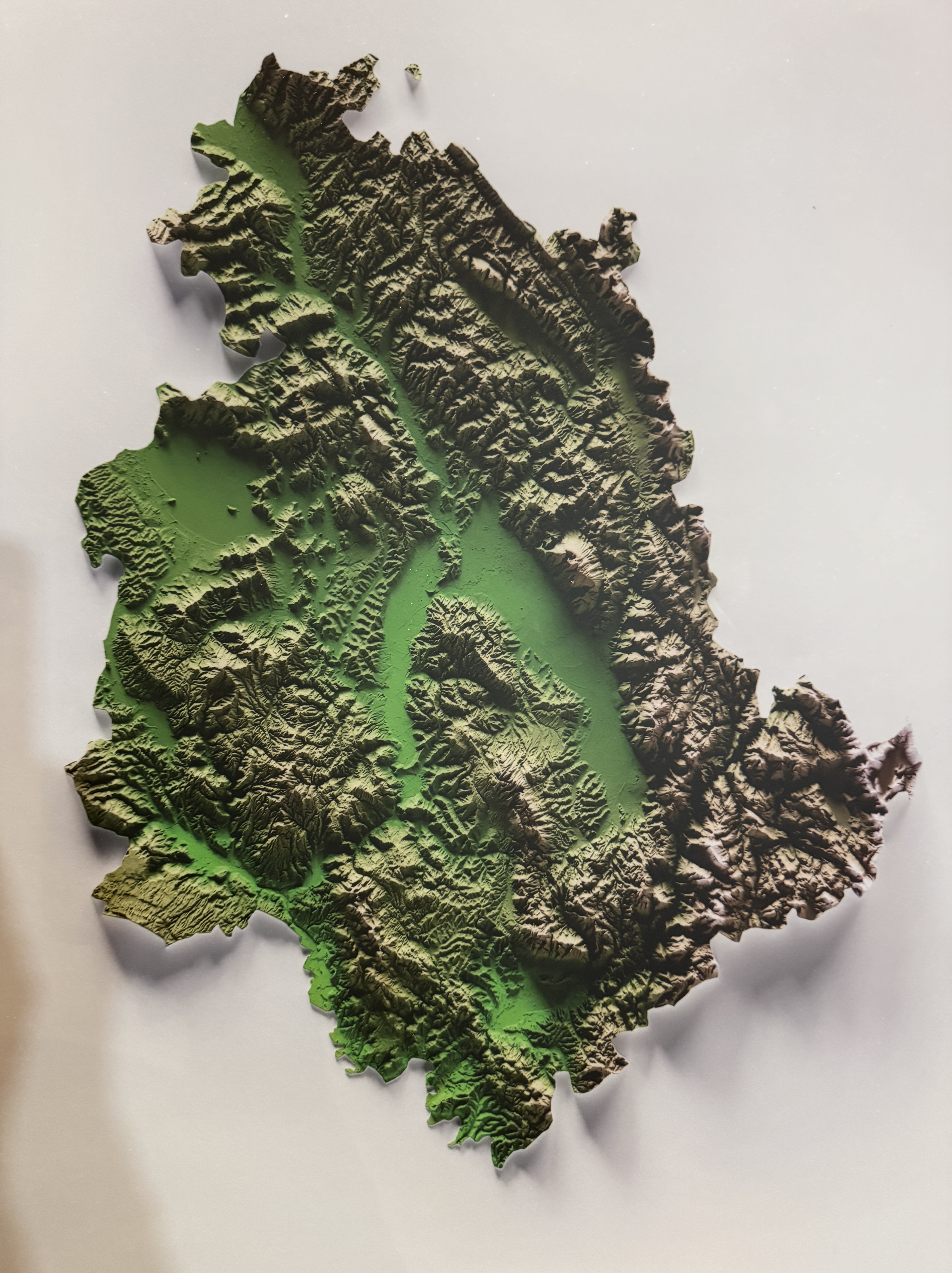
A relief map of Montefalco, Umbria found in the Romanelli tasting room. You can imagine that the flat area used to be a lake bed! The unique geography protects the vines from damaging storms.
According to the Consorzio Tutela Vini Montefalco, “The wine varietal Sagrantino has existed in these parts from time immemorial and was, in fact, cultivated by the first Franciscan friars.”
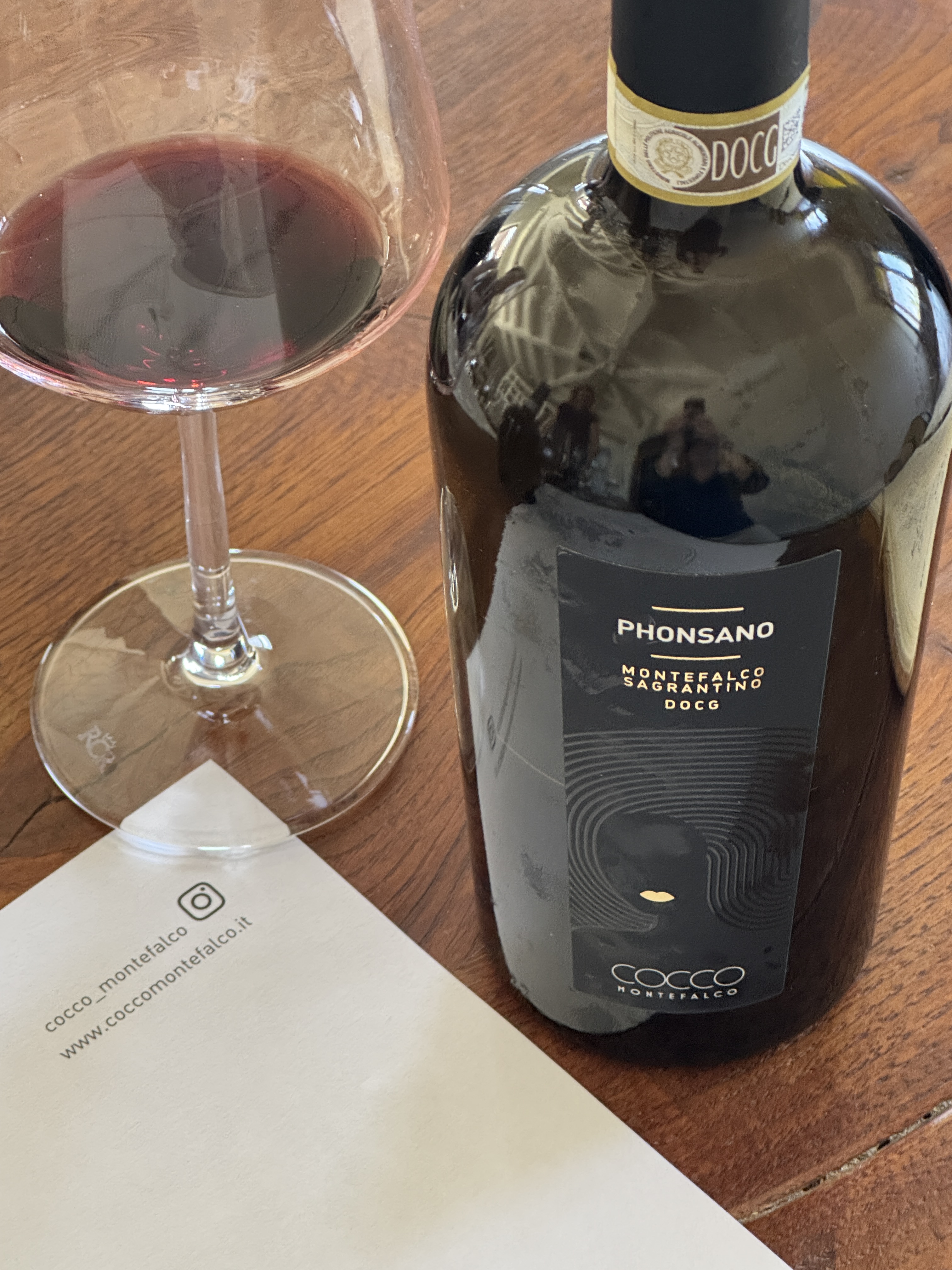
Cocco Ilaria’s elegant Sagrantino DOC “Phonsano”
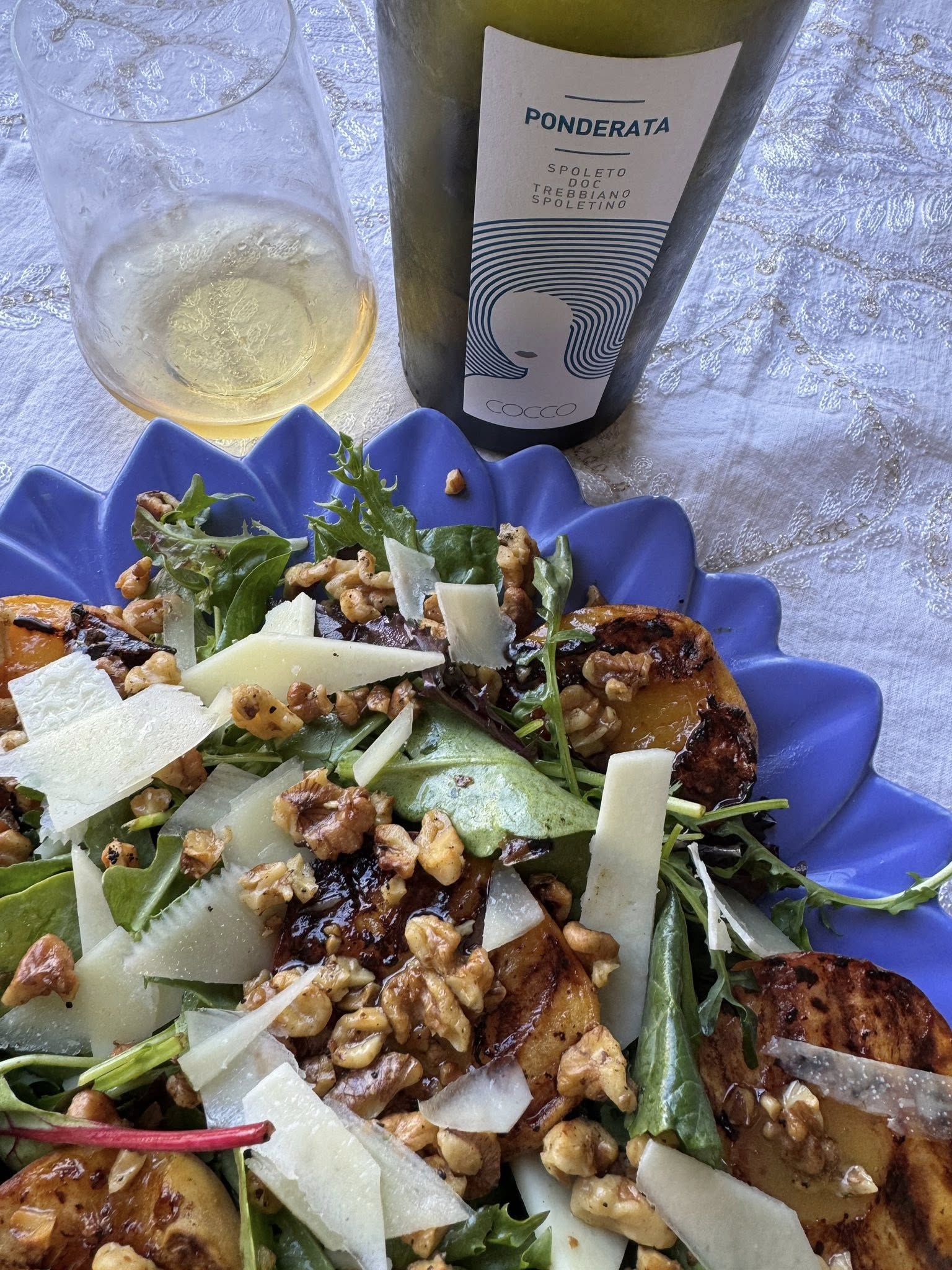
2022 Cocco Ilaria “Ponderata” Spoleto Trebbiano Spoletino DOC, Umbria, Italy with pecorino and grilled peach salad
To get you in the mood for more wines from Umbria, check out “Discover the Green Heart of Italy: Orvieto DOC in Umbria Paired with Chicken Cacciatore #ItalianFWT” where you will find ideas about wines from Umbria’s Orvieto.
Grateful to the Consorzio Tutela Vini Montefalco for this opportunity to meet Ilaria and taste her wines. Grateful as well to my fellow wine writers!
2022 Cocco Ilaria “Ponderata” Spoleto Trebbiano Spoletino DOC, Umbria, Italy Paired with:
- Pecorino, pecorino and more pecorino!
- Cheese board: pecorino, parmesan, pecorino with pistachios, pecorino with truffles, American prosciutto, American picante prosciutto with black pepper and fennel, truffle prosciutto, black olives
- Homegrown tomato bruschetta on ciabatta
- Grilled peach, pecorino, walnut salad
- Carbonara with Zucchini (Sue made a variation of this recipe which also included pancetta)
- And pecorino! When in doubt, bring the pecorino out!
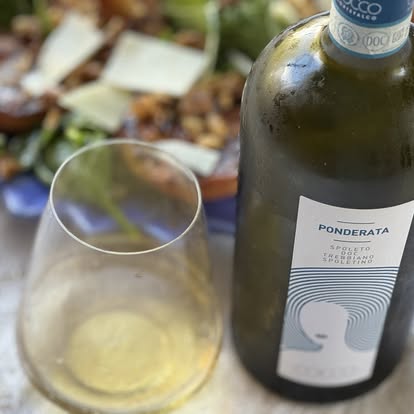
Trebbiano Spoletino
2022 Cocco Ilaria “Ponderata” Spoleto Trebbiano Spoletino DOC, Umbria, Italy
ABV: 13%
SRP: $30
Grapes: 100% Trebbiano Spoletino from Spoleto DOC grown using organic practices but not certified
Importer:
1700 bottles produced
This wine was a gift from the winemaker Ilaria Cucco following my visit in June 2025, and I brought it back from Italy.
Her distinct labels hint at the fingerprints of her ancestors — and the waves of her hair.
The “Ponderata” comes exclusively from the authochthonous grapes of Trebbiano Spoletino, a wine with the potential for elegance and evolutionary. Founded in 2008, Ilaria Cocco produces 10-12,000 bottles a year some of which are imported to the US as well as to the Netherlands. Her 30 year old vines are grown using organic practices on clay and limestone harvested in late September, macerated on skins for 15 days, 18 months on steel, refined in bottle for 10 months. Learn more about Cocco Ilaria here.
Appearance: Very golden, buttercup, shimmering gold, clear, pale yellow rim, deep in color
Aroma: Ponderosa pine, butterscotch, vanilla, perfume like, chamomile, fennel, rich white flowers, white roses, intriguing, intoxicating, amber, richness develops as it warms. The aromatics in the wine are beautifully enchanced by the food– evening orange blossom is evoked when paired with food.
Palate: Lemon drops, peach, nectarine, white stone fruit, fennel, minerals, tannins, chalky finish, light refreshing, smooth across the palate, orange oil, basil.
Pairing: Beautiful with bruschetta, lovely with the pecorino! This wine brings out beautiful nuttiness in the parmesan, but just fine with the pistachio pecorino. Fabulous with the truffle pecorino— it make the wine pure and clean. Also lovely with the truffle proscuitto. The grilled peach in the salad highlights the stone fruit flavors in the wine. Lovely with the carbonara bringing out nice orange blossom in the aroma and the flavors. The salad brought out the herbal characteristics and with the carbonara the wine is so very smooth as the acidity cuts through the richness of the pasta and makes the meal light and refreshing.
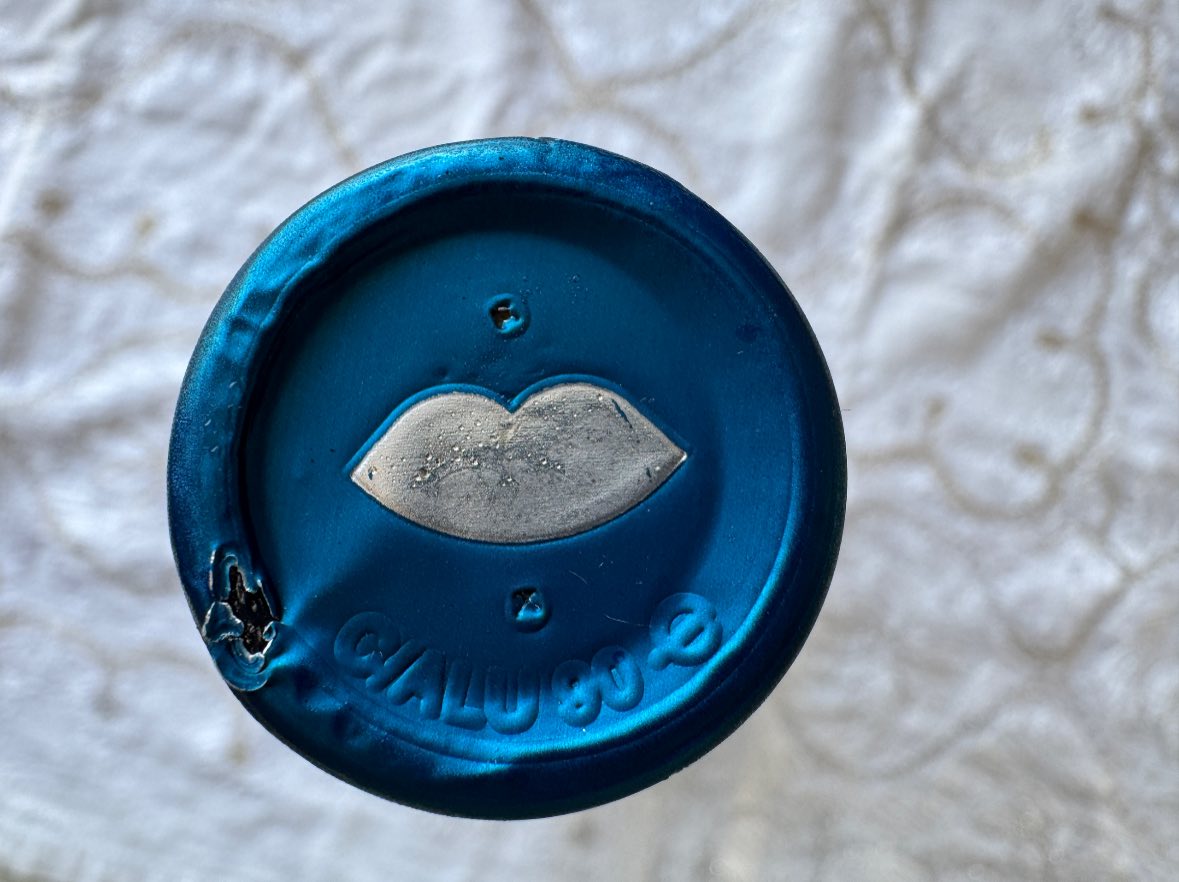
foil on Cocco Ilaria wines
You’re invited to join Italian Food Wine Travel in UMBRIA this August!
On August 9, the Italian Food, Wine, Travel writers are tasting and writing about wines from Umbria— and you can too! Scroll down for all the details to prepare you.
- In the next two weeks, find one or more wines from Umbria.
- All are welcome to participate. Please join us!!
- The wine/s can be from any grape in any style– red, white, rose, orange, sparkling, sweet–- and from any part of Umbria.
- We emphasize pairing Italian wines with foods, but the menu does not have to be regional.
- Sponsored posts and sample wines are fine as long as they are clearly identified as such.
- We love to read about the stories behind the wine and why you chose it.
- We love to learn about travel to the region of the world where your wine/s and dishes came from.
- Please let me know you’ll be participating by commenting below!
- Please get your title to me by commenting below by Tuesday Aug. 5. Thank you!
- You can also post in the Facebook event “An Invitation to Umbria” under the title thread before EOD Tuesday August 5 so that I can publish a preview post with titles and links to participants. (Event to come!)
- From Friday August 8 to Saturday Aug. 9 at 9am, please publish your post.
- We encourage you to include #ItalianFWT in the title of your article.
- Append to your post the preliminary HTML to link to other participants; it can be found on the Facebook event page or can be cut and pasted from the preview post which I will publish Weds. Aug. 6.
- Please update with the final HTML when it is available on Sat. Aug. 9.
- Read around, comment, and share each other’s posts.
- As soon as it is available, please remember to add the final HTML to your post which links to participants’ published posts.
- Have fun! Stay tuned and subscribe!
- Email me with any questions: gwendolynalleyATyahooDOTcom
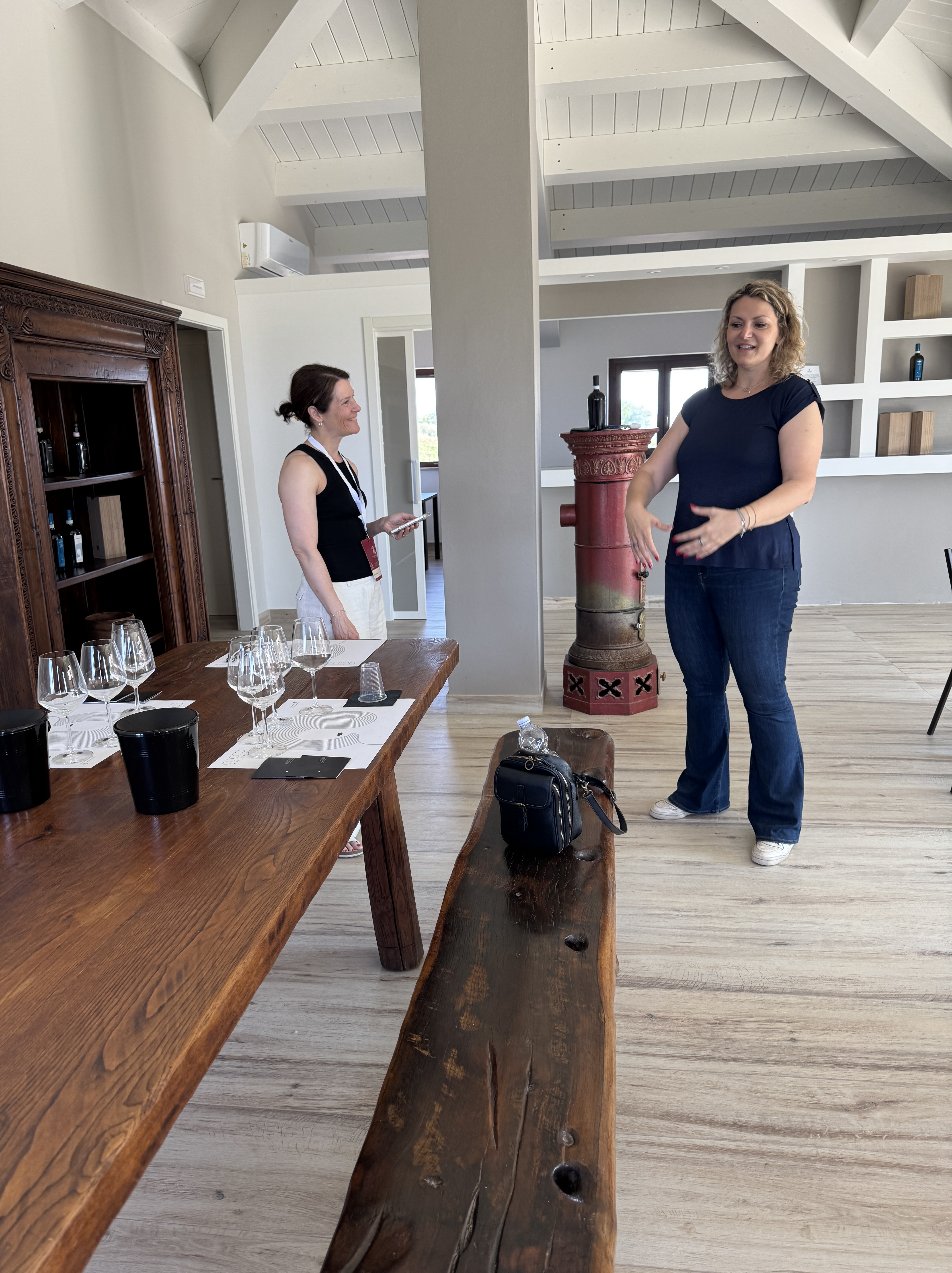
wine maker Ilaria Cocco and wine writer Kathleen Smith in the Montefalco tasting room
So what wine will you be tasting in the next two weeks from Umbria?? Do tell in the comments! Cheers!
 wine predator.............. gwendolyn alley
Is any one having trouble commenting? I heard from one person that she wasn’t able to comment. I checked my settings and everything seems fine on this end.
LikeLike
I hadn’t tried commenting on here. I tried commenting on the event page but it wouldn’t accept it. Camilla was able to post it for me. Sorry for the confusion, I wasn’t aware that the format had been changed.
LikeLiked by 1 person
Okay. Glad to know that it works for you to comment here. No idea why you couldn’t comment over there.
LikeLike
test comment
LikeLike
I’m logged in to my wordpress.com account and the comment was accepted
LikeLiked by 1 person
Thanks Jeff.
LikeLike
https://avvinare.com/2025/08/09/discovering-spectacular-wines-in-the-green-heart-of-italy-montefalco-in-umbria/
LikeLiked by 1 person
Thanks Susannah!
LikeLike