
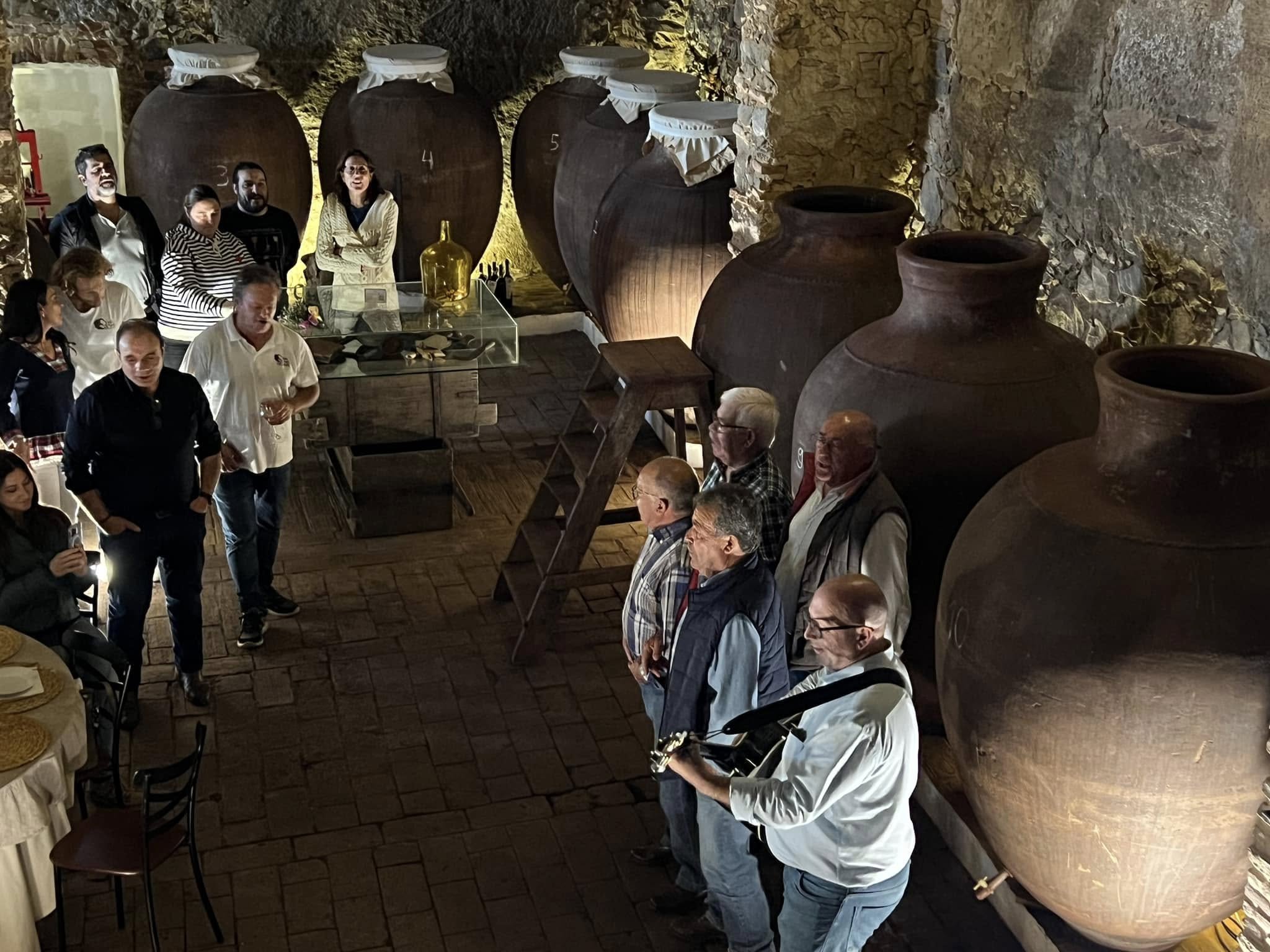
Honrado Winery in Alentejo Portugal
On the weekend of São Martinho Day, traditional Portuguese musicians sang as we descended into the cellar at Honrado located in Vila de Frades “the Capital of Vinho de Talha” in the county of Vidigueira, Beja District, Alentejo, Portugal. With a small crowd, we waited for the main event: the tapping of the Talhas. Pronounced talhas, the large clay pots almost magically turn grapes into wine in the brief months following that year’s harvest. It’s a sacred ceremony, a moment of truth — is the wine good?– and a festive time for friends and family to gather.

Tapping a Talha at Honrado
We’d already attended several parties, tastings, and the huge World Amphora Day event at Rocim which includes seminars and wines from around the world. So at Honrado we weren’t seeing our first talha tapped by any means. But each time it’s special, and worthy of watching. We saw young and old, women and children, all participating in this timeless ritual where the wine is first sipped as we slipped our small glass drinking jars under the slowly flowing tap to taste for ourselves the fruits of this year’s labor.
We’d seen and tasted fresh tapped wine from talha at several venues over the weekend, but out of all the places I visited during my 10 day stay in Portugal last fall, it was this cellar that had the biggest impact, and is the story I tell the most.
To better understand, it helps to know a little Portuguese history. The Romans arrived 2000 years ago, and brought with them advanced viticultural techniques. They built structures, bridges, and aquaducts, some of which are in use today. Many amphora are very old because the art of making them was almost lost. Much of the Alentejo wine region fell into disrepair during fascism as vineyards and wineries were repurposed or unused. Instead of making wine, growing grains was held in high regard, and many families lost their historic homes and lands, only now to recover them, and to return to their ancestral holdings. Today, and during the previous 10-15 years, old facilities are being purchased and repaired and put back into production with revitalized older vineyards and newly planted vineyards, up to the minute modern steel and concrete facilities as well as ancient ones built of stone.
And this, the cellar at Honrado, was one of the ancient ones.
Imagine having a small restaurant, where you of course have wine, and you make some too which sells out immediately. You want to expand, have a real winery, and you need more space to make that wine. From the restaurant at the top of the hill, the building slopes down. It’s a decrepit walled in structure, full of debris, but it would be convenient to put your winery there, right? Because of its condition, you get the rest of the building for a song, and begin clearing out the rubble.
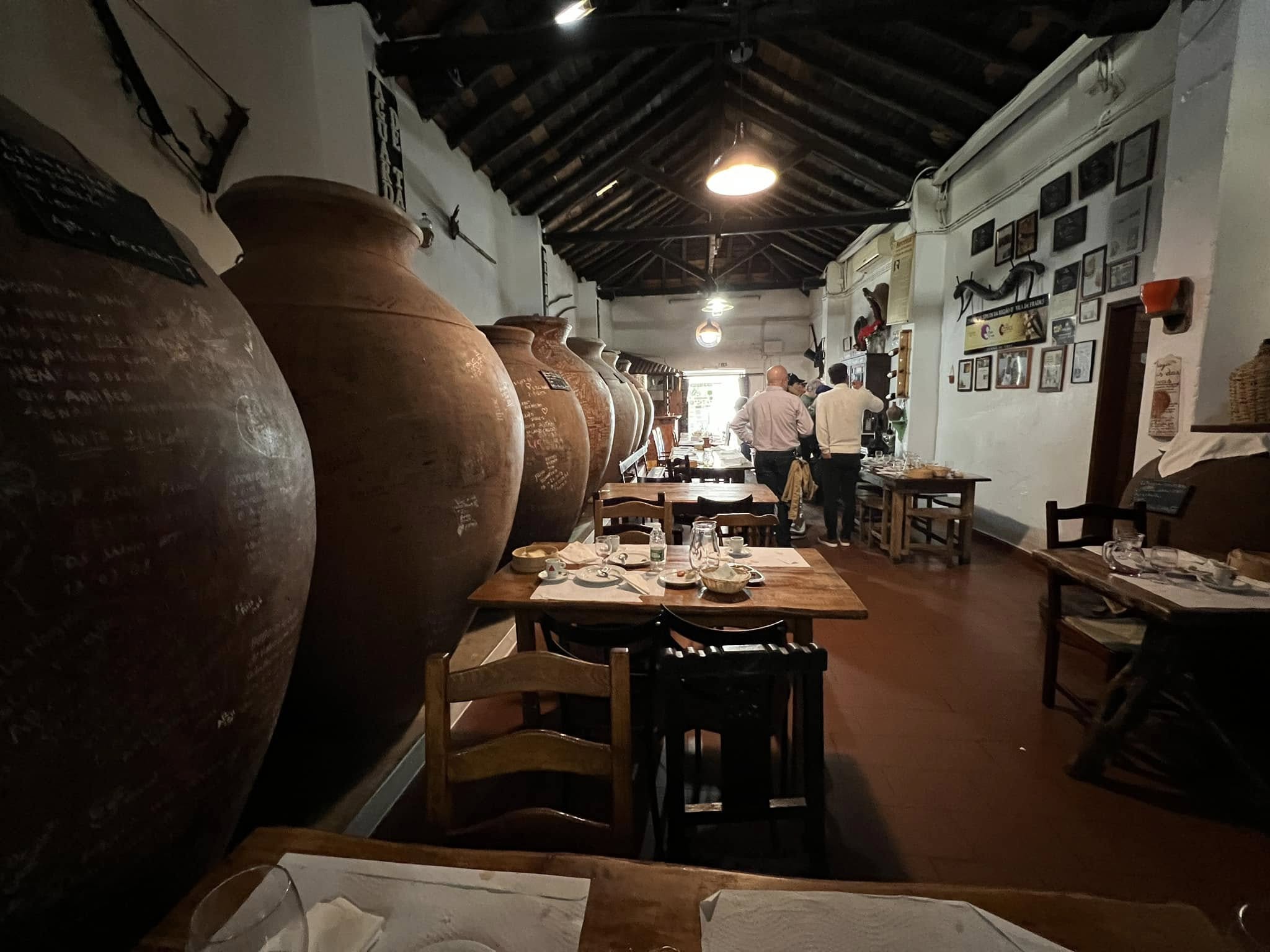
Honrado
You know the Romans had settled in this village, but you’re still surprised to find Roman arches that are over 2000 years old that have been filled in with stones and whitewashed.
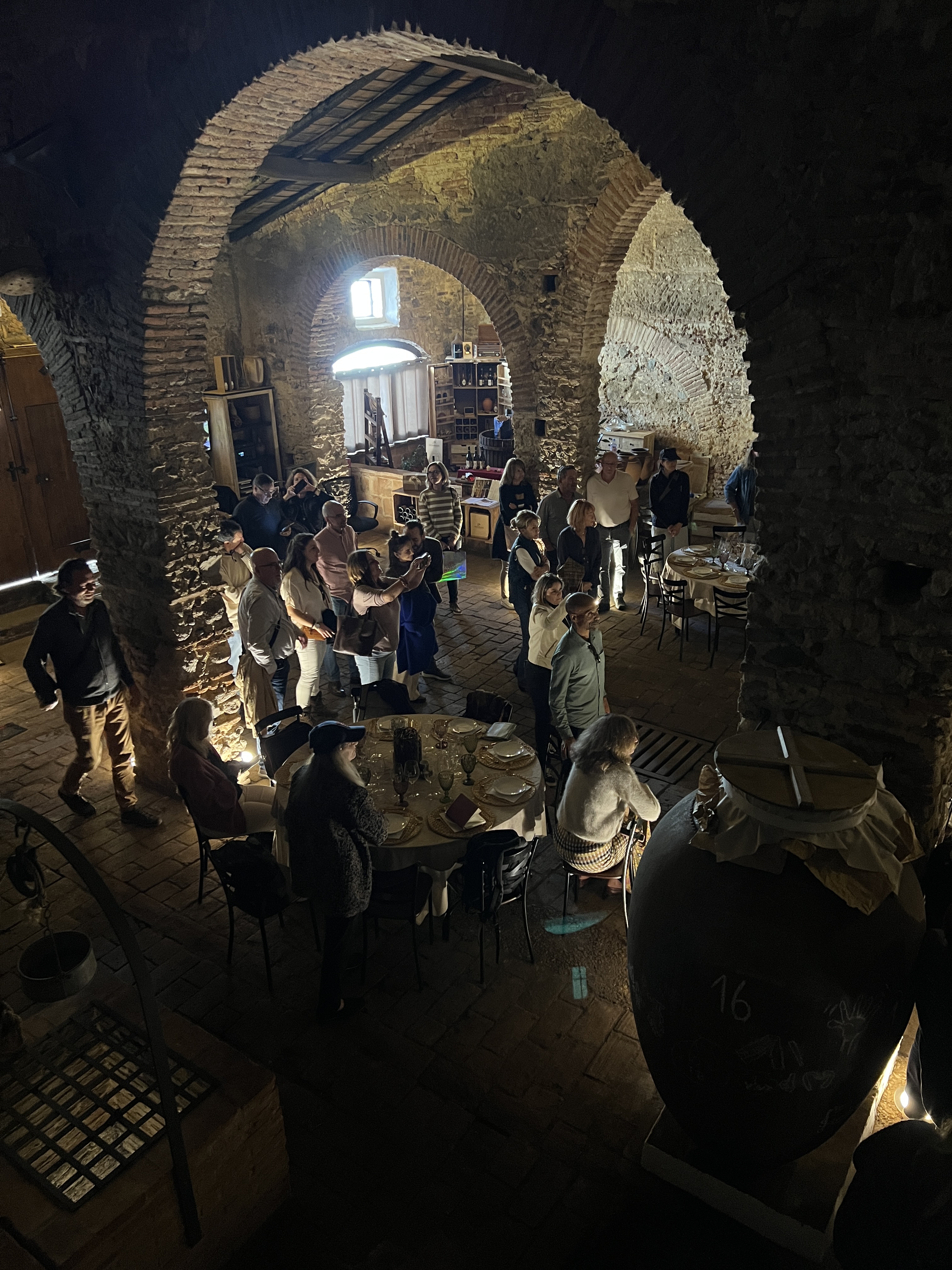
Honrado’s ancient arches
You carefully excavate around them, and remove the stones in the arches; the structure is still sound. Those Romans really knew how to build! You keep digging and find a well with sweet water. You keep removing debris and find grates and ways for water to flow. And then you realize: this building was built for wine. These grates collect wine that spills, or perhaps a talha might break and the wine could be saved.
The winery that you plan for this space? You realize it was a winery back in ancient Roman times as well. An archeologist confirms saying that the channels of water held maintain cooler conditions for the wine when it’s warm and to cool down fermentations.
Hearing this tale, the tapping of the talhas at Honrado takes on deeper meaning, and we feel the connection with time, with place, with people — the family there today and the family that lived there long ago.
Honrado is the Portuguese word for “honored.” It’s family name, but clearly they find it an honor to make wine in this special place, and it is an honor for us to be there to taste the wine as it flows unfiltered and fresh from the tap, and then to enjoy a meal there and to meet family including the grandmother too! Her life has been so incredible there’s a book about her.

history at Honrado: Ruben Honrado and his grandmother the author
Ruben Honrado is the son, and the current mastermind modernizing the operation. António Honrado is the father, manager of the famous “País das Uvas” Restaurant and a producer of wine for more than 15 years. António Honrado wanted to expand and bring his wine to the world– wine made in the traditional talhas, a technique passed down over the generations for thousands of years.
At the end of the evening, we each took home a bottle of wine; read more about the 2018 Honrado Talha Premium Vinho Branco DOC Alentejo below.
É dia de São Martinho;
comem-se castanhas, prova-se o vinho.
(It is St. Martin’s Day,
we’ll eat chestnuts, we’ll taste the wine.)
Well maybe not chestnuts this time, but we do have some great pairings for wine made in a large clay pot!
You might also be interested in
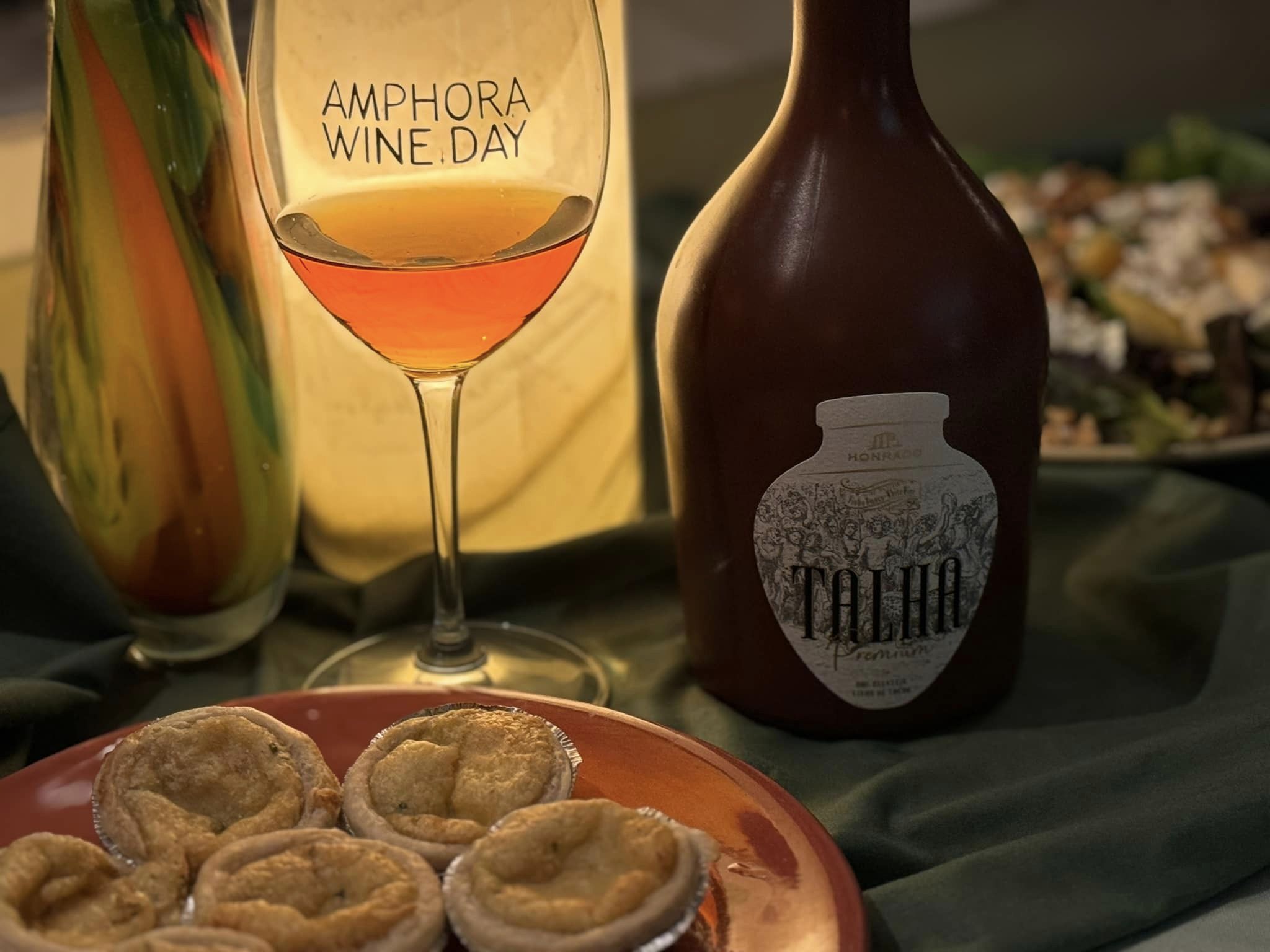
Honrado’s 2018 Talha Premium Vinho Branco DOC Alentejo with pairings
Menu
- 2018 Honrado Talha Premium Vinho Branco DOC Alentejo
- Bacalhau Tartlettes (frozen from Trader Joe’s)
- Roasted Pork Tenderloin, Potatoes, Butternut Squash (Lombo de Porco Assado)
- Spring Greens with Pear, Feta, Walnuts
- Pumpkin Custard Tarts (frozen from Trader Joe’s)
- With leftovers, I made a butternut squash soup with coconut milk and curry with potatoes and pork loin which paired beautifully with this wine. Rich complex flavors with rich complex flavors rule!

2018 Honrado Talha Premium Vinho Branco DOC Alentejo
2018 Honrado Talha Premium Vinho Branco DOC Alentejo
ABV: 13.5%
SRP: $30
Grapes: 25% Anto Vaz, 25% Arinto, 25% Perrum, 25% Diagalvs
Importer:
Sample for my review
A combination of Anto Vaz, Arinto, Perrum, and Diagalvs from old and new vineyards were manually harvested, destemmed, and crushed separately in late August and September. Equal parts of each –including the stems and skins– were placed in the big clay pots (talks) covered with pêz louro which is a beewax and pine resin mixture which serves as a seal for about four months. While the talk is typically tapped in November or December, bottling takes place the following January using a semi-automatic production line with a 3μm filter. They recommend cellaring this wine for 5 to 7 years after bottling, meaning the 2018 is in a sweet spot for optimum enjoyment.
Many of the wines made in amphora have extended skin contact which gives white wines more color making them so called “orange wines.”
Appearance: Very amber, like cognac or brandy, yellow rim, nice and clear, very pretty, amber jewelry the way it catches the light.
Aroma: Oxidation, sweet, meadow, caramel, graham cracker, graham cracker crust, orange oil.
Palate: Bitter orange, blood orange, tannic and smooth at the same time, long lingering nutty finish, candied walnuts with orange peel, walnut skin, very interesting and unusual.
Pairing: The meal brings out a sweet fruity characteristic in the wine that is not there before pairing with food.
The Bacalhau Tartlettes, Portuguese salt cod custard cups, are great with the wine as the rich salty intense custards are perfect with this rich intense wine. The cod custards reminded us of having clam chowder in a tiny pot pie and went so nicely with the wine. Salt cod aka Bacalhau isn’t the easiest ingredient to acquire in the US; thank goodness for Trader Joe’s!
We both loved the salad and the wine. The wine heightened all of the flavors in the salad. The greens were very fresh and the pear crisp and bright. The creamy walnuts and tannic walnut skins were a great match and added to the long lingering finish of both the salad and the wine.
The squash has a lovely sweetness and goes quite nicely with the tenderloin and the wine. There is also a richness in the baked squash that works so well with this wine as the squash has a long lengthy flavor that matches that of the wine.
While we would normally do a port with the pumpkin tarts, it went well with the Honrado Talha as the wine paired with the strong baking spices in the dessert with its tart creamy cheese and richness and complexity of the spices were nearly perfect with the rich complexity of the wine.

2018 Honrado Talha Premium Vinho Branco DOC Alentejo
I’m so grateful I had the opportunity to experience the Amphora Wine Day celebrations in Portugal’s Alentejo in 2023, and I loved looking back on my visit to the region. I have plenty more stories to share– and I look forward to returning to the region and celebrating São Martinho Day again!
Looking for a great resource to learn more about Portuguese Talhas? Check out Paul White’s
For more amphora made wine, stay tuned! Subscribe! We have three biodynamic amphora wines from Georgia coming right up, and we have four more Georgian wines to write about in the new year. And maybe I’ll get to Georgia one of these days soon!
 wine predator.............. gwendolyn alley