
Uruguayan White Wines
If you know anything about Uruguayan wines, you know about their tannat, because there is something special happening there with that grape: the terroir simply tames it and elevates it. But white wines? Yes! When Europeans settled along the coast of Uruguay, they planted the grapes they knew from home. From Galicia in Spain, they brought Albarino, from Germany they brought Riesling, and from France they brought Sauvignon Blanc and Viognier. Regardless of the grape, you’ll find, like we did, that the white wines of Uruguay reflect their proximity to the sea by expressing salinity, minerality, and a distinct character.
I live in North America on the coast where the sun and the moon sets on the Pacific Ocean and it is rarely humid. Uruguay is in South America where the sun and moon rise in the Atlantic Ocean, and it is often humid. But both coastal regions unite in a few important ways: we love our internet, our literacy, and our seafood paired with crisp white wines! As I am currently looking to leave the US following the outcome of yesterday’s disappointing presidential election, Uruguay is looking mighty attractive! With 44% of the immigrants from Italy, you know they have good food with high quality bread and pasta. The immigrants from France also brought their cuisine, and there’s a strong farm to table movement and plenty of fine dining. And there’s great wine and a growing wine industry! Time to brush up on my Spanish!
Unfamiliar with Uruguay?
- Here’s a primer that focuses on tannat with pairings.
- Check out “Unexpected Uruguay”– wines that aren’t tannat! with pairings of course
- Here’s some more fun facts about Uruguay and its wines– and you guessed it, pairings!
- We loved this vermouth from Uruguay too.
- Here’s the Wines of Uruguay website.
Here’s some facts shared on a recent Zoom with Joshua Green organized by Creative Palate:
- Manhattan and Brooklyn have more people than Uruguya
- Just about everyone has internet
- Just about everyone is literate
- Just about everyone is a European immigrant or a descendent of one
- There are four head of cattle for every citizen in the country
- The capital Montevideo has urban beaches
- The name “Uruguay” means painted bird in the native language
- Uruguay has around 300 wineries and a long wine making tradition

Oz Clarke’s Wine Regions of So America
What makes Uruguay special with regards to wine is the unique Uruguayan combination of climate and soil. The location along the 30-35 parallel (similar to New Zealand, South Africa, Australia, and Chile) is ideal, and climate is very similar to Galicia or Bordeaux. The ocean currents in Uruguay are unusual: the cold Malvinas current comes from up from along Argentina to the south while a warm ocean current comes from Brazil in the north. This creates lots of humidity, but overall it’s a moderate climate with rare days climbing above 100 or dropping to freezing. It does rain a lot– 40″ by the coast on average and 63″ a year inland so 3-4x what we get annually here in Southern California– and rivers flow through from the Andes to the Atlantic creating the southern border with Argentina. But don’t think it’s an elevated country like its neighbor– the highest peak is only 1600′.
The soils, according to Josh Green, are fantastic, and fantastically old. In fact some of the oldest soils on Earth, and the oldest part of the crust dating back to the days when South America and South Africa were united. This soil, says Josh, is brilliant for grapevines. Today almost 15k acres grow vineyards, planted mostly to reds with tannat occupying 16%.
The amount of acres of white wines are growing as they figure out which ones work where, why, and how. For example, albarino is a rising star, and recently surpassed plantings of chardonnay. Given the quality, Josh suspects it will overcome Sauvignon Blanc to become the most important white wine in Uruguay.
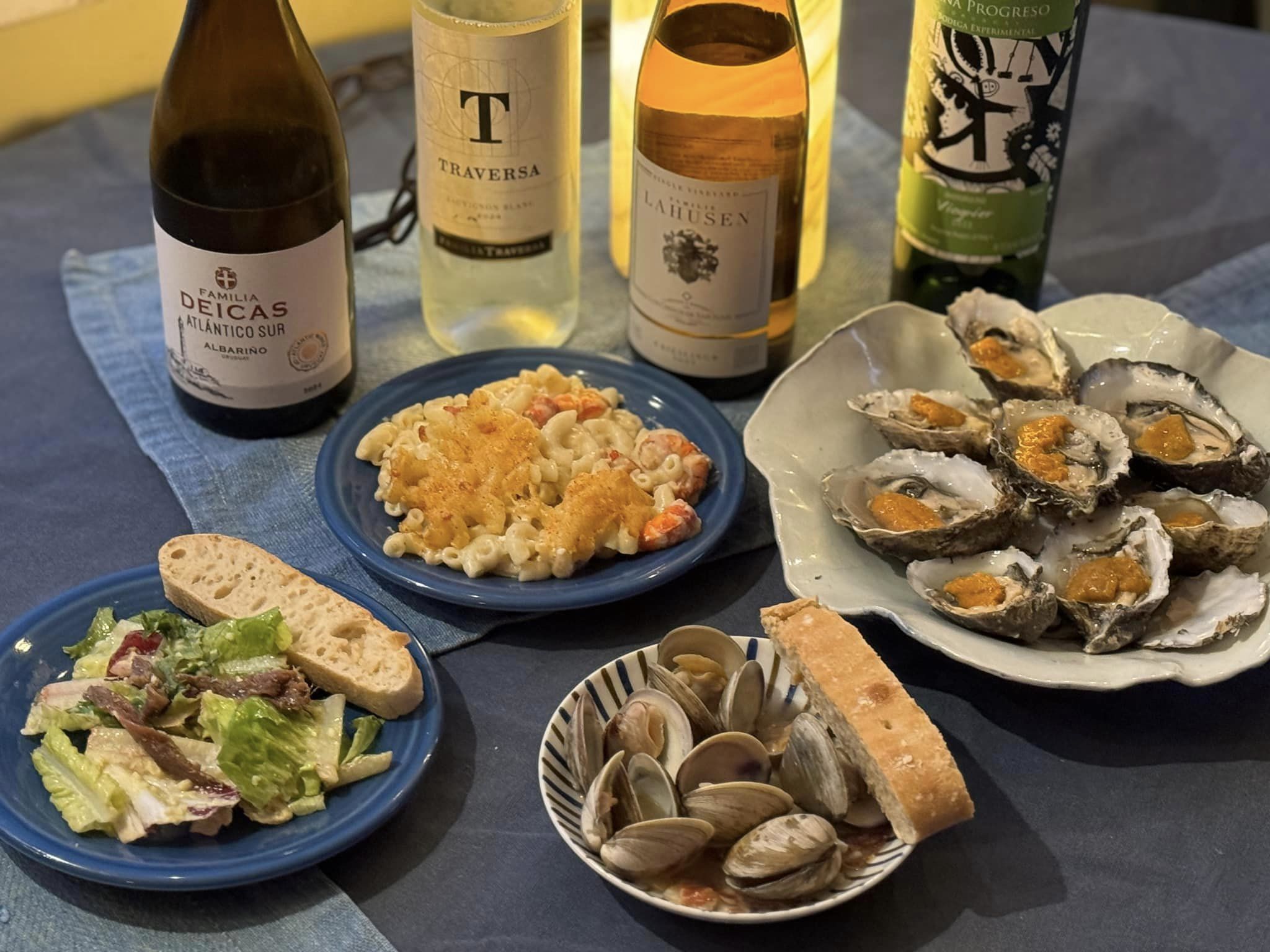
Knowing that I had this ZOOM coming up with Creative Palate (thank you!) all about six white wines from Uruguay I’d received as samples, I went to the Ventura Harbor to see what seafood I could see to pair with a riesling, a Viognier, a Sauvignon Blanc, and a Albarino all from Uruguay, and I came home with oysters, prawns, mussels, clams, sable fish, and uni. Now what? I threw out some ideas to Sue, and together we came up with a menu– and a contest to see which one of these four wines would pair the best with fresh raw oysters and uni!
4 Uruguayan White Wines with pairings
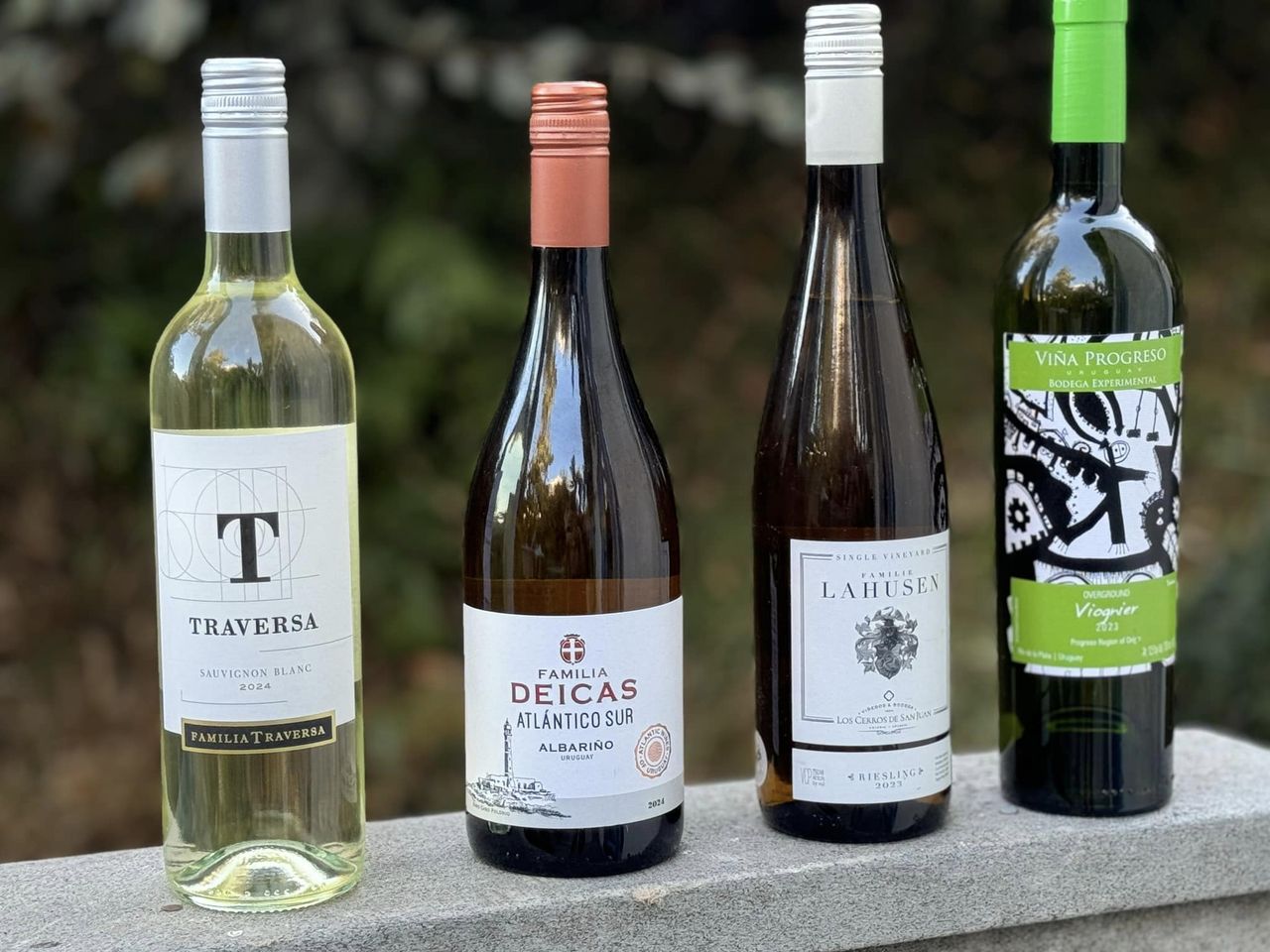
4 White Wines from Uruguay
- Familia Traversa Traversa Sauvignon Blanc 2023
- Viña Progreso Overground Viognier 2023
- Los Cerros de San Juan Familie Lahusen Riesling 2023
- Familia Deicas Atlántico Sur Albariño 2024
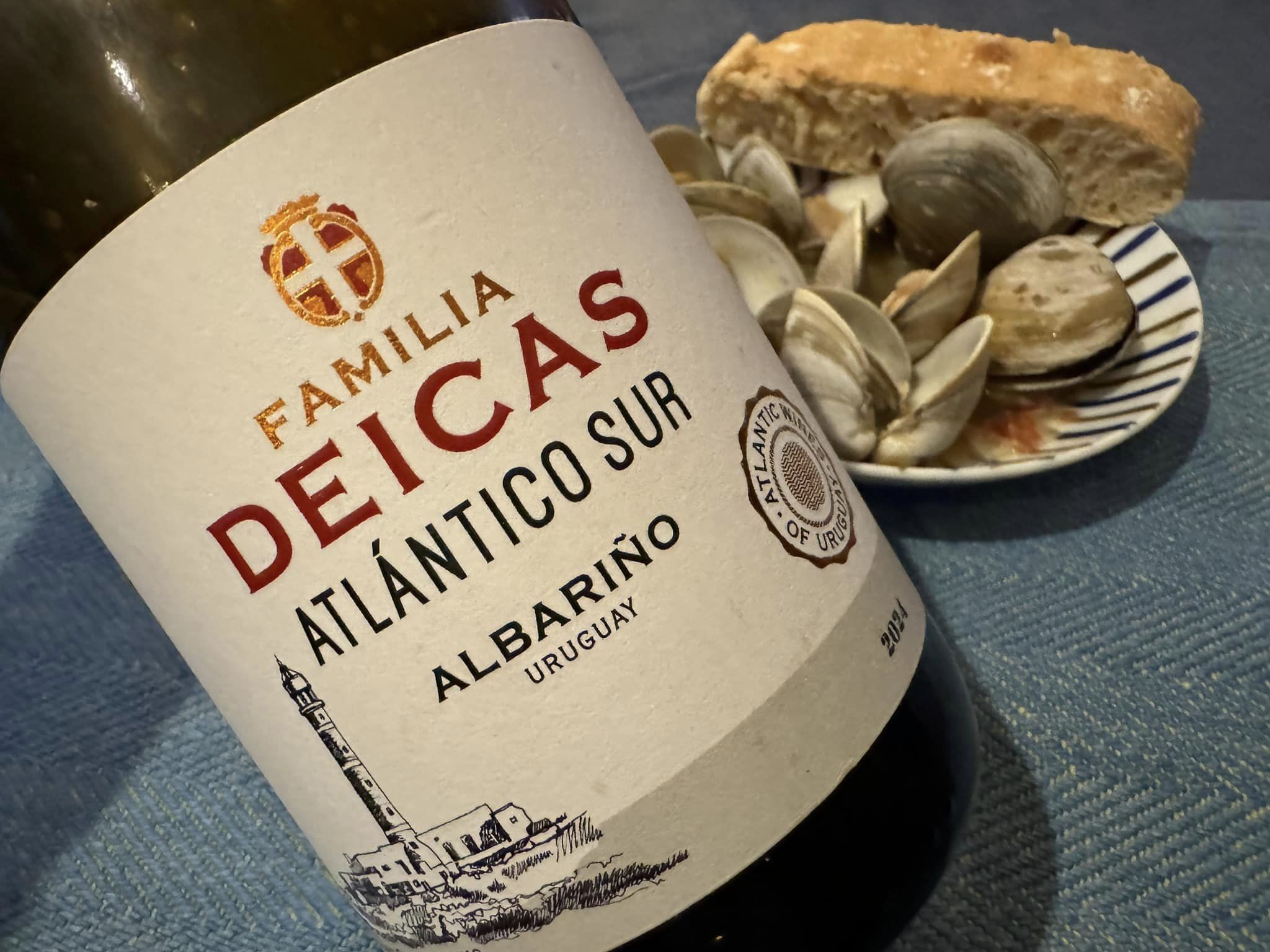
Familia Deicas Atlántico Sur Albariño 2024 is awesome with oysters
Seafood Menu for Uruguayan White Wines
- Oysters with Uni
pairing: all four wines
WINNER: Familia Traversa Traversa Sauvignon Blanc 2023!! - Caesar Salad with Anchovies
pairing: Familia Traversa Traversa Sauvignon Blanc 2023 $16 - Clams with Spanish Jamon, wine, butter
pairing: Familia Deicas Atlántico Sur Albariño 2024 $20 - Sable Fish (black cod) with capers, lemon, butter
pairing: Viña Progreso Overground Viognier 2023 $26 - Gouda Comte Mac n Cheese with Ridgeback Prawns (very similar to lobster or langoustine)
pairing: Los Cerros de San Juan Familie Lahusen Riesling 2023 $25 - Not that we needed more food, but I wish we’d made this again:
Faina, a chickpea flour flatbread (adapted from this recipe)

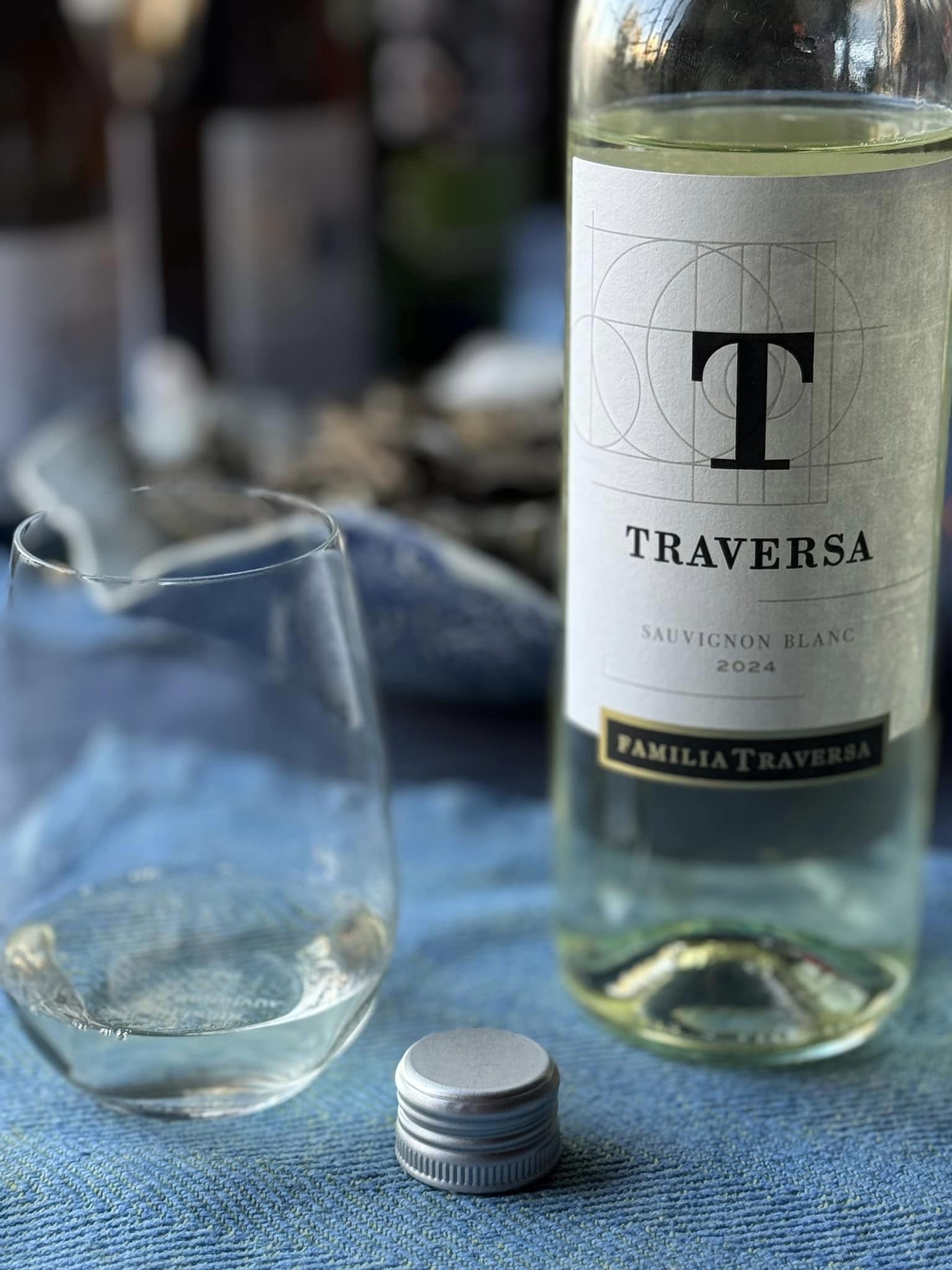
Familia Traversa Traversa Sauvignon Blanc 2023
Familia Traversa Traversa Sauvignon Blanc 2023
ABV: 13.5%
SRP: $16
Grapes: Sauvignon Blanc sustainably farmed
Importer: American Estates Wines Inc.
sample for my review
Overall, we found this SB to be very varietally true — but without too much of that “cat pee” charactiersitc that can turn people off, and is a different style than what you typically find at this price point for a wine from NZ.
Appearance: Very pale lemon, bit of green, platinum rim, very clear
Aroma: Jalapeno jelly, Meyer lemon, vanilla, lemon meringue pie,
Palate: Meyer lemon, bright acidity, minerals, pleasing simple, easy to enjoy,
Pairing: Great with our oysters, the wine becomes so fresh and peachy, by far our favorite wine with the oysters and uni. I love love love Cesar salad, and we often pair Ceasar salad with Sauvignon Blanc because it works almost every time. This is no exception. The wine loves the anchovy and the garlic and the lemon; such intense wine that integrates itself so well with these complex flavors. This wine goes from simplistic and easy to enjoy to becoming a fantastic, much more interesting wine, and complements the meal so beautifully.
Familia Deicas Atlántico Sur Albariño 2024
Familia Deicas Atlántico Sur Albariño 2024
ABV: 12.3
SRP: $20
Grapes: Albarino farmed sustainably
Importer: Cork Alliance Inc.
sample for my review
A green sticker on the label indicates that the 10 year old vines are grown sustainably on clay and limestone soils, then grapes are fermented in stainless steel tanks.
While the Albraino vines may be young, the Deicas vineyards however are old — the winery was built by Jesuits who were kicked out of country in the 1760s. It also had a life growing ugni blanc for brandy. When owner Santiago Deicas came into the picture from Valtellina Italy he completely transformed the vineyards, and with help from Paul Hobbes, began experimenting– his most experimental line of wines is a play on the word “bizarre.”
While Deicas has two vineyards– one on the coast and one more east– he prefers the albarino from the coastal vineyard for its more explosive flavor, says Josh.
Appearance: Pale yellow, pale lemon, platinum rim, very clear
Aroma: Sea grass, ocean air, jalapeno jelly, very clean, orange blossom
Palate: Lemon, salinity, bright acidity, slick minerals, clay, smooth, clean finish, simple and enjoyable, I really liked this wine, orange.
Pairing: I was inspired by the cuisines of coastal Portugal and Galicia when I chose to pair clams with jamon with this wine. While it was fine with the oysters, it was not that exciting after tasting the oysters with the Sauvignon Blanc. The salinity of the ham that is in the clam dish adds salinity and richness of flavor that the wine responds to nicely; the richness of the dish and the richness of the wine go very well together.
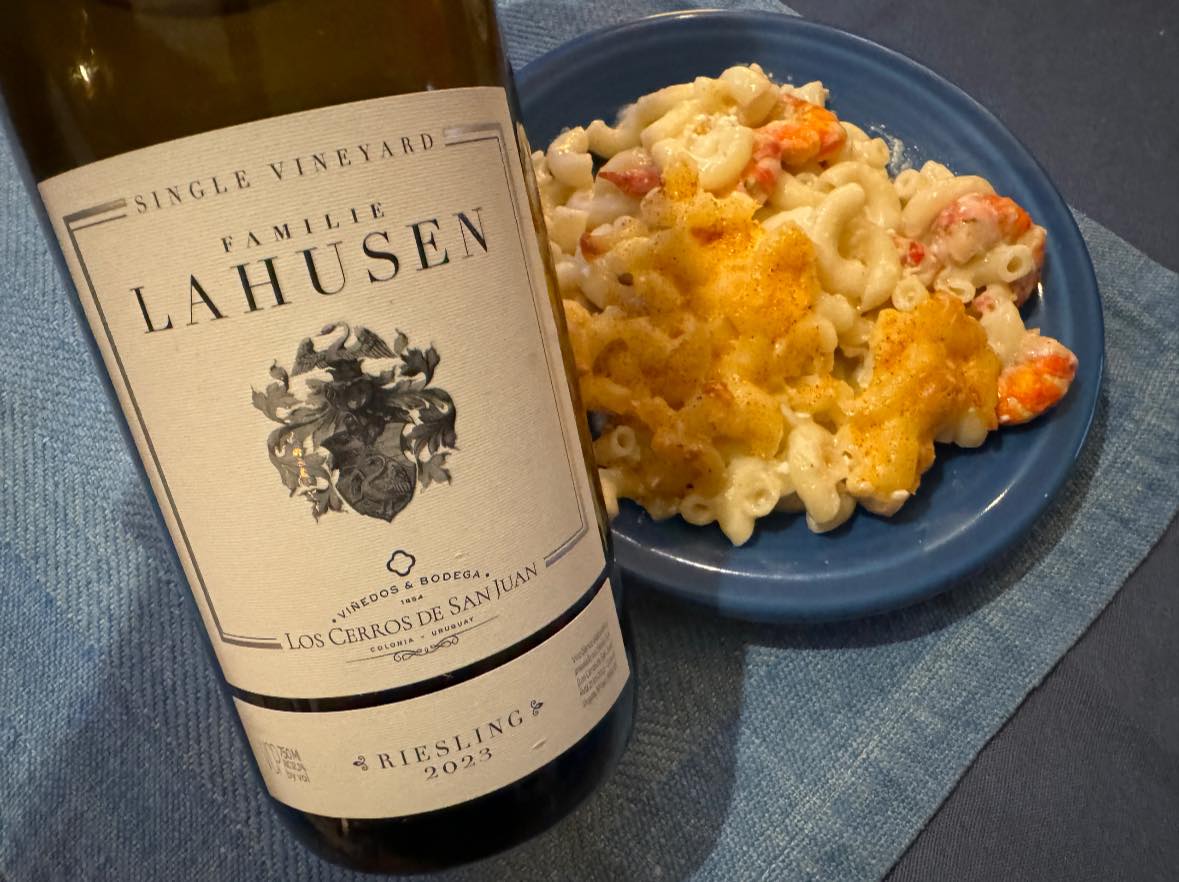
Los Cerros de San Juan Familie Lahusen Riesling 2023
Los Cerros de San Juan Familie Lahusen Riesling 2023
ABV: 12.3%
SRP: $25
Grapes: Riesling
Importer: Cimarron
sample for my review
There are only 10 acres total of Riesling in Uruguay, and wow! What a wine. Not much of a petrol marker but it certainly speaks of riesling– perhaps because it spent time in amphora?
Grapes are harvest twice about two weeks apart to get two styles, then fermented in Tuscan amphora. This is the only one in Uruguay that Josh knows about, however, tulip shaped vats are being used in several wineries to produce beautiful wine. Another speaker said she knew about 5 or 6 amphora in Uruguay, and this way of making wine is making its way back to Uruguay.
Appearance: Pale yellow, lemon yellow. platinum rim, very clear
Aroma: Honeysuckle, honeycomb, very faint petrol, salinity, bee pollen
Palate: The acidity and salinity in the wine balances the sweetness, it feels very tart on the palate, apple, tangerine on the finish herbal, chamomile, smoked paprika. While it does not taste like a European Riesling, it does have very nice riesling characteristics.
Pairing: This wine loves the rich creaminess of the uni, but was just alright with the oyster; the wine looses so much of its distinctive characteristic when paired with the oysters. We decided to pair this wine with a Gouda and Comte Mac n Cheese thinking about condo dishes of Germany. The sweet and creamy Mac and cheese makes the wine creamy and luscious, the wine helps accentuate all of the different flavor elements in the dish while leaving the characteristics of the wine in tact. The wine loves the nutty Comte cheese in the dish.
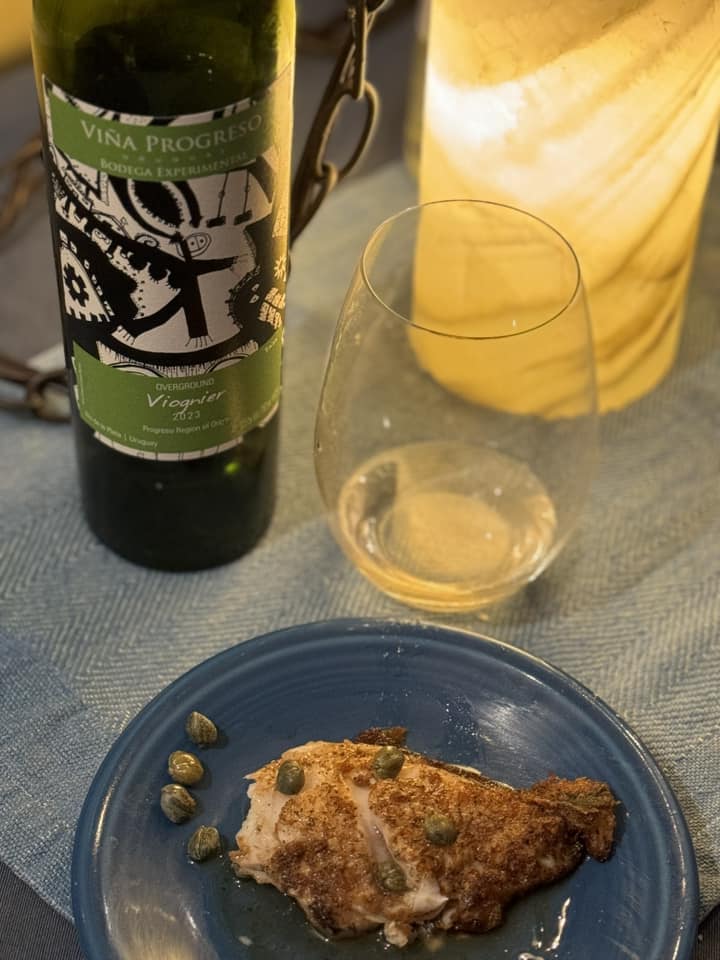
Viña Progreso Overground Viognier 2023
Viña Progreso Overground Viognier 2023
ABV: 12.5%
SRP: $26
Grapes: Viognier
Importer: Copa Fina Wine Imports
sample for my review
Like the other wines, this viognier is not exactly what you might expect from a viognier and yet it is still very viognier. This wine is an experimental side project of the larger label Paisano. Grapes are grown on more calcareous soils in the north. This small production wine had a fairly long and cold fermentation.
The Paisanos are an Italian family from Liguria, and they are influenced by their cultural background. The label art is a family member, Gabriel Paisano’s aunt; she’s done other labels as well.
Appearance: Pale lemon, platinum rim, quite clear,
Aroma: Honeysuckle, gardenia, asian pear, apple, honeycomb,
Palate: Super tart lemon, tons of acidity, viscous,
Pairing: The wine loves the rich uni on the oyster, but still not as great as the Sauvignon Blanc with the oysters. Loves the richness of the black cod as well as the crispy skin. Marsh and I have this dish in our home regularly and it is so fabulous with this wine. Almost as if you are asking yourself, “Did we do something different?” but we didi not it was enhanced so nicely with this wine. I don’t usually eat the skin on the black cod when we make this dish, but tonight I am enjoying skin and all. The salinity in the dish accentuates the fruit in the wine that was not as evident upon tasting the wine with out food. This wine would also be fantastic with sand dabs.
 wine predator.............. gwendolyn alley